

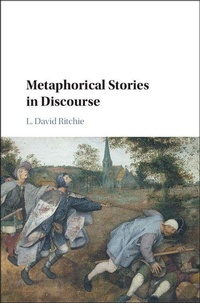
Metaphorical Stories in Discourse
Published on 14. September 2017
Book
Hardback
282 pages
978-1-107-16830-5 (ISBN)
Description
When Hillary Clinton conceded in 2008 that she didn't quite 'shatter the glass ceiling', and when Rick Perry in 2012 called Mitt Romney a 'vulture capitalist', they used abbreviated metaphorical stories, in which stories about one topic are presented as stories about something entirely different. This book examines a wide range of metaphorical stories, beginning with literary genres such as allegories and fables, then focusing on metaphorical stories in ordinary conversations, political speeches, editorial cartoons, and other communication. Sometimes metaphorical stories are developed in rich detail; in other examples, like 'vulture capitalist', they may merely be referenced or implied. This book argues that close attention to metaphorical stories and story metaphors enriches our understanding and is essential to any theory of communication. The book introduces a theoretical structure, which is developed into a theory of metaphorical stories and then illustrates the theory by applying it to actual discourse.
More details
Language
English
Place of publication
Cambridge
United Kingdom
Target group
College/higher education
Illustrations
7 Tables, black and white; 7 Halftones, black and white; 5 Line drawings, black and white
Dimensions
Height: 235 mm
Width: 157 mm
Thickness: 20 mm
Weight
568 gr
ISBN-13
978-1-107-16830-5 (9781107168305)
Copyright in bibliographic data and cover images is held by Nielsen Book Services Limited or by the publishers or by their respective licensors: all rights reserved.
Schweitzer Classification
Other editions
Additional editions
L. David Ritchie
Metaphorical Stories in Discourse
E-Book
09/2017
Cambridge University Press
€105.99
Available for download
L. David Ritchie
Metaphorical Stories in Discourse
E-Book
09/2017
Cambridge University Press
€88.99
Available for download
Person
L. David Ritchie is Professor of Communication at Portland State University, where he has taught since 1990. He is the author of three books, including Metaphor (Cambridge, 2014).
Content
1. Introduction; 2. Understanding metaphors: substitution and property attribution theories; 3. Understanding metaphors: theories based on semantic relationships; 4. Conceptual metaphors; 5. Perceptual simulation; 6. Metaphors and framing effects; 7. Language play: metaphors, stories, and humor; 8. Conversation; 9. Metaphors in politics; 10. Metaphors in literature; 11. Closing reflections.