

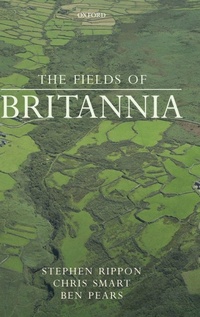
The Fields of Britannia
Continuity and Change in the Late Roman and Early Medieval Landscape
Published on 10. September 2015
Book
Hardback
472 pages
978-0-19-964582-4 (ISBN)
Description
It has long been recognized that the landscape of Britain is one of the 'richest historical records we possess', but just how old is it? The Fields of Britannia is the first book to explore how far the countryside of Roman Britain has survived in use through to the present day, shaping the character of our modern countryside. Commencing with a discussion of the differing views of what happened to the landscape at the end of Roman Britain, the volume then brings together the results from hundreds of archaeological excavations and palaeoenvironmental investigations in order to map patterns of land-use across Roman and early medieval Britain. In compiling such extensive data, the volume is able to reconstruct regional variations in Romano-British and early medieval land-use using pollen, animal bones, and charred cereal grains to demonstrate that agricultural regimes varied considerably and were heavily influenced by underlying geology. We are shown that, in the fifth and sixth centuries, there was a shift away from intensive farming but very few areas of the landscape were abandoned completely. What is revealed is a surprising degree of continuity: the Roman Empire may have collapsed, but British farmers carried on regardless, and the result is that now, across large parts of Britain, many of these Roman field systems are still in use.
Reviews / Votes
[an] important new book ... I have no hesitation from an academice viewpoint in recommending it to students of landscape archaeology, as I suspect it will have quite a significant effect on the way we read the post-Roman landscape in the future. * Robert Waterhouse, Current Archaeology * excellent and valuable piece of research * Andrew Fleming, Antiquity * contributes solid support for the growing swell of research which suggests that most changes to the early medieval landscape represented evolution and innovation from a consistently Romano- British base. * Susan Oosthuizen, Medieval Archaeology *More details
Other editions
Additional editions
Stephen Rippon | Chris Smart | Ben Pears
The Fields of Britannia
Continuity and Change in the Late Roman and Early Medieval Landscape
E-Book
09/2015
1st Edition
OUP eBook
€60.99
Available for download
Persons
Stephen Rippon is Professor of Landscape Archaeology at the University of Exeter.
Chris Smart is an Associate Research Fellow in the Department of Archaeology at the University of Exeter.
Ben Pears is an Honorary Research Associate at the University of Exeter.
Chris Smart is an Associate Research Fellow in the Department of Archaeology at the University of Exeter.
Ben Pears is an Honorary Research Associate at the University of Exeter.
Content
List of Figures ; List of Tables ; List of Appendices ; List of Abbreviations ; 1. Fields of Britannia: A Roman Legacy in the British Countryside ; 2. A Regional Approach to Studying Landscape ; 3. A Landscape Approach to the Roman-medieval Transition ; 4. The South East ; 5. East Anglia ; 6. The Central Zone ; 7. The South West ; 8. The Western Lowlands ; 9. The North East Lowlands ; 10. The Northern Uplands ; 11. Upland and Lowland Wales ; 12. Discussion and Conclusions ; Bibliography ; Index