

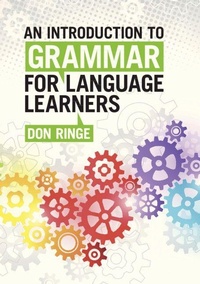
An Introduction to Grammar for Language Learners
Published on 23. August 2018
Book
Paperback/Softback
230 pages
978-1-108-44123-0 (ISBN)
Description
Learning a foreign language is much easier when it is approached with a knowledge of language structure ('grammar'), but many students find grammar mystifying. This text explains points of grammar straightforwardly using examples from several widely-studied languages, including English, so that students can see how the same principles work across different languages, and how the structures of different languages correspond both formally and functionally. The use of concrete examples makes grammar less abstract and easier to grasp, allowing students to relate what they are learning to knowledge that they already possess unconsciously; it simultaneously brings that knowledge up to a conscious level.
Reviews / Votes
'This excellent book represents a new approach to languages and how to learn them. It takes the reader through the wonderful peculiarities and challenges of real language with minimal jargon and maximum common sense. It is packed with insight and practical tips on how to start understanding grammar.' Stephen Colvin, University College LondonMore details
Language
English
Place of publication
Cambridge
United Kingdom
Target group
College/higher education
Product notice
Paperback (trade)
Illustrations
Worked examples or Exercises
Dimensions
Height: 254 mm
Width: 203 mm
Thickness: 13 mm
Weight
512 gr
ISBN-13
978-1-108-44123-0 (9781108441230)
Copyright in bibliographic data and cover images is held by Nielsen Book Services Limited or by the publishers or by their respective licensors: all rights reserved.
Schweitzer Classification
Other editions
Additional editions
Book
08/2018
Cambridge University Press
€115.00
Shipment within 15-20 days
Person
Don Ringe has been teaching undergraduate and postgraduate students for more than thirty years. In addition to historical linguistics and comparative Indo-European linguistics, he has taught a wide range of ancient and mediaeval languages. In 2012 he won the Ira Abrams Award for Distinguished Teaching at the University of Pennsylvania. He is the author or co-author of half a dozen linguistics books.
Content
How to use this book; 1. Introduction; 2. Sentences, clauses, and their verbs; 3. Subjects; 4. Noun phrases; 5. Pronouns and subject-verb agreement; 6. Direct objects; 7. Double-object verbs; 8. 'Linking' verbs; 9. Personal pronoun systems; 10. Reflexives and passives; 11. Possession; 12. Gender, concord, and noun classifications; 13. Case systems and adpositions: the Latin system; 14. Tense, aspect, and auxiliary verbs: the English verb system; 15. Tense, aspect, and mood: the Spanish verb system; 16. The Latin verb system; 17. The Hebrew verb system; 18. The Navajo verb system; 19. The Mandarin verb system; 20. Negation; 21. Questions; 22. Adjectives and relative clauses; 23. Articles, demonstratives, and quantifiers; 24. Subordinate clauses, infinitives, and verbal nouns; 25. Participles; 26. Comparative constructions; 27. The segmental sounds of human languages; 28. Prosody; 29. Writing systems; 30. The lexicon; Epilogue: 'bad grammar'; Answers to the exercises; Glossary of technical terms; Languages used as examples in the exercises; References; Index.