


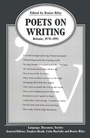
Poets on Writing
Britain, 1970-91
Published on 2. June 1992
Book
Hardback
304 pages
978-0-333-47129-6 (ISBN)
Description
For this collection, a number of contemporary poets, distinguished by their energy and thoughtfulness, were asked to write on aspects of the working processes of poetry in whatever ways they believed would be helpful to readers. The result is an invaluable account of their reflections on writing and its conditions, on their enthusiasms, and on their sense of the directions of others' poetry as well as of their own. Some poems, preoccupied by the questions of this book, are included. A scarcely-documented history of sustained work in Britain, non-parochial and outside a restricted "mainstream" is illuminated in these essays; many of the contributors here are or have been small-press publishers and journal editors too. This engaging book will serve as an introduction to the work of some fine writers, as it debates questions of significance for readers and writers of contemporary poetry.
More details
Series
Language
English
Place of publication
Basingstoke
United Kingdom
Target group
College/higher education
Professional and scholarly
Dimensions
Height: 216 mm
Width: 138 mm
Weight
415 gr
ISBN-13
978-0-333-47129-6 (9780333471296)
Copyright in bibliographic data is held by Nielsen Book Services Limited or its licensors: all rights reserved.
Schweitzer Classification
Other editions
Additional editions
E-Book
07/2016
Palgrave Macmillan
€52.99
Available for download
Book
06/1992
Palgrave Macmillan
€53.49
Shipment within 15-20 days
Content
Part 1 The conditions of writing: uttering poetry - small-press publication, Nigel Wheale; grasping the plural, Ken Edwards; you can't get there from hre, Nick Totton; writing and not writing, John Hall; two poems, Grace Lake; the state of poetry today, Tom Raworth. Part 2 What the work is: from - unconscious/unfolding/voice, and the particularity of poetry, Martin Harrison; two poems, Martin Harrison; the subject of poems, Michael Haslam; two poems, John Riley; what are you going to call it?, John Riley; moving buildings, Anthony Barnett; subsequent looping, Allen Fisher; the creative moment of the poem, Peter Riley; John Clare's mountain, Wendy Mulford. Part 3 Readings and beginnings: three poems, mark Hyatt; a curve of reading, Nigel Wheale; objects that come alive at night, Geoffrey Ward; two poems, Geoffrey Ward; dream and restoration, John Welch; two poems, John Welch; imperfect pitch, John Wilkinson; sometimes a word will start it, Kelvin Corcoran. Part 4 Particular studies: the poet as ethnographer, Martin Thomp; pages from "La Tempesta", Tom Lowenstein; about filibustering in Samsara, and after filibustering in Samsara, Tom Lowenstein; an introduction to Veronica Forrest-Thomson's work, Martin Harrison; from poetic artifice, Veronica Forrest-Thomson; the medium itself, rabbit by proxy - some thoughts about reading J.H. Prynne, Ian Patterson. Part 5 Ways of working: a theory of poetry, John James; a period of gestation, Ralph Hawkins; working processes of a woman poet, Carlyle Reedy; poet on writing, Roy Fisher; three lilies, Douglas Oliver.