

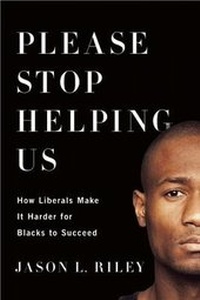
Please Stop Helping Us
How Liberals Make It Harder for Blacks to Succeed
Published on 17. June 2014
Book
Hardback
216 pages
978-1-59403-725-2 (ISBN)
Description
Why is it that so many efforts by liberals to lift the black underclass not only fail, but often harm the intended beneficiaries? In Please Stop Helping Us, Jason L. Riley examines how well-intentioned welfare programs are in fact holding black Americans back. Minimum-wage laws may lift earnings for people who are already employed, but they price a disproportionate number of blacks out of the labor force. Affirmative action in higher education is intended to address past discrimination, but the result is fewer black college graduates than would otherwise exist. And so it goes with everything from soft-on-crime laws, which make black neighborhoods more dangerous, to policies that limit school choice out of a mistaken belief that charter schools and voucher programs harm the traditional public schools that most low-income students attend. In theory these efforts are intended to help the poor--and poor minorities in particular. In practice they become massive barriers to moving forward. Please Stop Helping Us lays bare these counterproductive results.
People of goodwill want to see more black socioeconomic advancement, but in too many instances the current methods and approaches aren't working. Acknowledging this is an important first step.
Why is it that so many efforts by liberals to lift the black underclass not only fail, but often harm the intended beneficiaries? In Please Stop Helping Us, Jason L. Riley examines how well-intentioned welfare programs are in fact holding black Americans back. Minimum-wage laws may lift earnings for people who are already employed, but they price a disproportionate number of blacks out of the labor force. Affirmative action in higher education is intended to address past discrimination, but the result is fewer black college graduates than would otherwise exist. And so it goes with everything from soft-on-crime laws, which make black neighborhoods more dangerous, to policies that limit school choice out of a mistaken belief that charter schools and voucher programs harm the traditional public schools that most low-income students attend. In theory these efforts are intended to help the poor--and poor minorities in particular. In practice they become massive barriers to moving forward. Please Stop Helping Us lays bare these counterproductive results.
People of goodwill want to see more black socioeconomic advancement, but in too many instances the current methods and approaches aren't working. Acknowledging this is an important first step.
People of goodwill want to see more black socioeconomic advancement, but in too many instances the current methods and approaches aren't working. Acknowledging this is an important first step.
Why is it that so many efforts by liberals to lift the black underclass not only fail, but often harm the intended beneficiaries? In Please Stop Helping Us, Jason L. Riley examines how well-intentioned welfare programs are in fact holding black Americans back. Minimum-wage laws may lift earnings for people who are already employed, but they price a disproportionate number of blacks out of the labor force. Affirmative action in higher education is intended to address past discrimination, but the result is fewer black college graduates than would otherwise exist. And so it goes with everything from soft-on-crime laws, which make black neighborhoods more dangerous, to policies that limit school choice out of a mistaken belief that charter schools and voucher programs harm the traditional public schools that most low-income students attend. In theory these efforts are intended to help the poor--and poor minorities in particular. In practice they become massive barriers to moving forward. Please Stop Helping Us lays bare these counterproductive results.
People of goodwill want to see more black socioeconomic advancement, but in too many instances the current methods and approaches aren't working. Acknowledging this is an important first step.
More details
Language
English
Place of publication
New York
United States
Product notice
Cloth over boards
Dimensions
Height: 229 mm
Width: 153 mm
Weight
482 gr
ISBN-13
978-1-59403-725-2 (9781594037252)
Copyright in bibliographic data and cover images is held by Nielsen Book Services Limited or by the publishers or by their respective licensors: all rights reserved.
Schweitzer Classification
Other editions
Additional editions
E-Book
06/2014
1st Edition
Encounter Books
€35.59
Available for download
Person
Jason L. Riley is an editorial board member of the Wall Street Journal, where he has worked since 1994, and a Fox News contributor. He lives in suburban New York City with his wife and three children.
Jason L. Riley is an editorial board member of the Wall Street Journal, where he has worked since 1994, and a Fox News contributor. He lives in suburban New York City with his wife and three children.
Jason L. Riley is an editorial board member of the Wall Street Journal, where he has worked since 1994, and a Fox News contributor. He lives in suburban New York City with his wife and three children.