

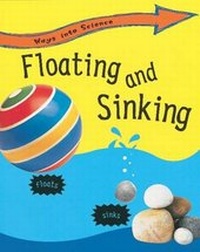
Floating and Sinking
Published on 27. September 2001
Book
Hardback
32 pages
978-0-7496-3957-0 (ISBN)
Description
A very simple science series that introduces the first concepts that surround the physical sciences. The text combines statements and questions in such a way that develops a child's understanding of science as well as the language related to it. It also builds confidence by helping children appreciate the science they already know. Simple experiments are also included in the text and exercises introduced which promote skills in sorting and handling data. MAGNETS looks at how magnets attract and repel each other and magnetic materials, while FLOATING AND SINKING considers what materials float or sink and why. The author, Peter Riley, has developed the projects in a classroom context working with reception and Year 1 classes. He has incorporated aspects of both KS1 curriculum and the desirable outcomes for younger learning and ensured the text is appropriate for use in literacy as well as science. Illustrated in full colour with photographs, most of which have been specially commissioned for the books.
More details
Series
Language
English
Place of publication
London
United Kingdom
Publishing group
Hachette Children's Group
Target group
Primary & secondary/elementary & high school
Illustrations
colour illustrations
Dimensions
Height: 10 mm
Width: 215 mm
Thickness: 270 mm
Weight
362 gr
ISBN-13
978-0-7496-3957-0 (9780749639570)
Copyright in bibliographic data and cover images is held by Nielsen Book Services Limited or by the publishers or by their respective licensors: all rights reserved.
Schweitzer Classification
Person
Peter Riley was a science teacher for 25 years, 17 of them as Head of Science. His first book was published in 1981, and he has been a full-time author since 1996, with over 200 books published for children, students and teachers. He is the winner of the prestigious Schoolbook Award for Science in 2000, as well as being shortlisted for the Aventis Science Prize 2004 and nominated for the Educational Resources Award in 2009.