

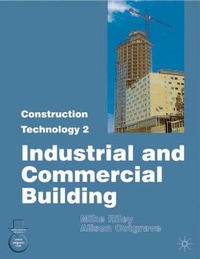
Construction Technology 2: Part. 2
Industrial and Commercial Building
Published on 21. October 2003
Book
Paperback/Softback
480 pages
978-0-333-80482-7 (ISBN)
Description
The second volume in the "Construction Technology" set looks at the construction of industrial and commercial buildings for students at undergraduate and HNC/D level. Each element of a structure is considered within a comparative study at the end of the chapter dealing with that element. The comparative study aims to summarise in very simple terms the salient features of the alternative options. Other key features include case study material taken from actual building sites, an accessible text design, self assessment review exercises, and an accompanying lecturer and student web site. The two volumes can either be used individually or together to form a complete learning environment for students on building, surveying, land management or civil engineering courses.
More details
Series
Language
English
Place of publication
Basingstoke
United Kingdom
Target group
College/higher education
Illustrations
diagrams, photos, index
Dimensions
Height: 246 mm
Width: 190 mm
Weight
914 gr
ISBN-13
978-0-333-80482-7 (9780333804827)
Copyright in bibliographic data and cover images is held by Nielsen Book Services Limited or by the publishers or by their respective licensors: all rights reserved.
Schweitzer Classification
Other editions
New editions
Mike Riley | Alison Cotgrave
Construction Technology 2: Industrial and Commercial Building: 2
Book
06/2009
2nd Edition
Palgrave Macmillan
€51.98
Article exhausted; check for reprint
Book
04/2009
2nd Edition
Red Globe Press
€53.30
Shipment within 15-20 days
Content
Part 1 Preparing to build: functions and requirements of industrial and commercial buildings; building process; preparing to build. Part 2 Building substructure: foundations; walls below ground and basements; ground floors. Part 2 Building superstructure: high rise buildings; long span buildings; frames and fire; external walls and claddings; upper floors and stairs; roof structures and coverings; integration of services and internal division of space. Part 4 The building in use: building lifecycle and refurbishment.