


Phylogenetic Systematics
Haeckel to Hennig
1st Edition
Published on 30. June 2016
Book
Hardback
380 pages
978-1-4987-5488-0 (ISBN)
Description
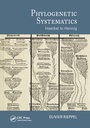
Phylogenetic Systematics: Haeckel to Hennig traces the development of phylogenetic systematics against the foil of idealistic morphology through 100 years of German biology. It starts with the iconic Ernst Haeckel-the German Darwin from Jena-and the evolutionary morphology he developed. It ends with Willi Hennig, the founder of modern phylogenetic systematics. Written in English, the book presents a unique perspective on a vast body of German biological literature.
The book also offers a perspective on German biology in the Third Reich. The author looks at how idealistic morphology and phylogenetic systematics represented two antagonistic traditions in German biology, the first organicist-holistic, the latter empiricist-positivistic. In addition, he explains the ways in which both traditions acquired socio-political and ideological connotations, culminating in their accommodation to different strands of Nazi ideology.
The book's nine chapters summarize a century of the conceptual development of systematics, describe both the history and philosophy of phylogenetic approaches to the understanding of the history of life, examine the role of important people such as Haeckel, Gegenbauer, Portman, von Bertalanffy, Stresemann, and Hennig, and critically evaluate the impact and influence of Nazism on evolutionary biology.
Chapter titles include: The Evolutionary Turn in Comparative Anatomy; Of Parts and Wholes; The Turn against Haeckel; The Rise of Holism in German Biology; The Rise of German ("Aryan") Biology; Ganzheitsbiologie; The Ideological Instrumentalization of Biology; A New Beginning: From Speciation to Phylogenetics; and Grundzuege: The Conceptual Foundations of Phylogenetic Systematics.
The book also offers a perspective on German biology in the Third Reich. The author looks at how idealistic morphology and phylogenetic systematics represented two antagonistic traditions in German biology, the first organicist-holistic, the latter empiricist-positivistic. In addition, he explains the ways in which both traditions acquired socio-political and ideological connotations, culminating in their accommodation to different strands of Nazi ideology.
The book's nine chapters summarize a century of the conceptual development of systematics, describe both the history and philosophy of phylogenetic approaches to the understanding of the history of life, examine the role of important people such as Haeckel, Gegenbauer, Portman, von Bertalanffy, Stresemann, and Hennig, and critically evaluate the impact and influence of Nazism on evolutionary biology.
Chapter titles include: The Evolutionary Turn in Comparative Anatomy; Of Parts and Wholes; The Turn against Haeckel; The Rise of Holism in German Biology; The Rise of German ("Aryan") Biology; Ganzheitsbiologie; The Ideological Instrumentalization of Biology; A New Beginning: From Speciation to Phylogenetics; and Grundzuege: The Conceptual Foundations of Phylogenetic Systematics.
Reviews / Votes
The whole is a complex and compelling story that requires attention to the details of the argument. The breadth and depth of Rieppel's coverage of these controversies is the major strength of this book. Another major strength is the analysis of what can go wrong when science is subverted by politics. For those who wish to understand the roots of phylogenetic systematics and its philosophical basis, this volume is an essential resource. E. O Wiley in The Quarterly Review of Biology.More details
Series
Language
English
Place of publication
Bosa Roca
United States
Publishing group
Taylor & Francis Inc
Target group
College/higher education
Professional and scholarly
Illustrations
27 s/w Abbildungen
27 Illustrations, black and white
Dimensions
Height: 234 mm
Width: 156 mm
Weight
703 gr
ISBN-13
978-1-4987-5488-0 (9781498754880)
Copyright in bibliographic data and cover images is held by Nielsen Book Services Limited or by the publishers or by their respective licensors: all rights reserved.
Schweitzer Classification
Other editions
Additional editions

Book
12/2019
1st Edition
CRC Press
€85.00
Shipment within 15-20 days
E-Book
07/2016
CRC Press
€86.99
Available for download
E-Book
07/2016
CRC Press
€86.99
Available for download
Person
Olivier Rieppel is Rowe Family Curator of Evolutionary Biology at The Field Museum in Chicago. His main current research interests focus on Triassic marine reptiles from southern China. He also contributed extensively to the comparative anatomy and evolution of modern reptiles, most notably the evolutionary origin of turtles and snakes. He published widely in the history and philosophy of comparative biology on topics as diverse as species concepts, mid-eighteenth-century French biology, and the history of phylogenetic systematics. Rieppel is on the editorial board of several peer-reviewed scientific journals and has, himself, published more than 350 scientific papers and 7 books.
Content
The Evolutionary Turn in Comparative Anatomy. Of Parts and Wholes. The Turn against Haeckel. The Rise of Holism in German Biology. The Rise of German ("Aryan") Biology. Ganzheitsbiologie. The Ideological Instrumentalization of Biology. A New Beginning: From Speciation to Phylogenetics. Grundzuege: The Conceptual Foundations of Phylogenetic Systematics. Epilogue. Literature Cited.