


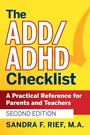
The ADD ADHD Checklist
An Easy Reference for Parents and Teachers
Published on 15. December 1997
Book
Paperback/Softback
272 pages
978-0-13-762395-2 (ISBN)
Description
Written by a nationally known educator with two decades of experience in working with ADD/ADHD students. For fast, reliable information about attention deficit disorder, parents and teachers need only to refer to The ADD/ADHD Checklist. This unique resource is packed with up-to-date facts, findings, and proven strategies and techniques for understanding and helping children and adolescents with attention deficit problems and hyperactivity- all in a handy list format.
More details
Language
English
Place of publication
Upper Saddle River
United States
Publishing group
Pearson Education (US)
Target group
College/higher education
Professional and scholarly
Dimensions
Height: 250 mm
Width: 130 mm
Weight
369 gr
ISBN-13
978-0-13-762395-2 (9780137623952)
Copyright in bibliographic data is held by Nielsen Book Services Limited or its licensors: all rights reserved.
Schweitzer Classification
Other editions
New editions
Book
10/2008
2nd Edition
Jossey-Bass
€18.50
Shipment within 10-20 days
Person
Sandra Rief, M.A., is the author of How to Reach and Teach ADD/ADHD Children and the coauthor of How to Reach and Teach All Students in the Inclusive Classroom. She has been a special education teacher for over twenty years, and in 1995, was named California Resource Specialist of the Year.
Content
SECTION 1: What Is: ADD/ADHD? SECTION 2: Critical Factors in Working With ADD/ADHD. SECTION 3: A List of Don'ts. SECTION 4: A Comprehensive Treatment Program for ADD/ADHD. SECTION 5: Preventing Behavioral Problems in the Classroom Through Management Techniques. SECTION 6: Preventing Problems During Transitions and Noninstructional Time. SECTION 7: Attention: Getting It, Focusing It, Keeping It. SECTION 8: How to Teach Students Organization and Study Skills. SECTION 9: Multisensory Instruction. SECTION 10: Language Arts Strategies. SECTION 11: Written Language Strategies. SECTION 12: Math Strategies. SECTION 13: Tips for Giving Directions. SECTION 14: The Advantages of Cooperative Learning with ADD/ADHD Students. SECTION 15: Learning Styles. SEOTION 16: Relaxation, Guided Imagery, and Visualization Techniques. SECTION 17: Music for Transitions, Calming, and Visualization. SECTION 18: Communication With Parents and Mutual Support. SECTION 19: A Parent's Story: What Every Teacher Needs to Hear. SECTION 20: Medication and School Management.SECTION 21: What About Kindergarten? SECTION 22: The Challenge of Middle School and Junior High. SECTION 23: Actual Case Studies With Intervention Plans. SECTION 24: How Administrators Can Help Teachers and Students Succeed. SECTION 25: Team Teaching and Teacher Partnerships. SECTION 26: Using Tutors and Volunteers to Help Students in the Classroom. SECTION 27: School Documentation and Communication With Physicians and Agencies. SECTION 28: School Referrals, Assessment, and Special Education Placement. SECTION 29: Exemplary Model Programs. SECTION 30: Child Advocacy: Going the Extra Mile. BIBLIOGRAPHY AND RECOMMENDED RESOURCES.