


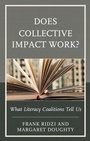
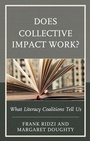
Does Collective Impact Work?
What Literacy Coalitions Tell Us
Published on 4. October 2017
Book
Hardback
272 pages
978-1-4985-0845-2 (ISBN)
Description
The book seeks to demonstrate the ways in which collective impact approaches have guided the development of literacy coalitions over time. Since community collaboration strategies developed to address social issues, coalitions have grown from small networking organizations to powerful forces for change. The history of literacy coalitions offers a timeline outlining the why, who, what, where, when and how of communities that were influenced by social and political changes and the ways coalitions responded and thrived. The lack of literacy has held back economic development in the US and coalitions shine a light on issues associated with illiteracy and low school achievement. Not all coalitions succeed and the book explores models of success, funding strategies, evaluation and impact. The goal is to assist those developing coalitions by providing not only lessons learned but a blueprint for success.
Reviews / Votes
As indicated in the subtitle, this book explores What Literacy Coalitions Tell Usand systematically reviews what factors contribute to this type of collective initiatives working effectively. The authors carry out an analysis that is referential for the implementation of evidence-based coalitions. * Voluntas * The authors have produced an especially insightful analysis of the issue of literacy and of the dynamics of collaborative efforts in general. If your organization is involved in community impact work of any nature, you will find real value here. An added bonus is the entertaining examples that are used throughout the book, like the multiple and significant values of early literacy, George Washington's adult literacy efforts at Valley Forge, and the New York grid system as an analogy for the way that coalitions work. -- Bill Millett, Scope View Strategic Advantage Does Collective Impact Work? sheds new light on the powerful role that coalitions are playing in mobilizing communities to take action and make measurable progress in addressing the literacy crisis in the United States. More than simply offering a series of case examples, the authors identify the key drivers and the underlying success factors necessary for communities to produce longer-term, more sustainable results. -- Ron Fairchild, The Campaign for Grade-Level Reading Frank Ridzi and Margaret Doughty shine a bright light on the value of a literacy coalition in the collective impact model and the challenges in evaluating system level change and attaining sustainable funding to address a complex social issue. This book is a great read for those who are involved with a literacy coalition and for those interested in learning more about them. -- Robert E. Paponetti, The Literacy CooperativeMore details
Language
English
Place of publication
United States
Publishing group
Bloomsbury Publishing Plc
Target group
Professional and scholarly
Illustrations
21 b/w illustrations; 3 tables
Dimensions
Height: 235 mm
Width: 157 mm
Thickness: 19 mm
Weight
552 gr
ISBN-13
978-1-4985-0845-2 (9781498508452)
Copyright in bibliographic data and cover images is held by Nielsen Book Services Limited or by the publishers or by their respective licensors: all rights reserved.
Schweitzer Classification
Other editions
Additional editions
E-Book
10/2017
1st Edition
Lexington Books
€107.99
Available for download
E-Book
10/2017
1st Edition
Lexington Books
€108.99
Available for download
Persons
Frank Ridzi is Vice President for Community Investment at the Central New York
Community Foundation and associate professor of sociology at Le Moyne College. He is a past
president of the Literacy Funders Network.
Margaret Doughty founded Literacy Powerline and directed the Houston READ Commission.
Community Foundation and associate professor of sociology at Le Moyne College. He is a past
president of the Literacy Funders Network.
Margaret Doughty founded Literacy Powerline and directed the Houston READ Commission.
Content
Introduction
1. The Many Faces of Collective Impact Community Literacy Coalitions
2. Catalytic Philanthropy and Community Coalitions
3. Are Collective Impact Coalition Communities Better Off?: Understanding Collective Impact as Part of a Virtuous Cycle
4. Measuring Impact and Moving Toward Best Practices
Conclusion
1. The Many Faces of Collective Impact Community Literacy Coalitions
2. Catalytic Philanthropy and Community Coalitions
3. Are Collective Impact Coalition Communities Better Off?: Understanding Collective Impact as Part of a Virtuous Cycle
4. Measuring Impact and Moving Toward Best Practices
Conclusion