

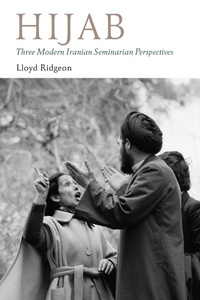
Hijab
Three Modern Iranian Seminarian Perspectives
Published on 26. April 2021
Book
Hardback
400 pages
978-1-909942-56-1 (ISBN)
Description
This book provides an overview of the range of seminarian thinking in Iran on the controversial topic of the hijab. During the modern period, Iran has suffered a great deal of conflict and confusion caused by the impact of Western views on the hijab in the 19th century, Riza Shah Pahlavi's 1936 decree banning Islamic head coverings, and the imposition of the veil in the wake of the Islamic Revolution in 1979. Hijab addresses the differences of opinion among seminarians on the hijab in the Islamic Republic of Iran, focusing on three representative thinkers: Murtaza Mutahhari who held veiling to be compulsory, Ahmad Qabil who argued for the desirability of the hijab, and Muhsin Kadivar who considers it neither necessary nor desirable. In the first chapter, the views of these three scholars are contextualized within the framework known as 'new religious thinking' among the seminarians. Comprehending the hermeneutics of this new religious thinking is key to appreciating how and why the younger generation of scholars have offered divergent judgements about the hijab. Following the first chapter, the book is divided into three parallel sections, each devoted to one of the three seminarians. These present a chronological approach, and each scholar's position on the hijab is assessed with reference to historical specificity and their own general jurisprudential perspective. Extensive examples of the writings of the three scholars on the hijab are also provided.
Reviews / Votes
'This excellent study is an examination of the evolving theological and juristic positions on hijab among seminarians in Iran. The author Lloyd Ridgeon provides the reader with valuable insights into the complexity of the juristic debates. Focusing on the work of three aptly-chosen scholars, he makes their juristic arguments available in English for the first time, as well as referencing the extensive literature on the topic in English and Persian. The writing is clear, the story unfolds systematically and cogently, and the book is a pleasure to read.' Ziba Mir-Hosseini, SOAS University of London; 'This study fills an important gap by discussing the views of three different Islamic scholars from Iran on the hijab. A particular strength of the book is that it covers scholars from both the pre-revolutionary and post-revolutionary periods. The contributions of the scholars are contextualized by providing accessible introductions to the political, social and cultural developments in Iran before and after the Islamic Revolution with a focus on gender issues and the question of the hijab. As such, the study illustrates quite well how Islamic jurisprudence is always situated in and responds to a particular context.'Oliver Scharbrodt, University of Birmingham.More details
Series
Language
English
Place of publication
London
United Kingdom
Target group
College/higher education
Professional and scholarly
Illustrations
15 colour illustrations and 4 black and white photographs
Dimensions
Height: 234 mm
Width: 153 mm
Thickness: 3 mm
Weight
566 gr
ISBN-13
978-1-909942-56-1 (9781909942561)
Copyright in bibliographic data and cover images is held by Nielsen Book Services Limited or by the publishers or by their respective licensors: all rights reserved.
Schweitzer Classification
Person
Lloyd Ridgeon is a reader in Islamic studies and head of theology and religious studies at the University of Glasgow. He is the author of Jawanmardi: A Sufi Code of Honour and the editor of Javanmardi: Ethics and Practice of Persianate Perfection.
Content
List of Illustrations
Acknowledgements
Transliteration
Introduction 1
Part 1
1. Sharia, Fiqh, and the New Religious Thinkers
Part 2: Hijab as Mandatory (va?jib): The Views of Murtaza Mutahhari
The Hijab in Iran from Pre-Modern Times to the 1960s
The Life and Thought of Ayatollah Murtaza Mutahhari
Translation of Mutahhari's 'The Philosophy of Covering in Islam'
Part 3: Hijab as Desirable (mustah?abb): The Views of Ahmad Qabil
5. The Islamic Republic and the Hijab Controversy (1978-2012)
6. Mullas without Turbans and Women without Veils: The Life and
Thought of Ahmad Qabil
7. Translation of Qabil's 'The Desirability for Covering the Head
and Neck'
Part 4: Hijab Depending on Time and Place: The Views of Muhsin Kadivar
8. The Hijab Controversy Continues (2005-)
9. The Worldview of Muhsin Kadivar
10. Translation of Kadivar's 'Reflections on the Question of Hijab'
Conclusion
Appendix 268 Bibliography
Index
Acknowledgements
Transliteration
Introduction 1
Part 1
1. Sharia, Fiqh, and the New Religious Thinkers
Part 2: Hijab as Mandatory (va?jib): The Views of Murtaza Mutahhari
The Hijab in Iran from Pre-Modern Times to the 1960s
The Life and Thought of Ayatollah Murtaza Mutahhari
Translation of Mutahhari's 'The Philosophy of Covering in Islam'
Part 3: Hijab as Desirable (mustah?abb): The Views of Ahmad Qabil
5. The Islamic Republic and the Hijab Controversy (1978-2012)
6. Mullas without Turbans and Women without Veils: The Life and
Thought of Ahmad Qabil
7. Translation of Qabil's 'The Desirability for Covering the Head
and Neck'
Part 4: Hijab Depending on Time and Place: The Views of Muhsin Kadivar
8. The Hijab Controversy Continues (2005-)
9. The Worldview of Muhsin Kadivar
10. Translation of Kadivar's 'Reflections on the Question of Hijab'
Conclusion
Appendix 268 Bibliography
Index