

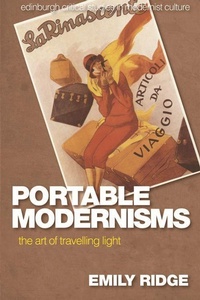
Portable Modernisms
The Art of Travelling Light
Published on 13. May 2019
Book
Paperback/Softback
224 pages
978-1-4744-5246-5 (ISBN)
Description
A wide-ranging study of the rise of a new culture of portability and its impact on modernist approaches to fiction
Luggage is an overlooked detail in the stock sketch of the expatriated modernist writer from the valise-fashioned desks of both James Joyce and Vladimir Nabokov to the lost manuscript-laden cases of Ernest Hemingway and Walter Benjamin. While the trope of modernist exile has long been spotlighted, little attention has been given to the material meaning of this condition. What things and objects do modernism's exiles and emigres carry with them and how does the act of carriage enter into the modernist picture more broadly? What are the implications and historical resonances of a portable outlook, particularly from the angles of gender, wartime conflict and character conception? Above all, how far does such an outlook impact upon artistic vision? Portability represents the simultaneous transportation and repudiation of domesticity and the home, those key frames of reference in the nineteenth-century novel. This book examines the multifarious ways in which the emergence of a modern culture of portability prompts a radical, if often problematic, departure from Victorian architectural conceptions of fiction towards more movable understandings of form and character.
Key Features
Presents the first full-length formulation of portable models for fiction and, as such, opens up a new field of enquirySheds fresh light on our understanding of the history of the novel through one long-obscured metaphor for narrative formConstructively integrates recent discussions of material culture and mobility in modernism within a single monograph and links these discussions to more formal questionsIncludes archival research on the material culture of movement and travel during the period
Luggage is an overlooked detail in the stock sketch of the expatriated modernist writer from the valise-fashioned desks of both James Joyce and Vladimir Nabokov to the lost manuscript-laden cases of Ernest Hemingway and Walter Benjamin. While the trope of modernist exile has long been spotlighted, little attention has been given to the material meaning of this condition. What things and objects do modernism's exiles and emigres carry with them and how does the act of carriage enter into the modernist picture more broadly? What are the implications and historical resonances of a portable outlook, particularly from the angles of gender, wartime conflict and character conception? Above all, how far does such an outlook impact upon artistic vision? Portability represents the simultaneous transportation and repudiation of domesticity and the home, those key frames of reference in the nineteenth-century novel. This book examines the multifarious ways in which the emergence of a modern culture of portability prompts a radical, if often problematic, departure from Victorian architectural conceptions of fiction towards more movable understandings of form and character.
Key Features
Presents the first full-length formulation of portable models for fiction and, as such, opens up a new field of enquirySheds fresh light on our understanding of the history of the novel through one long-obscured metaphor for narrative formConstructively integrates recent discussions of material culture and mobility in modernism within a single monograph and links these discussions to more formal questionsIncludes archival research on the material culture of movement and travel during the period
Reviews / Votes
[...] makes a significant contribution to modernist studies through elegant consideration of the 'new culture of portability in the early twentieth century' and its effects on modernist approaches to fiction (p. 4). * The Year's Work in English Studies, Volume 98, Issue 1, 2019 * Portable Modernisms is an intellectually agile and absorbing account of the motif of luggage in the literature of the early twentieth century, from the emancipatory promises of modernist mobility to the harrowing dislocations and dispossessions of the 1930s. This is a study of small light things that is itself satisfyingly substantial. -- Marina MacKay, University of Oxford Portable Modernisms is stunning in the breadth of material covered. -- Susanne S. Cammack, Project MuseMore details
Series
Language
English
Place of publication
Edinburgh
United Kingdom
Target group
College/higher education
Product notice
Paperback (trade)
Unsewn / adhesive bound
Illustrations
10 black and white illustrations
Dimensions
Height: 229 mm
Width: 152 mm
Thickness: 13 mm
Weight
363 gr
ISBN-13
978-1-4744-5246-5 (9781474452465)
Copyright in bibliographic data and cover images is held by Nielsen Book Services Limited or by the publishers or by their respective licensors: all rights reserved.
Schweitzer Classification
Person
Emily Ridge is an Assistant Professor of English Literature at the Education University of Hong Kong.
Content
Introduction
1. 'Living Modernly's Living Quickly': Towards Travelling Light 2. 'A Purse of Her Own': Women and Carriage3. 'No one Is Safe from the Beggar's Pack': Portability and Precarity4. 'Have You Anything to Declare?': Portable Selves on Trial
Conclusion
1. 'Living Modernly's Living Quickly': Towards Travelling Light 2. 'A Purse of Her Own': Women and Carriage3. 'No one Is Safe from the Beggar's Pack': Portability and Precarity4. 'Have You Anything to Declare?': Portable Selves on Trial
Conclusion