

Framboids
Published on 12. October 2021
Book
Hardback
360 pages
978-0-19-008011-2 (ISBN)
Description
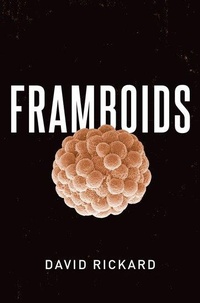
Framboids may be the most astonishing and abundant natural features you've never heard of. These microscopic spherules of golden pyrite consist of thousands of even smaller microcrystals, often arranged in stunning geometric arrays. They are rarely more than twenty micrometers across, and often look like miniscule raspberries under the microscope.
The formation of a framboid is the result of self-assembly of pyrite micro- and nano-crystals under the influence of surface forces. They can be found all around us in rocks of all ages and present-day sediments, soils, and natural waters. Our planet makes billions every second and has been doing so for most of recorded geologic time. As a result, there are more framboids on our planet than there are sand grains on Earth or stars in the observable universe.
The microscopic size of framboids belies their importance to contemporary science. They help us better understand inorganic self-assembly and self-organization, and studying them illuminates Earth's evolutionary history.
In this book, David Rickard explains what framboids are, how they are formed, and what we can learn from them. The book's thirteen chapters trace everything from their basic attributes and mineralogy to their biogeochemistry and paleoenvironmental significance. Rickard expands on the most updated research and recent developments in geology, chemistry, biology, materials science, biogeochemistry, mineralogy, and crystallography, making this a must-have guide for researchers.
The formation of a framboid is the result of self-assembly of pyrite micro- and nano-crystals under the influence of surface forces. They can be found all around us in rocks of all ages and present-day sediments, soils, and natural waters. Our planet makes billions every second and has been doing so for most of recorded geologic time. As a result, there are more framboids on our planet than there are sand grains on Earth or stars in the observable universe.
The microscopic size of framboids belies their importance to contemporary science. They help us better understand inorganic self-assembly and self-organization, and studying them illuminates Earth's evolutionary history.
In this book, David Rickard explains what framboids are, how they are formed, and what we can learn from them. The book's thirteen chapters trace everything from their basic attributes and mineralogy to their biogeochemistry and paleoenvironmental significance. Rickard expands on the most updated research and recent developments in geology, chemistry, biology, materials science, biogeochemistry, mineralogy, and crystallography, making this a must-have guide for researchers.
Reviews / Votes
The book by David Rickard, world authority on sulfide chemistry, geochemistry, geomicrobiology, biogeochemistry and ore geology, opens the doors of this fascinating world... David Rickard has condensed in a relatively small book a wealth of information which makes it a reference text certainly for many years to come * Massimo Nespolo, Acta Crystallographica * Framboidal pyrite; a riddle wrapped in a mystery inside an enigma. An engaging text on mineral morphology seems a contradiction in terms, but Rickard's superbly crafted book will surprise and inform readers at all levels. Popular audiences will be awestruck by the sheer profligacy of framboid formation: more than ten thousand billion framboids are formed every second, giving a worldwide abundance a billion times larger than the number of sand grains on Earth. Professionals will get a closer look into the physio-chemical controls of burst nucleation that produce the exquisite architecture of framboidal pyrite * Rob Raiswell, School of Earth and Environment, University of Leeds * There is a mystery behind framboids. They represent fool's gold, many compare their appearance to that of a tasty raspberry, and they're invisible to the naked eye. In this book, Dave Rickard expertly provides readers with the most recent data about framboids, and he also delves into the history and future of framboids. This is a must-have for Earth scientists, chemists, and materials scientists. * Zbigniew Sawlowicz, Institute of Geological Sciences, Jagiellonian University * I found Framboids to be a fun and highly educational read. Ever since I first saw a pyrite framboid, I wondered how these entities could arrange themselves in such beautiful symmetries. In this book, David Rickard documents how other compounds generate framboids and that these materials are everywhere even though they cannot easily be seen. Rickard does a spectacular job in providing the history of their discovery, starting with optical microscopy through more advanced electron microscopy methods. For the scientist who wishes to understand the physical and chemical forces that align microcrystals into framboids, he provides an exquisite step-by-step dissertation regarding their formation, growth mechanisms, nucleation, self-assembly, and self-organization. * George W. Luther, III, School of Marine Science and Policy, University of Delaware and author of Inorganic Chemistry for Geochemistry and Environmental Sciences *More details
Language
English
Place of publication
New York
United States
Target group
Professional and scholarly
Product notice
sewn/stitched
Cloth over boards
Dimensions
Height: 243 mm
Width: 165 mm
Thickness: 27 mm
Weight
635 gr
ISBN-13
978-0-19-008011-2 (9780190080112)
Copyright in bibliographic data and cover images is held by Nielsen Book Services Limited or by the publishers or by their respective licensors: all rights reserved.
Schweitzer Classification
Other editions
Person
David Rickard is Emeritus Professor of Geochemistry at Cardiff University and Adjunct Professor of Marine Geochemistry at the University of Delaware. He received his BSc, ARSM, DIC, and PhD from Imperial College London. Rickard has authored more than 300 publications, including four books and over 150 original research papers on sulfide chemistry, geochemistry, biogeochemistry, and ore geology. His most recent book is Pyrite (Oxford University Press, 2015). He is a Fellow of the Royal Society of Chemistry, the Royal Society of Biology, the Geochemical Society, and the Geological Society of London.
Content
Dedication
Synopsis
Acknowledgments
Chapter 1: Introduction
Chapter 2: Framboid Sizes
Chapter 3: Framboid Shapes
Chapter 4: Microcrystal Morphology
Chapter 5: Framboid Microarchitecture
Chapter 6: The Crystallography of Pyrite Framboids
Chapter 7: Organic Matter in Framboids
Chapter 8: Framboid Mineralogy
Chapter 9: Geochemistry of Framboids
Chapter 10: Pyrite Framboid Formation Chemistry
Chapter 11: Nucleation of Framboids
Chapter 12: Framboid Microcrystal Growth
Chapter 13: Framboid Self-Assembly and Self-Organization
List of Symbols and Abbreviations
List of Units
Glossary
References
Index
Synopsis
Acknowledgments
Chapter 1: Introduction
Chapter 2: Framboid Sizes
Chapter 3: Framboid Shapes
Chapter 4: Microcrystal Morphology
Chapter 5: Framboid Microarchitecture
Chapter 6: The Crystallography of Pyrite Framboids
Chapter 7: Organic Matter in Framboids
Chapter 8: Framboid Mineralogy
Chapter 9: Geochemistry of Framboids
Chapter 10: Pyrite Framboid Formation Chemistry
Chapter 11: Nucleation of Framboids
Chapter 12: Framboid Microcrystal Growth
Chapter 13: Framboid Self-Assembly and Self-Organization
List of Symbols and Abbreviations
List of Units
Glossary
References
Index