

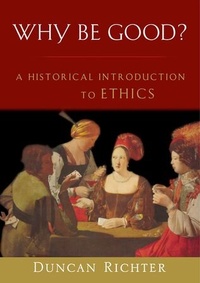
Why Be Good?
A Historical Introduction to Ethics
Published on 3. January 2008
Book
Hardback
224 pages
978-0-19-532504-1 (ISBN)
Description
In The Republic of Plato, the character Thrasymachus questions whether it is beneficial to be morally good. His belief is that the only rational policy to follow is one of strict self-interest: if you can get away with it, why not do the "wrong" thing? Why be good? Why Be Good? is an engaging introduction to ethics that explores Thrasymachus' question as it appears in Western philosophy. Historically organized, the text presents a series of answers to Thrasymachus' immoralist challenge from Plato, Aristotle, thinkers in Christianity, Aquinas, Hobbes, Hume, Kant, Mill, Nietzsche, and several twentieth century philosophers. Each chapter focuses on the main ethical ideas of primarily one philosopher, building on the theories discussed in previous chapters. Duncan Richter explains each philosopher's thoughts on ethics, virtue, and character and discusses ensuing objections to each philosopher's arguments. Students are encouraged to think about their own lives, what it means to be good, and why or, rather, if they should be good. Key terms are boldfaced the first time they appear, questions end each chapter, and suggestions for further reading are provided throughout.
The book is ideal for introductory ethics and history of ethics courses.
The book is ideal for introductory ethics and history of ethics courses.
More details
Language
English
Place of publication
New York
United States
Target group
College/higher education
Dimensions
Thickness: 15 mm
Weight
457 gr
ISBN-13
978-0-19-532504-1 (9780195325041)
Copyright in bibliographic data and cover images is held by Nielsen Book Services Limited or by the publishers or by their respective licensors: all rights reserved.
Schweitzer Classification
Other editions
Additional editions
Book
12/2007
Oxford University Press Inc
€39.60
Shipment within 15-20 days
Content
Acknowledgements ; Introduction ; One: Plato ; Two: Aristotle ; Three: Christianity ; Four: Aquinas ; Five: Hobbes ; Six: Hume ; Seven: Kant ; Eight: Mill ; Nine: Nietzsche ; Ten: Virtue after Nietzsche ; Conclusion