


Missing the Breast
Gender, Fantasy, and the Body in the German Enlightenment
Published on 29. September 2006
Book
Hardback
368 pages
978-0-295-98611-1 (ISBN)
Description
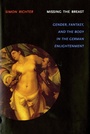
The cult of the female breast in contemporary American and European society is as pervasive as it is notorious. Our current fascination merely updates a long-standing obsession with the breast, which over the past twenty years has also become a subject of scholarly attention. Most historians and cultural theorists have focused on England and France, with virtually all research starting from the simple assumption that the breast is a signifier of the feminine and the female. With Missing the Breast, Simon Richter uses the texts of Enlightenment-era Germany to challenge that assumption, engaging instead the complexity of culturally constructed notions of the breast.
Using the tools of medicine, literary theory, psychology, psychoanalysis, and etymology, Richter probes the breast-related fantasies underlying German culture and literature in the second half of the eighteenth century. His study reveals that, whereas in England and France and in the public imagination generally, the breast has been associated with the feminine and with abundance, the inherent "logic of the breast" in German culture unexpectedly pushes the breast toward masculinity and lack. Richter's tour de force of textual and cultural analysis brings together the work of important German poets, writers, and dramatists, as well as major psychoanalysts and their critics, and writers and artists of the English-speaking world, to explore the tension between the plenitude of the breast and the implications of its absence. His engaging study draws the reader ineluctably toward a revolutionary possibility: the breast as an "unruly and uncontainable signifier," the equal and more of what Lacan called the phallus.
Missing the Breast will be an indispensable addition to the libraries of those interested in German textual studies, the history of sexuality, and theories of psychoanalysis. Its groundbreaking perspective will make a significant contribution to the fields of literary studies, gender studies, and women's studies.
Using the tools of medicine, literary theory, psychology, psychoanalysis, and etymology, Richter probes the breast-related fantasies underlying German culture and literature in the second half of the eighteenth century. His study reveals that, whereas in England and France and in the public imagination generally, the breast has been associated with the feminine and with abundance, the inherent "logic of the breast" in German culture unexpectedly pushes the breast toward masculinity and lack. Richter's tour de force of textual and cultural analysis brings together the work of important German poets, writers, and dramatists, as well as major psychoanalysts and their critics, and writers and artists of the English-speaking world, to explore the tension between the plenitude of the breast and the implications of its absence. His engaging study draws the reader ineluctably toward a revolutionary possibility: the breast as an "unruly and uncontainable signifier," the equal and more of what Lacan called the phallus.
Missing the Breast will be an indispensable addition to the libraries of those interested in German textual studies, the history of sexuality, and theories of psychoanalysis. Its groundbreaking perspective will make a significant contribution to the fields of literary studies, gender studies, and women's studies.
Reviews / Votes
"Missing the Breast is a valuable contribution not only to German Studies but also to gender and media studies. Although his analysis also stretches back to Greek myth and looks forward to Philip Roth's The Breast . . . Richter consistently ties these varied topics to the discourse of the breast in Enlightenment Germany. He ultimately convinces the reader of the literary and semantic importance of the breast in the patriarchal order."(German Studies Review) "Sinuously pleasurable prose. . . . Richter's argument is plausible, thought-provoking, and intellectually stimulating. Missing the Breast will cause scholars to rethink gender and literature not only in the eighteenth-century central European tradition, but also in the West in general."
(Monatshefte) "Richter convincingly brings insights from previous chapters to illuminate the dynamics and issues in these contemporary texts. Richter's writing is accessible and all quotations are in English..Recommended."
(Choice)
More details
Series
Language
English
Place of publication
Seattle
United States
Target group
Professional and scholarly
Illustrations
12 illus.
Dimensions
Height: 229 mm
Width: 152 mm
Weight
653 gr
ISBN-13
978-0-295-98611-1 (9780295986111)
Copyright in bibliographic data and cover images is held by Nielsen Book Services Limited or by the publishers or by their respective licensors: all rights reserved.
Schweitzer Classification
Other editions
Additional editions
E-Book
03/2012
1st Edition
University of Washington Press
€103.99
Available for download
Person
Simon Richter is associate professor and chair of the Department of Germanic Languages and Literature at the University of Pennsylvania.
Content
Acknowledgments
Introduction: Men With Breasts, Women Without
1. Breasts on a Platter and the Bosom of Jesus: The Parameters of Fantasy
2. Phenomenology, Psychoanalysis, and the Breast
3. Ut in pene: The Medical and Moral Discourses of the Breast
4. Wieland's Busted Tropes
5. Sophie von La Roche and the Communities of the Breast
6. Revealing the Phallus, Concealing the Breast: The Revolutionary Fictions of Wilhelm Heinse and Therese Huber
7. The Breast in Ruins: Heinrich von Kleist and the Language of the Breast
8. Being the Breast, Being Without: Philip Roth, Matuschka, and Deena Metzger
Notes
Bibliography
Index
Introduction: Men With Breasts, Women Without
1. Breasts on a Platter and the Bosom of Jesus: The Parameters of Fantasy
2. Phenomenology, Psychoanalysis, and the Breast
3. Ut in pene: The Medical and Moral Discourses of the Breast
4. Wieland's Busted Tropes
5. Sophie von La Roche and the Communities of the Breast
6. Revealing the Phallus, Concealing the Breast: The Revolutionary Fictions of Wilhelm Heinse and Therese Huber
7. The Breast in Ruins: Heinrich von Kleist and the Language of the Breast
8. Being the Breast, Being Without: Philip Roth, Matuschka, and Deena Metzger
Notes
Bibliography
Index