

Dada
Art and Anti-Art
Published on 20. October 2016
Book
Paperback/Softback
376 pages
978-0-500-20431-3 (ISBN)
Description
As heard on BBC Radio 4's 'A Good Read'
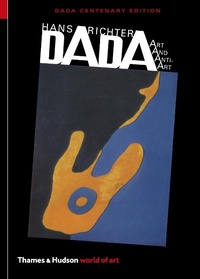
'Where and how Dada began is almost as difficult to determine as Homer's birthplace', writes Hans Richter, the artist and film-maker closely associated with this radical movement from its earliest days. Here, he records and traces Dada's history, from its inception in wartime Zurich, to its collapse in Paris in the 1920s when many of its members were to join the Surrealist movement, to its reappearance in the 1960s in movements such as Pop Art. This absorbing eyewitness narrative is enlivened by extensive use of Dada documents, illustrations and texts by fellow Dadaists. The complex personalities, relationships and contributions of, among others, Hugo Bali, Tristan Tzara, Picabia, Arp, Schwitters, Hausmann, Duchamp, Ernst and Man Ray, are vividly brought to life.
Over a hundred years on from the riotous inception of Dada at the Cabaret Voltaire in Zurich in 1916, art historian Michael White provides a new introduction and commentary to a book that has become a legend in its own right, influencing a generation of performers and artists since its first publication in 1965 - David Bowie even quoted from Dada: Art and Anti-Art in his Scary Monsters album. Michael White has unearthed Richter's private correspondence with his fellow Dada artists to tell the story of how the book came about and, using previously unseen archive sources, enables us to read between the lines and discover the truth behind this most elusive of art movements.
'Where and how Dada began is almost as difficult to determine as Homer's birthplace', writes Hans Richter, the artist and film-maker closely associated with this radical movement from its earliest days. Here, he records and traces Dada's history, from its inception in wartime Zurich, to its collapse in Paris in the 1920s when many of its members were to join the Surrealist movement, to its reappearance in the 1960s in movements such as Pop Art. This absorbing eyewitness narrative is enlivened by extensive use of Dada documents, illustrations and texts by fellow Dadaists. The complex personalities, relationships and contributions of, among others, Hugo Bali, Tristan Tzara, Picabia, Arp, Schwitters, Hausmann, Duchamp, Ernst and Man Ray, are vividly brought to life.
Over a hundred years on from the riotous inception of Dada at the Cabaret Voltaire in Zurich in 1916, art historian Michael White provides a new introduction and commentary to a book that has become a legend in its own right, influencing a generation of performers and artists since its first publication in 1965 - David Bowie even quoted from Dada: Art and Anti-Art in his Scary Monsters album. Michael White has unearthed Richter's private correspondence with his fellow Dada artists to tell the story of how the book came about and, using previously unseen archive sources, enables us to read between the lines and discover the truth behind this most elusive of art movements.
Reviews / Votes
'A first-rate history, objective and sober' - The Times 'Hans Richter is the ideal chronicler' - Guardian 'Such a historical work inevitably becomes a piece of art in its own right and this re-publication includes an extensive introduction and commentary ... that allows it to be appreciated by a whole new audience' - Art Book ReviewMore details
Series
Language
English
Place of publication
London
United Kingdom
Illustrations
Illustrated in colour and black and white throughout
Dimensions
Height: 211 mm
Width: 149 mm
Thickness: 27 mm
Weight
783 gr
ISBN-13
978-0-500-20431-3 (9780500204313)
Copyright in bibliographic data and cover images is held by Nielsen Book Services Limited or by the publishers or by their respective licensors: all rights reserved.
Schweitzer Classification
Other editions
Previous edition
Book
08/1978
Thames & Hudson Ltd
€31.08
Article exhausted; check for reprint
Person
Hans Richter (1888 -1976) was well known both as a painter and as a filmmaker. While in Zurich from 1916 to 1920, he started the Dada movement with Hugo Ball, Tristan Tzara and others. In 1940 he left Europe for the US and became an American citizen. His films include Vormittagsspuk, Dreams that Money Can Buy, Dadascope and 8 x 8, produced in collaboration with Arp, Calder, Duchamp, Ernst, Huelsenbeck, Man Ray and others. His paintings hang in galleries around the world, and he is the author of several books on cinema and art.