

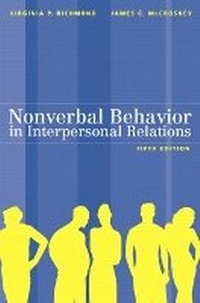
Nonverbal Behavior in Interpersonal Relations
5th Edition
Published on 27. August 2003
Book
Paperback/Softback
368 pages
978-0-205-37246-1 (ISBN)
Description
Nonverbal Behavior in Interpersonal Relationships offers a complete and precise explanation of the principles of nonverbal communication and its application in everyday life. The authors draw from a wide variety of disciplines and upon their vast experience as instructors, consultants, and corporate trainers to offer a unique blend of social scientific and humanistic approaches to the study of nonverbal behavior.
More details
Edition
5th edition
Language
English
Place of publication
United States
Publishing group
Pearson Education (US)
Target group
Professional and scholarly
Dimensions
Height: 229 mm
Width: 153 mm
Thickness: 17 mm
Weight
450 gr
ISBN-13
978-0-205-37246-1 (9780205372461)
Copyright in bibliographic data and cover images is held by Nielsen Book Services Limited or by the publishers or by their respective licensors: all rights reserved.
Schweitzer Classification
Other editions
New editions
Virginia Peck Richmond | James C. McCroskey | Mark L. Hickson
Nonverbal Behavior in Interpersonal Relations
Book
01/2008
6th Edition
Pearson
€70.83
Article exhausted; check for reprint
Previous edition

Virginia P. Richmond | Mccroskey
Nonverbal Behavior in Interpersonal Relations
Book
11/1999
4th Edition
Pearson
€52.23
Article exhausted; check for reprint
Content
1. Communication and Nonverbal Behavior.
Myths about Nonverbal Communication.
Nonverbal versus Verbal Messages
Intentionality and Nonverbal Communication.
Culture and Nonverbal Communication.
Functions of Nonverbal Messages.
Categories of Nonverbal Messages.
2. Physical Appearance.
Attractiveness.
Personal Body Concept.
Nonverbal Messages of Body Shape and Size.
Appearance and Dress.
Artifacts and Accessories.
3. Gesture and Movement.
A Theoretical Look at Gesture and Movement.
Types of Gesture and Movement.
Deception Cues.
Posture.
Movement and Communicator Style.
General Communicator Styles.
Effects of Body Movements and Gestures.
4. Facial Behavior.
Importance of Facial Expressions.
Perspectives on Acquisition and Development.
Facial Management and Expression of Emotion.
Primary Affect Displays and Communication.
Variations of Facial Expressions.
5. Eye Behavior.
Properties and Functions of Eye Behavior.
Types of Eye Behaviors.
Eye Behavior and Individual Differences.
6. Vocal Behavior.
Categories of Vocal Behavior.
Vocal Behavior and Turn Interaction Management.
Effects of Vocal Behavior.
7. Space and Territoriality.
Phenomenon of Territoriality.
Personal Space.
Crowding and Density.
8. Touch and Communication.
Life Span Development and Touch.
Categories of Touch.
Touch Norms and Communication.
What Does Touch Communicate?
Effects of Touch Deprivation.
9. Environment and Physical Surroundings.
Perceptual Characteristics of Environment.
Architecture and Environment.
Spatial Arrangement.
Other Environmental Factors.
Importance of Scents.
10. Time.
Time Orientations.
Effects of the Use of Time.
11. Immediacy and Communication.
Nonverbal Immediacy.
Outcomes of Immediacy.
Drawbacks of Immediacy.
12. Female-Male Nonverbal Communication.
Definition Issues: Sex and Gender.
Development of Nonverbal Behavior in Females and Males.
Distinctive and Similar Characteristics:
The Dilemma.
Liking and Courtship of the American Female and Male.
Advantages of Immediacy.
Disadvantages of Immediacy.
The Androgynous Person.
13. Supervisor and Employee Relationships.
Distinctive Characteristics.
Role of Nonverbal Messages.
Conclusions about Supervisor-Employee Relationships.
Immediacy in the Workplace.
14. Teacher-Student Nonverbal Relationships.
Teacher Roles.
Role of Nonverbal Communication.
Outcomes of Teacher Immediacy.
15. Intercultural Relationships.
Defining Intercultural Communication.
Nonverbal Behavior.
Goals to Seek.
Myths about Nonverbal Communication.
Nonverbal versus Verbal Messages
Intentionality and Nonverbal Communication.
Culture and Nonverbal Communication.
Functions of Nonverbal Messages.
Categories of Nonverbal Messages.
2. Physical Appearance.
Attractiveness.
Personal Body Concept.
Nonverbal Messages of Body Shape and Size.
Appearance and Dress.
Artifacts and Accessories.
3. Gesture and Movement.
A Theoretical Look at Gesture and Movement.
Types of Gesture and Movement.
Deception Cues.
Posture.
Movement and Communicator Style.
General Communicator Styles.
Effects of Body Movements and Gestures.
4. Facial Behavior.
Importance of Facial Expressions.
Perspectives on Acquisition and Development.
Facial Management and Expression of Emotion.
Primary Affect Displays and Communication.
Variations of Facial Expressions.
5. Eye Behavior.
Properties and Functions of Eye Behavior.
Types of Eye Behaviors.
Eye Behavior and Individual Differences.
6. Vocal Behavior.
Categories of Vocal Behavior.
Vocal Behavior and Turn Interaction Management.
Effects of Vocal Behavior.
7. Space and Territoriality.
Phenomenon of Territoriality.
Personal Space.
Crowding and Density.
8. Touch and Communication.
Life Span Development and Touch.
Categories of Touch.
Touch Norms and Communication.
What Does Touch Communicate?
Effects of Touch Deprivation.
9. Environment and Physical Surroundings.
Perceptual Characteristics of Environment.
Architecture and Environment.
Spatial Arrangement.
Other Environmental Factors.
Importance of Scents.
10. Time.
Time Orientations.
Effects of the Use of Time.
11. Immediacy and Communication.
Nonverbal Immediacy.
Outcomes of Immediacy.
Drawbacks of Immediacy.
12. Female-Male Nonverbal Communication.
Definition Issues: Sex and Gender.
Development of Nonverbal Behavior in Females and Males.
Distinctive and Similar Characteristics:
The Dilemma.
Liking and Courtship of the American Female and Male.
Advantages of Immediacy.
Disadvantages of Immediacy.
The Androgynous Person.
13. Supervisor and Employee Relationships.
Distinctive Characteristics.
Role of Nonverbal Messages.
Conclusions about Supervisor-Employee Relationships.
Immediacy in the Workplace.
14. Teacher-Student Nonverbal Relationships.
Teacher Roles.
Role of Nonverbal Communication.
Outcomes of Teacher Immediacy.
15. Intercultural Relationships.
Defining Intercultural Communication.
Nonverbal Behavior.
Goals to Seek.