

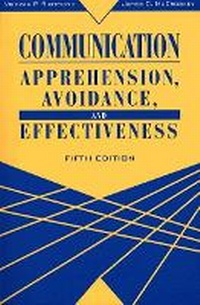
Communication
Apprehension, Avoidance, and Effectiveness
5th Edition
Published on 10. March 2000
Book
Paperback/Softback
152 pages
978-0-205-27982-1 (ISBN)
Description
A perfect supplement for more broadly-based texts in Public Speaking or Introduction to Communication, this volume provides a clear overview of the process of human communication and analyses of what sorts of behaviors cause speakers to experience shyness, apprehension, or a desire to avoid speaking occasions. Further, it describes the effects of such behaviors on the communication process and a range of strategies to reduce such anxieties. Starting from the premise that speech anxiety is one of the most common obstructions to clear and effective communication, the text provides students with a greater understanding for the reasons that people experience such fears and concrete suggestions for how to overcome them.
More details
Edition
5th edition
Language
English
Place of publication
United States
Publishing group
Pearson Education (US)
Target group
Professional and scholarly
Dimensions
Height: 229 mm
Width: 152 mm
Weight
1000 gr
ISBN-13
978-0-205-27982-1 (9780205279821)
Copyright in bibliographic data and cover images is held by Nielsen Book Services Limited or by the publishers or by their respective licensors: all rights reserved.
Schweitzer Classification
Other editions
New editions
Virginia Peck Richmond | Jason S. Wrench | James C. McCroskey
Communication Apprehension, Avoidance, and Effectiveness
Book
10/2012
6th Edition
Pearson
€53.41
Article is exhausted; no reprint
Content
All chapters conclude with "Discussion Questions" and "Activities."
Preface.
1.An Overview of Human Communication.
Definition of Human Communication.
Components of the Human Communication Process.
Noise.
Functions of the Communication Process.
2.Misconceptions About Communication.
Misconception 1: Meanings are in the Words Themselves.
Misconception 2: Interpersonal Communication is the Same as Intimate Communication.
Misconception 3: Communication is Solely a Verbal Process.
Misconception 4: Telling is Communicating.
Misconception 5: Communication Will Solve All Our Problems.
Misconception 6: Communication is Always a Good Thing.
Misconception 7: The More Communication, the Better.
Misconception 8: Communication Can Break Down.
Misconception 9: Communication is a Natural Human Ability.
Misconception 10: Communication Competence Equals Communication Effectiveness.
3.Shyness: The Behavior of Not Communicating.
Individual Differences in Communication.
Effects of Individual Differences.
The Nature of Shyness.
The Causes of Shyness.
Types of Shy People.
Measures of Shyness.
4.Scared Speechless: The Fear of Communication.
The Nature of Communication Apprehension.
Types of Communication Apprehension.
Causes of Communication Apprehension.
Effects of Communication Apprehension.
Personality Correlates of Apprehension.
5.Quiet vs. Talkative People: How They Behave and How Others Perceive Them.
Behaviors of Quiet and Talkative People.
Quiet vs. Talkative People: A Generalized Profile.
Interpersonal Perceptions.
Everyday Life.
Compulsive Communicators.
6.Communication Avoidance and Communication Effectiveness.
Contributors to Communication Effectiveness.
Self-Perceived Communication Competence.
Social Style.
Immediacy.
7.Reducing Apprehension and Anxiety About Communication.
Theories of Causes.
Treatment Approaches.
Samples of Nonthreatening to Threatening Communication Situations.
Summary.
Selected References.
Appendices.
A: Introversion Scale.
B: Shyness Scale (SS).
C: Willingness to Communicate Scale (WTC).
D: Writing Apprehension Test (WAT).
E: Test of Singing Apprehension (TOSA).
F: Personal Report of Communication Apprehension (PRCA-24).
G: Personal Report of Public Speaking Anxiety (PRPSA).
H: Communication Apprehension in Generalized Contexts.
I: Situational Communication Apprehension Measure (SCAM).
J: Self-Perceived Communication Competence Scale (SPCC).
K: Assertiveness-Responsiveness Measure.
L. Talkaholic Scale (TAS).
Author Index.
Subject Index.
Preface.
1.An Overview of Human Communication.
Definition of Human Communication.
Components of the Human Communication Process.
Noise.
Functions of the Communication Process.
2.Misconceptions About Communication.
Misconception 1: Meanings are in the Words Themselves.
Misconception 2: Interpersonal Communication is the Same as Intimate Communication.
Misconception 3: Communication is Solely a Verbal Process.
Misconception 4: Telling is Communicating.
Misconception 5: Communication Will Solve All Our Problems.
Misconception 6: Communication is Always a Good Thing.
Misconception 7: The More Communication, the Better.
Misconception 8: Communication Can Break Down.
Misconception 9: Communication is a Natural Human Ability.
Misconception 10: Communication Competence Equals Communication Effectiveness.
3.Shyness: The Behavior of Not Communicating.
Individual Differences in Communication.
Effects of Individual Differences.
The Nature of Shyness.
The Causes of Shyness.
Types of Shy People.
Measures of Shyness.
4.Scared Speechless: The Fear of Communication.
The Nature of Communication Apprehension.
Types of Communication Apprehension.
Causes of Communication Apprehension.
Effects of Communication Apprehension.
Personality Correlates of Apprehension.
5.Quiet vs. Talkative People: How They Behave and How Others Perceive Them.
Behaviors of Quiet and Talkative People.
Quiet vs. Talkative People: A Generalized Profile.
Interpersonal Perceptions.
Everyday Life.
Compulsive Communicators.
6.Communication Avoidance and Communication Effectiveness.
Contributors to Communication Effectiveness.
Self-Perceived Communication Competence.
Social Style.
Immediacy.
7.Reducing Apprehension and Anxiety About Communication.
Theories of Causes.
Treatment Approaches.
Samples of Nonthreatening to Threatening Communication Situations.
Summary.
Selected References.
Appendices.
A: Introversion Scale.
B: Shyness Scale (SS).
C: Willingness to Communicate Scale (WTC).
D: Writing Apprehension Test (WAT).
E: Test of Singing Apprehension (TOSA).
F: Personal Report of Communication Apprehension (PRCA-24).
G: Personal Report of Public Speaking Anxiety (PRPSA).
H: Communication Apprehension in Generalized Contexts.
I: Situational Communication Apprehension Measure (SCAM).
J: Self-Perceived Communication Competence Scale (SPCC).
K: Assertiveness-Responsiveness Measure.
L. Talkaholic Scale (TAS).
Author Index.
Subject Index.