

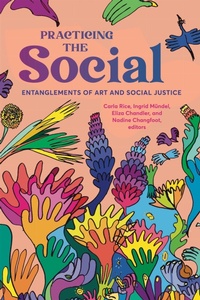
Practicing the Social
Entanglements of Art and Social Justice
Will be published approx. on 1. December 2026
Book
Hardback
384 pages
978-1-77112-746-2 (ISBN)
Description
Practicing the Social: Entanglements of Art and Social Justice brings together artists, activists, and scholars who use creative practice to reimagine how we live and build more just worlds.
This collection centers disability, Deaf, Mad, neurodivergent, Indigenous, Black, Brown, queer, fat, and aging arts and cultures, highlighting creative practices that reconfigure the social from the ground up. Across five sections-Designing, Enacting, Troubling, Analyzing, and Transforming the Social-contributors examine how art cultivates access justice, deepens relationality, unsettles dominant narratives, and seeds alternative futures.
Spanning dance, feasting, storytelling, video art, curatorial and archival activism, youth and community arts, creative pedagogies and digital worldmaking, the chapters demonstrate how creative acts intervene in colonial, white supremacist, ableist, and neoliberal systems, while opening pathways for connection, coalition, and collective flourishing. In dialogue with feminist, decolonial, and disability-led traditions, the project is accompanied by an accessible digital archive that extends these conversations through curated multimedia offerings. Together, contributors ask: What does activist art do? Who is it for? How do access, power, and place expand what becomes possible in artful justice desiring work?
The book demonstrates how creative practices can generate "ripples" of change, small, relational gestures that accumulate into counter-hegemonic possibilities. Working at the intersection of art and justice, Practicing the Social offers artists, educators, organizers, librarians, and researchers vital methods and imaginaries for reconfiguring the social in accessible and life-affirming ways. It invites readers into everyday acts of worldmaking and into artistic interventions as catalysts for ushering in more just, difference-embracing futures.
This collection centers disability, Deaf, Mad, neurodivergent, Indigenous, Black, Brown, queer, fat, and aging arts and cultures, highlighting creative practices that reconfigure the social from the ground up. Across five sections-Designing, Enacting, Troubling, Analyzing, and Transforming the Social-contributors examine how art cultivates access justice, deepens relationality, unsettles dominant narratives, and seeds alternative futures.
Spanning dance, feasting, storytelling, video art, curatorial and archival activism, youth and community arts, creative pedagogies and digital worldmaking, the chapters demonstrate how creative acts intervene in colonial, white supremacist, ableist, and neoliberal systems, while opening pathways for connection, coalition, and collective flourishing. In dialogue with feminist, decolonial, and disability-led traditions, the project is accompanied by an accessible digital archive that extends these conversations through curated multimedia offerings. Together, contributors ask: What does activist art do? Who is it for? How do access, power, and place expand what becomes possible in artful justice desiring work?
The book demonstrates how creative practices can generate "ripples" of change, small, relational gestures that accumulate into counter-hegemonic possibilities. Working at the intersection of art and justice, Practicing the Social offers artists, educators, organizers, librarians, and researchers vital methods and imaginaries for reconfiguring the social in accessible and life-affirming ways. It invites readers into everyday acts of worldmaking and into artistic interventions as catalysts for ushering in more just, difference-embracing futures.
More details
Language
English
Place of publication
Waterloo, Ontario
Canada
Target group
Professional and scholarly
Product notice
sewn/stitched
Cloth over boards
With dust jacket
Dimensions
Height: 229 mm
Width: 152 mm
Weight
1 gr
ISBN-13
978-1-77112-746-2 (9781771127462)
Copyright in bibliographic data and cover images is held by Nielsen Book Services Limited or by the publishers or by their respective licensors: all rights reserved.
Schweitzer Classification
Persons
Carla Rice is Tier I Canada Research Chair in Feminist Studies and Social Practice at the University of Guelph, specializing in embodiment theory, intersectionality studies, post-philosophical theories, and arts-based research methods.
Ingrid Muendel is the Managing Director of the Re*Vision Centre for Art and Social Justice at the University of Guelph. Eliza Chandler, a Toronto-based scholar and curator of disability arts, is an associate professor in the School of Disability Studies and Executive Director of the Office of Social Innovation at Toronto Metropolitan University.
Nadine Changfoot is a full professor in Political Studies at Trent University, Peterborough/Nogojiwanong (Treaty 20).
Ingrid Muendel is the Managing Director of the Re*Vision Centre for Art and Social Justice at the University of Guelph. Eliza Chandler, a Toronto-based scholar and curator of disability arts, is an associate professor in the School of Disability Studies and Executive Director of the Office of Social Innovation at Toronto Metropolitan University.
Nadine Changfoot is a full professor in Political Studies at Trent University, Peterborough/Nogojiwanong (Treaty 20).
Content
Introduction: Practicing the Social: Art's Entanglements with Justice
Section I: Designing the Social
Chapter 1: Enacting Disability Justice in Arts-Based Research - Lauren Munro and Ciann Wilson
Chapter 2: Theatre for Agency, Activism, & Acting Up in Second Language Education - Melisa Cahnmann-Taylor
Chapter 3: Intersectional Feminism as Pedagogy: Community Agreements for Navigating an Ethics of Care in Research and Teaching - Jessica Watkin and Sarah Robbins
Chapter 4: "Self in Response": Reflections on a Collaborative Youth Arts Workshop Facilitation as Research Site - Miranda Campbell, Calla Evans, and Johannes Valdes
Section II: Enacting the Social
Chapter 5: Dancing the Social: Collectively Creating Conditions of Knowing through Kinesthetic Praxis - Evadne Kelly
Chapter 6: This Conversation Attempts to Reveal this Magic from the Perspective of its Seven Key Actors - Taqralik Partridge, Jocelyn Piirainen, Anna Hudson, Laakkuluk Williamson Bathory, Koomuatuk Sapa Curley, and Georgiana Uhlyarik
Chapter 7: A Non-Monogamous Exchange - Kim Tallbear and Simon(E) Van Saarloos
Chapter 8: Facing The Music and Practicing The Social: Songwriting, Representation, and The Pedagogy Of Being Schooled - Kael Reid
Section III: Troubling the Social
Chapter 9: Bodies in Transition: Reflections on Aging, Disability, and Bodily Transitions in the Social - Eliza Chandler, Carla Rice, Lisa East, Katie Aubrecht, and Natasha Greenblatt
Chapter 10: Body Work on Body Work: Body Mapping and (Ante)Narratives of Caring Labour - Kimberly J. Lopez
Chapter 11: Sizing Up Gender: The Alchemy of Gender, Weight and Representation - May Friedman, Ben Barry and Calla Evans
Chapter 12: From Counternarratives of Chronic Pain to Policy Possibilities: Exploring Complex Embodiment, Disability, and Discomfort in The Video Works of Panteha Abareshi - Luka Stojanovic
Section IV: Analyzing the Social
Chapter 13: Critical Arts-Based Research and an Ethic of Storyboundedness - Trish Van Katwyk
Chapter 14: Beyond 'Inclusionism': Unmaking and Remaking Autism in Education through Creative Research - Patty Douglas, Carla Rice, Meg Gibson, and Jan Hastie
Chapter 15: Chapter 15: Inter and Intersectionality Embodied and Embedded: What Art Offers - Carla Rice, Nadine Changfoot, and Eliza Chandler
Section V: Transforming the Social
Chapter 16 : Disruption Embraced: Cripped Oral History and Art Aesthetics - Fady Shanouda, Jeff Thomas, nancy viva davis halifax, Sean Lee, and Karen Yoshida
Chapter 17: Art, Academics, and the Open Road: Writing Stories for Gender Diversity - Karleen Pendleton Jimenez
Chapter 18: "Our Bodies are More Than Our Bodies": Stories of Weight and Race - Emkay Adjei-Manu, Sonia Meerai, Casandra Fulwood, C. Jones, Ashana Persaud, Verlia Stephens, and May Friedman
Chapter 19: Panarchy Loops, Activism and Change Making Art: Life in The Back Loop - D. Syrus Marcus Ware
Chapter 20: Alternative Models of Community and Social Cooperation: Festivals, Pedagogy, Social Practice - Ajay Heble
Coda: The Rippling Effects of Art's Entanglements with Justice: Seeding Counter-hegemonies
References
Section I: Designing the Social
Chapter 1: Enacting Disability Justice in Arts-Based Research - Lauren Munro and Ciann Wilson
Chapter 2: Theatre for Agency, Activism, & Acting Up in Second Language Education - Melisa Cahnmann-Taylor
Chapter 3: Intersectional Feminism as Pedagogy: Community Agreements for Navigating an Ethics of Care in Research and Teaching - Jessica Watkin and Sarah Robbins
Chapter 4: "Self in Response": Reflections on a Collaborative Youth Arts Workshop Facilitation as Research Site - Miranda Campbell, Calla Evans, and Johannes Valdes
Section II: Enacting the Social
Chapter 5: Dancing the Social: Collectively Creating Conditions of Knowing through Kinesthetic Praxis - Evadne Kelly
Chapter 6: This Conversation Attempts to Reveal this Magic from the Perspective of its Seven Key Actors - Taqralik Partridge, Jocelyn Piirainen, Anna Hudson, Laakkuluk Williamson Bathory, Koomuatuk Sapa Curley, and Georgiana Uhlyarik
Chapter 7: A Non-Monogamous Exchange - Kim Tallbear and Simon(E) Van Saarloos
Chapter 8: Facing The Music and Practicing The Social: Songwriting, Representation, and The Pedagogy Of Being Schooled - Kael Reid
Section III: Troubling the Social
Chapter 9: Bodies in Transition: Reflections on Aging, Disability, and Bodily Transitions in the Social - Eliza Chandler, Carla Rice, Lisa East, Katie Aubrecht, and Natasha Greenblatt
Chapter 10: Body Work on Body Work: Body Mapping and (Ante)Narratives of Caring Labour - Kimberly J. Lopez
Chapter 11: Sizing Up Gender: The Alchemy of Gender, Weight and Representation - May Friedman, Ben Barry and Calla Evans
Chapter 12: From Counternarratives of Chronic Pain to Policy Possibilities: Exploring Complex Embodiment, Disability, and Discomfort in The Video Works of Panteha Abareshi - Luka Stojanovic
Section IV: Analyzing the Social
Chapter 13: Critical Arts-Based Research and an Ethic of Storyboundedness - Trish Van Katwyk
Chapter 14: Beyond 'Inclusionism': Unmaking and Remaking Autism in Education through Creative Research - Patty Douglas, Carla Rice, Meg Gibson, and Jan Hastie
Chapter 15: Chapter 15: Inter and Intersectionality Embodied and Embedded: What Art Offers - Carla Rice, Nadine Changfoot, and Eliza Chandler
Section V: Transforming the Social
Chapter 16 : Disruption Embraced: Cripped Oral History and Art Aesthetics - Fady Shanouda, Jeff Thomas, nancy viva davis halifax, Sean Lee, and Karen Yoshida
Chapter 17: Art, Academics, and the Open Road: Writing Stories for Gender Diversity - Karleen Pendleton Jimenez
Chapter 18: "Our Bodies are More Than Our Bodies": Stories of Weight and Race - Emkay Adjei-Manu, Sonia Meerai, Casandra Fulwood, C. Jones, Ashana Persaud, Verlia Stephens, and May Friedman
Chapter 19: Panarchy Loops, Activism and Change Making Art: Life in The Back Loop - D. Syrus Marcus Ware
Chapter 20: Alternative Models of Community and Social Cooperation: Festivals, Pedagogy, Social Practice - Ajay Heble
Coda: The Rippling Effects of Art's Entanglements with Justice: Seeding Counter-hegemonies
References