

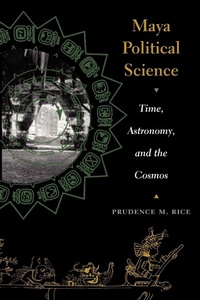
Maya Political Science
Time, Astronomy, and the Cosmos
Published on 1. November 2004
Book
Paperback/Softback
376 pages
978-0-292-70569-2 (ISBN)
Description
How did the ancient Maya rule their world? Despite more than a century of archaeological investigation and glyphic decipherment, the nature of Maya political organization and political geography has remained an open question. Many debates have raged over models of centralization versus decentralization, superordinate and subordinate status-with far-flung analogies to emerging states in Europe, Asia, and Africa. But Prudence Rice asserts that neither the model of two giant "superpowers" nor that which postulates scores of small, weakly independent polities fits the accumulating body of material and cultural evidence.
In this groundbreaking book, Rice builds a new model of Classic lowland Maya (AD 179-948) political organization and political geography. Using the method of direct historical analogy, she integrates ethnohistoric and ethnographic knowledge of the Colonial-period and modern Maya with archaeological, epigraphic, and iconographic data from the ancient Maya. On this basis of cultural continuity, she constructs a convincing case that the fundamental ordering principles of Classic Maya geopolitical organization were the calendar (specifically a 256-year cycle of time known as the may) and the concept of quadripartition, or the division of the cosmos into four cardinal directions. Rice also examines this new model of geopolitical organization in the Preclassic and Postclassic periods and demonstrates that it offers fresh insights into the nature of rulership, ballgame ritual, and warfare among the Classic lowland Maya.
In this groundbreaking book, Rice builds a new model of Classic lowland Maya (AD 179-948) political organization and political geography. Using the method of direct historical analogy, she integrates ethnohistoric and ethnographic knowledge of the Colonial-period and modern Maya with archaeological, epigraphic, and iconographic data from the ancient Maya. On this basis of cultural continuity, she constructs a convincing case that the fundamental ordering principles of Classic Maya geopolitical organization were the calendar (specifically a 256-year cycle of time known as the may) and the concept of quadripartition, or the division of the cosmos into four cardinal directions. Rice also examines this new model of geopolitical organization in the Preclassic and Postclassic periods and demonstrates that it offers fresh insights into the nature of rulership, ballgame ritual, and warfare among the Classic lowland Maya.
Reviews / Votes
"Just when you thought you had heard every possible model of Maya political organization, along comes Rice's book. Unsatisfied by foreign models (Mediterranean city-states, African segmentary states, Aegean peer-polities, Thai galactic polities, and Bali theater states), Rice draws on ethnohistoric, epigraphic, and archaeological data to develop a native Maya model in which the rotation of political seats of power conformed to calendar cycles of 256 years. This ambitious book is sure to provoke comments from the notoriously contentious field of Maya scholars." Joyce Marcus, Elman R. Service Professor of Cultural Evolution, University of MichiganMore details
Language
English
Place of publication
Austin, TX
United States
Target group
Professional and scholarly
Product notice
Paperback (trade)
Illustrations
82 figures, 16 tables
Dimensions
Height: 229 mm
Width: 152 mm
Thickness: 22 mm
Weight
613 gr
ISBN-13
978-0-292-70569-2 (9780292705692)
Copyright in bibliographic data and cover images is held by Nielsen Book Services Limited or by the publishers or by their respective licensors: all rights reserved.
Schweitzer Classification
Other editions
Previous edition

Book
11/2004
University of Texas Press
€64.57
Article exhausted; check for reprint
Person
Prudence M. Rice is Associate Vice Chancellor for Research and Director of the Office of Research Development and Administration at Southern Illinois University Carbondale.
Content
Preface
Note on Orthography and Dates
Acknowledgments
1. Introduction: Approaches to Maya Political Organization
Explanation, Analogy, and the Direct-Historical Approach
Sources for a Direct-Historical Approach: A Critical Review
Classic Period Hieroglyphic Inscriptions
Native Texts of the Postclassic and Colonial Periods
Spanish Colonial Documents
Dictionaries
Modern Ethnography
Maya Cosmology and Worldview
2. Previous Reconstructions of Classic Maya Political Organization
Early Thoughts
The Political Geography of the Yucatan Maya
Twentieth-Century Ethnography
Site Size and Size-Hierarchy Models
Inscription-based Models
The Importance of Emblem Glyphs
Emblem Glyph-based (and Other) Decentralized Models
Emblem Glyph-based Centralized Models
Time and Its Cycles
3. Maya Politico-Religious Calendrics
Maya Cosmology and Calendrical Science
Maya Calendars
Calendrical Origins
Calendrical Transformations
The Postclassic Maya May
The May and Its Seats
The Books of the Chilam B'alams and Rituals of the May
Overview
4. Tikal as Early Seat of the May
Preclassic Ritual Architecture and K'atun Seats
Early Classic Tikal and Its Rulers
The Institution of Kingship
Tikal's Dynastic Founding
Tikal's Name and Emblem Glyph
The Dynasty Continues
The Central Mexican Presence
Tikal in the Middle Classic Period
The Meaning of the Middle
Overview
5. Tikal's Late and Terminal Classic Seating of the May
Tikal as Late Classic May Ku
Twin-Pyramid Groups
Tikal's Late Classic Monuments
Late Classic Period-ending Monuments in Tikal's Realm
Interpretations: Tikal's Late Classic May Seating
Tikal and Its May Realm in the Terminal Classic Period
Monuments and Themes
Other Sites in Tikal's Terminal Classic May Realm
Overview
6. Other Classic Period May-based Realms
CopAn, Honduras, and QuiriguA, Guatemala
Calakmul, Campeche, Mexico
Other Sites and Regions
Caracol, Belize
Palenque and ToninA, Chiapas, Mexico
Dos Pilas, PetEn, Guatemala
Overview
7. New Terminal Classic May Realms
The Southern Lowlands
Seibal as May Ku: Structure A-3 Monuments
Lake PetEn ItzA
Ucanal
The Northern Lowlands
The Puuc Region
Chich'en Itza, YucatAn
DzibilchaltUn and CobA
Overview
8. Implications of the May Model
Identifying the May
Calendrical Rituals Involving Fire
Burner Rituals
New Year's Ceremonies
Fire Walking
Ballcourts and the Ballgame
Maya "Warfare"
Dual Rulership
Overview
9. Conclusion
Origin and Operation of the May System
The Classic Maya: A Theocratic State
Bibliography
Index
Note on Orthography and Dates
Acknowledgments
1. Introduction: Approaches to Maya Political Organization
Explanation, Analogy, and the Direct-Historical Approach
Sources for a Direct-Historical Approach: A Critical Review
Classic Period Hieroglyphic Inscriptions
Native Texts of the Postclassic and Colonial Periods
Spanish Colonial Documents
Dictionaries
Modern Ethnography
Maya Cosmology and Worldview
2. Previous Reconstructions of Classic Maya Political Organization
Early Thoughts
The Political Geography of the Yucatan Maya
Twentieth-Century Ethnography
Site Size and Size-Hierarchy Models
Inscription-based Models
The Importance of Emblem Glyphs
Emblem Glyph-based (and Other) Decentralized Models
Emblem Glyph-based Centralized Models
Time and Its Cycles
3. Maya Politico-Religious Calendrics
Maya Cosmology and Calendrical Science
Maya Calendars
Calendrical Origins
Calendrical Transformations
The Postclassic Maya May
The May and Its Seats
The Books of the Chilam B'alams and Rituals of the May
Overview
4. Tikal as Early Seat of the May
Preclassic Ritual Architecture and K'atun Seats
Early Classic Tikal and Its Rulers
The Institution of Kingship
Tikal's Dynastic Founding
Tikal's Name and Emblem Glyph
The Dynasty Continues
The Central Mexican Presence
Tikal in the Middle Classic Period
The Meaning of the Middle
Overview
5. Tikal's Late and Terminal Classic Seating of the May
Tikal as Late Classic May Ku
Twin-Pyramid Groups
Tikal's Late Classic Monuments
Late Classic Period-ending Monuments in Tikal's Realm
Interpretations: Tikal's Late Classic May Seating
Tikal and Its May Realm in the Terminal Classic Period
Monuments and Themes
Other Sites in Tikal's Terminal Classic May Realm
Overview
6. Other Classic Period May-based Realms
CopAn, Honduras, and QuiriguA, Guatemala
Calakmul, Campeche, Mexico
Other Sites and Regions
Caracol, Belize
Palenque and ToninA, Chiapas, Mexico
Dos Pilas, PetEn, Guatemala
Overview
7. New Terminal Classic May Realms
The Southern Lowlands
Seibal as May Ku: Structure A-3 Monuments
Lake PetEn ItzA
Ucanal
The Northern Lowlands
The Puuc Region
Chich'en Itza, YucatAn
DzibilchaltUn and CobA
Overview
8. Implications of the May Model
Identifying the May
Calendrical Rituals Involving Fire
Burner Rituals
New Year's Ceremonies
Fire Walking
Ballcourts and the Ballgame
Maya "Warfare"
Dual Rulership
Overview
9. Conclusion
Origin and Operation of the May System
The Classic Maya: A Theocratic State
Bibliography
Index