

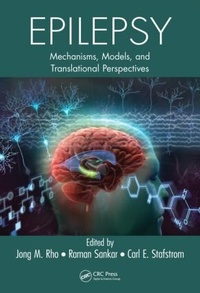
Epilepsy
Mechanisms, Models, and Translational Perspectives
1st Edition
Published on 18. June 2010
Book
Hardback
684 pages
978-1-4200-8559-4 (ISBN)
Description
Epilepsy has afflicted humankind throughout recorded history; yet, it is only in the last half-century, that significant progress has been made in our basic understanding of the epileptic brain. Pivotal advances in drug development and surgical techniques, as well as the emergence of innovative approaches such as electrical stimulation of the nervous system, have led to a substantial reduction in the morbidity and mortality of patients with epilepsy. At the same time, remarkable developments in neuroscience have enhanced our understanding of brain structure and function.
Epilepsy: Mechanisms, Models, and Translational Perspectives incorporates new translational advances that bring epilepsy therapies from the laboratory bench to the bedside and back again. It brings together the work of more than 70 of the field's most respected and cutting-edge researchers and clinicians. In 24 chapters, this extraordinarily comprehensive and current work:
Offers an overview of the basic anatomic and functional substrates of seizure genesis and considers novel pathogenic concepts that have both emerged and been validated experimentally
Examines antiepileptic drug therapy, including the latest on molecular targets
Looks at the state of surgical treatments for epilepsy and discusses advances in the fields of structural and functional neuroimaging
Reviews the variety of nontraditional therapeutic options, such as the ketogenic diet, the vagus nerve stimulator, immunomodulators, neurosteroids, herbs, and botanicals
Investigates neuroendocrine, hormonal, and biobehavioral factors that influence seizure susceptibility-information that can be incorporated into the design of treatment algorithms on an individualized basis
Provides a glimpse of what future epilepsy therapies might look like, from novel mechanisms of drug delivery to gene and stem-cell therapies for epilepsy to seizure detection meth
Epilepsy: Mechanisms, Models, and Translational Perspectives incorporates new translational advances that bring epilepsy therapies from the laboratory bench to the bedside and back again. It brings together the work of more than 70 of the field's most respected and cutting-edge researchers and clinicians. In 24 chapters, this extraordinarily comprehensive and current work:
Offers an overview of the basic anatomic and functional substrates of seizure genesis and considers novel pathogenic concepts that have both emerged and been validated experimentally
Examines antiepileptic drug therapy, including the latest on molecular targets
Looks at the state of surgical treatments for epilepsy and discusses advances in the fields of structural and functional neuroimaging
Reviews the variety of nontraditional therapeutic options, such as the ketogenic diet, the vagus nerve stimulator, immunomodulators, neurosteroids, herbs, and botanicals
Investigates neuroendocrine, hormonal, and biobehavioral factors that influence seizure susceptibility-information that can be incorporated into the design of treatment algorithms on an individualized basis
Provides a glimpse of what future epilepsy therapies might look like, from novel mechanisms of drug delivery to gene and stem-cell therapies for epilepsy to seizure detection meth
Reviews / Votes
"In summary, I strongly congratulate the editors and authors for producing a book that accomplishes its task of refocusing epilepsy research on its primary directive, translation of scientific discoveries into interventions and methods that directly relate and promise to improve the quality of medical care our patients with seizures receive. Although not exhaustive enough, it will be an invaluable primer for young investigators but also for more senior researchers who aim to create new bridges with aspects of epilepsy research that are more distant from their immediate focus." -Aristea S. Galanopoulou, Albert Einstein College of Medicine, Epilepsy & Behavior, 2011 Praise for the First Edition "... a much-needed textbook. It attempts to integrate data regarding the most relevant developments in research with those regarding clinical issues that have a direct effect on therapeutics. The book achieves this goal by reviewing current therapies and discussing new areas of research and treatment. Much of what is discussed provides a good review for not only the epilepsy community but also for general neurologists. ...Perhaps the most exciting discussion in the book concerns the future of epilepsy research and treatment. ...Although such goals may have seemed far-reaching a decade ago, the findings and ideas presented here make the concept of antiepileptogenesis appear to be an attainable goal." -Teresa Tran, M.D., MINCEP Epilepsy Care, Minneapolis, Minnesota, USA, in New England Journal of Medicine, February 2005More details
Language
English
Place of publication
Bosa Roca
United States
Publishing group
Taylor & Francis Inc
Target group
Professional and scholarly
Academic and Professional Practice & Development
Illustrations
105 b/w images and 43 tables
Dimensions
Height: 254 mm
Width: 178 mm
Weight
1542 gr
ISBN-13
978-1-4200-8559-4 (9781420085594)
Copyright in bibliographic data and cover images is held by Nielsen Book Services Limited or by the publishers or by their respective licensors: all rights reserved.
Schweitzer Classification
Other editions
Additional editions
Jong Rho | Raman Sankar | Carl E. Stafstrom
Epilepsy
Mechanisms, Models, and Translational Perspectives
Book
10/2019
1st Edition
CRC Press
€145.10
Shipment within 15-20 days
Jong Rho | Raman Sankar | Carl E. Stafstrom
Epilepsy
Mechanisms, Models, and Translational Perspectives
E-Book
06/2010
1st Edition
CRC Press
€89.99
Available for download
Jong Rho | Raman Sankar | Carl E. Stafstrom
Epilepsy
Mechanisms, Models, and Translational Perspectives
E-Book
06/2010
CRC Press
€89.99
Available for download
Persons
Jong M. Rho, MD, is a senior staff scientist at the Barrow Neurological Institute and St. Joseph's Hospital & Medical Center in Phoenix, Arizona. After obtaining an undergraduate degree in molecular biophysics and biochemistry at Yale University, Dr. Rho received his medical degree from the University of Cincinnati. Following a pediatric residency at the University of Southern California Children's Hospital of Los Angeles and a neurology residency at the University of California, Los Angeles (UCLA), School of Medicine, he completed fellowships in pediatric neurology at the UCLA School of Medicine and in neuropharmacology at the National Institutes of Health (NIH). Dr. Rho's main research interests are the mechanisms underlying the anticonvulsant and neuroprotective effects of the ketogenic diet, neuropharmacology of anticonvulsant compounds, and the study of surgically respected human epileptic tissue. His research activities have been sponsored by several NIH research grants, as well as a variety of intramural and extramural public and private sector sources. Dr. Rho has served on the editorial boards of Epilepsia and Epilepsy Currents and has been a regular reviewer for research grants submitted to the NIH. In addition to an extensive list of publications in basic science and pediatric neurology peer-reviewed journals, Dr. Rho has written numerous book chapters and edited several books and is a popular national and international guest lecturer.
Raman Sankar, MD, PhD, is a professor of neurology and pediatrics and chief of pediatric neurology at the David Geffen School of Medicine at UCLA. He holds the Rubin Brown Distinguished Chair in Pediatric Neurology. Dr. Sankar obtained his doctorate from the University of Washington in medicinal chemistry and was involved in teaching and research for several years prior to entering Tulane Medical School, where he obtained his medical degree. He trained in p
Raman Sankar, MD, PhD, is a professor of neurology and pediatrics and chief of pediatric neurology at the David Geffen School of Medicine at UCLA. He holds the Rubin Brown Distinguished Chair in Pediatric Neurology. Dr. Sankar obtained his doctorate from the University of Washington in medicinal chemistry and was involved in teaching and research for several years prior to entering Tulane Medical School, where he obtained his medical degree. He trained in p
Content
Scientific Foundations. Antiepileptic Drugs. Epilepsy Surgery. Alternative Therapies. Other Modulators of the Epileptic State. The Future of Epilepsy Therapy.