


The Developmental Scientist's Companion
Improving Research Methodology and Achieving Professional Success
Published on 3. April 2017
Book
Paperback/Softback
218 pages
978-1-316-64560-4 (ISBN)
Description
Written by one of developmental science's foremost methodologists, The Developmental Scientist's Companion provides an engaging and accessible guide to the scientific techniques that have been devised to investigate human development. Adopting an original approach to what can be a dry yet essential topic, Reznick enlivens his coverage of key issues in developmental methodology - measuring psychological phenomena, assessing reliability and validity, experimental design, interviews and surveys, data collection and analysis and interpreting research results - with discussion of his own experiences of those various techniques, gained over a substantial research career. The Companion concludes with practical tips for improving the field and navigating a path to professional success. Reznick's 'behind-the-scenes' view of empirical research and career progression, told with wit, wisdom and insight, is essential reading for students and young researchers launching their careers in developmental science.
Reviews / Votes
'In this extraordinary book, Reznick provides an engaging and insightful perspective on the practice of research in developmental science - one that is rooted in deep reflections on the philosophy of science and filled with valuable practical advice about research design, methodology, and data analysis. It should be required reading for anyone interested in the science of human development.' Philip David Zelazo, University of Minnesota 'As the author practiced in over thirty years of mentoring/advising trainees, this companion/guide informs, challenges, and scaffolds the reader to new levels of understanding and engagement with developmental science. This book should be required reading for aspiring developmentalists and those in training.' Jed T. Elison, University of MinnesotaMore details
Language
English
Place of publication
Cambridge
United Kingdom
Target group
Professional and scholarly
Product notice
Paperback (trade)
Illustrations
Worked examples or Exercises
Dimensions
Height: 229 mm
Width: 152 mm
Thickness: 13 mm
Weight
368 gr
ISBN-13
978-1-316-64560-4 (9781316645604)
Copyright in bibliographic data and cover images is held by Nielsen Book Services Limited or by the publishers or by their respective licensors: all rights reserved.
Schweitzer Classification
Other editions
Additional editions
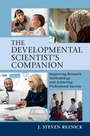
J. Steven Reznick
The Developmental Scientist's Companion
Improving Research Methodology and Achieving Professional Success
E-Book
04/2017
Cambridge University Press
€27.99
Available for download
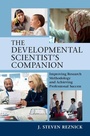
J. Steven Reznick
The Developmental Scientist's Companion
Improving Research Methodology and Achieving Professional Success
Book
04/2017
Cambridge University Press
€135.70
Shipment within 15-20 days
Person
J. Steven Reznick (1951-2016) was Professor Emeritus in the Department of Psychology and Neuroscience, University of North Carolina, Chapel Hill. He published numerous books, articles and chapters on a wide array of topics in developmental psychology; his research is most notable for the measurement tools he developed, including the MacArthur-Bates Communicative Development Inventory, which remains the most widely used child language assessment tool in the world and the First Year Inventory (developed with colleagues at University of North Carolina), used by researchers worldwide to identify infants at risk for autism spectrum disorder. He also founded the Cognitive Development Society, served on the editorial boards of many scientific journals and held several administrative roles for the Society for Research in Child Development. Dr Reznick completed this book during the final year of his life while living courageously with amyotrophic lateral sclerosis.
Content
1. The broad goals of science; 2. Developmental science in context; 3. Defining constructs and variables; 4. Validating measurement; 5. Designing developmental research; 6. Selecting a sample; 7. Collecting behavioral data; 8. Interviews and surveys; 9. Analyzing data; 10. Interpreting research results; 11. Building better developmental science; 12. Becoming better developmental scientists.