

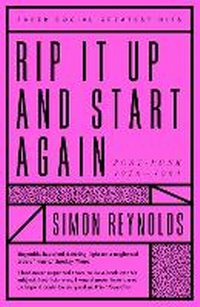
Rip it Up and Start Again
Postpunk 1978-1984
Published on 7. February 2019
Book
Paperback/Softback
608 pages
978-0-571-34967-8 (ISBN)
Description
A new edition as part of the Faber Greatest Hits - books that have taken writing about music in new and exciting directions for the twenty-first century.
In this, the first book to take a big-picture view of the entire post punk period, acclaimed author and music journalist Simon Reynolds recreates a time of tremendous urgency and idealism in pop music.
Full of anecdote and insight, and featuring the likes of Joy Division, The Fall, Pere Ubu, PiL and Talking Heads, Rip It Up And Start Again stands as one of the most inspired and inspiring books on popular music ever written.
In this, the first book to take a big-picture view of the entire post punk period, acclaimed author and music journalist Simon Reynolds recreates a time of tremendous urgency and idealism in pop music.
Full of anecdote and insight, and featuring the likes of Joy Division, The Fall, Pere Ubu, PiL and Talking Heads, Rip It Up And Start Again stands as one of the most inspired and inspiring books on popular music ever written.
More details
Series
Edition
Main - Faber Greatest Hits
Language
English
Place of publication
London
United Kingdom
Dimensions
Height: 198 mm
Width: 129 mm
Thickness: 36 mm
Weight
472 gr
ISBN-13
978-0-571-34967-8 (9780571349678)
Copyright in bibliographic data and cover images is held by Nielsen Book Services Limited or by the publishers or by their respective licensors: all rights reserved.
Schweitzer Classification
Person
Simon Reynolds is the author of Energy Flash: A Journey through Rave Music and Dance Culture, Blissed Out: The Raptures of Rock, The Sex Revolts: Gender, Rebellions and Rock and Roll (co-written with Joy Press), Rip it Up and Start Again: Postpunk 1978 - 1984, Bring the Noise: Twenty Years of Hip Hop and Hip Rock, Retromania: Pop Culture's Addiction to its Own Past, and most recently, Shock and Awe: Glam Rock and its Legacy from the Seventies to the Twenty-first Century.