


Exporting Security
International Engagement, Security Cooperation, and the Changing Face of the U.S. Military
Published on 15. September 2010
Book
Paperback/Softback
224 pages
978-1-58901-708-5 (ISBN)
Description
Given U.S. focus on the continuing wars in Iraq and Afghanistan, it is easy to miss that the military does much more than engage in combat. On any given day, military engineers dig wells in East Africa, medical personnel provide vaccinations in Latin America, and special forces mentor militaries in southeast Asia. To address today's security challenges, the military partners with civilian agencies, NGOs, and the private sector both at home and abroad. By doing so, the United States seeks to improve its international image, strengthen the state sovereignty system by training and equipping partners' security forces, prevent localized violence from escalating into regional crises, and protect U.S. national security by addressing underlying conditions that inspire and sustain violent extremism. In "Exporting Security", Derek Reveron provides a comprehensive analysis of the shift in U.S. foreign policy from coercive diplomacy to cooperative military engagement, examines how and why the U.S. military is an effective tool of foreign policy, and explores the methods used to reduce security deficits around the world.
Reviews / Votes
A fascinating analysis of the significant cultural and doctrinal transformations that have reverberated throughout the U.S. military in the post-Cold War era...a great read, a valuable resource for analysis of current trends in U.S. military doctrine. Journal of Slavic Military Studies A timely addition to the debate on the wisdom of expanding DOD's 'soft missions'...Reveron's overview of security cooperation and the many programs that support these efforts alone make the book worthwhile. Parameters A fascinating analysis of the significant cultural and doctrinal transofrmations that have reverberated throughout the U.S. military in the post-Cold War era... Reveron is an excellent writer and his commitment to clear writing is evident throughout this concise, clear, and well-organizaed work. Journal of Slavic Military Studies Given economic and fiscal realities, the United States will have to downsize and streamline its military and national security establishments. While Washington may not have to contemplate the drastic choices now being pondered across the Atlantic in London-where drastic cuts may cause the British military to abandon entire mission sets in the future-American policymakers cannot entirely ignore the choices between continuing to fund 'today's missions' (largely COIN-based) or choosing to prepare for tomorrow's challenges (which may end up being a return to traditional great power politics). Derek Reveron's concept of 'exporting security' (discussed in detail in a book of the same name just released by Georgetown University press) could provide a way forward out of this impasse. The National InterestMore details
Language
English
Place of publication
Washington, DC
United States
Target group
Professional and scholarly
US School Grade: College Graduate Student and over
Product notice
Paperback (trade)
Illustrations
2 Figures; 10 Tables, unspecified
Dimensions
Height: 229 mm
Width: 152 mm
Weight
336 gr
ISBN-13
978-1-58901-708-5 (9781589017085)
Copyright in bibliographic data and cover images is held by Nielsen Book Services Limited or by the publishers or by their respective licensors: all rights reserved.
Schweitzer Classification
Other editions
New editions
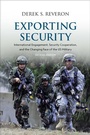
Derek S. Reveron
Exporting Security
International Engagement, Security Cooperation, and the Changing Face of the US Military
Book
07/2016
2nd Edition
Georgetown University Press
€33.00
Shipment within 3-4 weeks
Person
Derek S. Reveron is a professor of national security affairs and the EMC Informationist Chair at the U.S. Naval War College. He is coeditor of Inside Defense: Understanding the 21st Century Military and Flashpoints in the War on Terrorism, and is editor of America's Viceroys: The Military and US Foreign Policy.
Content
Preface Introduction 1. Beyond Warfare 2. Military Engagement, Strategy, and Policy 3. Resistance to Military Engagement 4. Demilitarizing Combatant Commands 5. Security Cooperation 6. Promoting Maritime Security 7. Implications for the Force 8. From Confrontation to Cooperation Index About the Author