

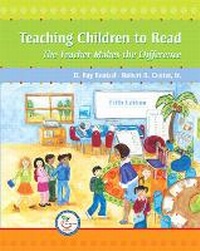
Teaching Children to Read
The Teacher Makes the Difference
5th Edition
Published on 20. June 2007
Book
Paperback/Softback
624 pages
978-0-13-613806-8 (ISBN)
Description
A major revision to this popular market leading text makes this a must-have for all new teachers. Continuing to offer a comprehensive and balanced approach to reading instruction, with this new edition the authors clearly illustrate for readers that it's the teacher that makes the difference for children's literacy development. The new edition organizes each chapter with five pillars of effective reading instruction: Teacher Knowledge, Classroom Assessment, Effective Practice, Differentiated Instruction, and Family Home Connections. This organization reinforces the teacher's role in every aspect of reading instruction. Consult the Getting to Know English Learners feature located throughout this text for research and guidance on adapting teaching to best accommodate English learners. Step inside the classroom and see effective classroom instruction in practice through integrated CD and web-based videos illustrating what application of chapter concepts look like in action. Integration with Merrill Education's Teacher Prep Website also provides readers the opportunity to practice building lesson plans, analyzing student artifacts and research articles, explore state and national standards, and more.
More details
Edition
5th edition
Language
English
Place of publication
United States
Publishing group
Pearson Education (US)
Target group
Professional and scholarly
Dimensions
Height: 254 mm
Width: 203 mm
ISBN-13
978-0-13-613806-8 (9780136138068)
Copyright in bibliographic data and cover images is held by Nielsen Book Services Limited or by the publishers or by their respective licensors: all rights reserved.
Schweitzer Classification
Other editions
New editions
D. Ray Reutzel | Robert B. Cooter
Teaching Children to Read
The Teacher Makes the Difference Plus MyEducationLab with Pearson eText -- Access Card Package
Book
08/2012
6th Edition
Pearson
€129.85
Article is exhausted; no reprint
Book
07/2011
6th Edition
Pearson
€122.55
Article exhausted; check for reprint
Previous edition
Book
11/2003
4th Edition
Pearson
€69.49
Article exhausted; check for reprint
Persons
Dr. D. Ray Reutzel is the Emma Eccles Jones Distinguished Professor and Endowed Chair of Early Childhood Education at Utah State University. Ray is a former Provost and Vice President for Academic Affairs at Southern Utah University; Associate Dean of Teacher Education in the David O. McKay School of Education; and former Chair of the Department of Elementary Education at Brigham Young University. While at BYU, he was the recipient of the 1992 Karl G. Maeser Distinguished Research and Creative Arts Professor Award and was an integral part of developing BYU's nationally celebrated Public School Partnership, the field-based Elementary Education program, the Center for Improvement of Teacher Education and Schooling (CITES) and the Utah/CITES Balanced Literacy initiative as a part of the U.S. and Utah's Goals 2000 funding. He has served as technical assistant to the Reading Excellence Act and the Reading First federal reading reform projects in the state of Utah. Several years ago, he took a leave from his university faculty position to return to full-time, first-grade classroom teaching in Sage Creek Elementary School. Ray has taught in Kindergarten, 1st grade, 3rd grade, and 6th grade.
Dr. Reutzel is the author of more than 165 refereed research reports, articles, books, book chapters, and monographs published in Early Childhood Research Quarterly, Reading Research Quarterly, Journal of Literacy Research, Journal of Educational Research, Reading Psychology, Reading Research and Instruction, Language Arts, Journal of Adolescent and Adult Literacy, andThe Reading Teacher, among others. He has received more than $5.5 million in research/professional development funding from private, state, and federal funding agencies. He was recently awarded a $1 million research grant as principal investigator under the Teacher Quality Research Program of the Institute of Education Sciences, U.S. Department of Education.
He is the past editor of Reading Research and Instruction, the journal of the College Reading Association. He is co-author, with Robert B. Cooter, Jr., of The Essentials for Teaching Children to Read, Second Edition, Teaching Children to Read: The Teacher Makes the Difference, Fifth Edition, and Strategies for Reading Assessment and Instruction: Helping Every Child Succeed, Third Edition published by Pearson Professional & Career. He has written a professional book titled, Your Classroom Library: How to Give It More Teaching Power, with Parker C. Fawson. He is or has been a reviewer for The Reading Teacher, Reading Research Quarterly, Reading Psychology, Journal of Educational Research, Early Childhood Research Quarterly, Reading Research and Instruction, Journal of Reading Behavior, Journal of Literqacy Research, andThe Elementary School Journal.
Dr. Reutzel received the A.B. Herr Award from the College Reading Association in 1999 for Outstanding Research and Published Contributions to Reading Education. He was the e4ditor of the International Reading Association's professional elementary section journal The Reading Teacher from 2002-2007. He was awarded the Researcher/Scholar of the Year Award by the College of Education and Human Services at Utah State University in May, 2004. He was elected Vice-President of the College Reading Association in April of 2005 and served as that organization's President in 2007. Dr. Reutzel was recognized as a recipient of the College of Education's 2006 Distinguished Alumni Award at the University of Wyoming in Laramie, Wyoming and is the D. Wynne Thorne Outstanding University Research Award recipient from Utah State University in April 2007. Dr. Reutzel was given the John C. Manning Public School Service Award from the International Reading Association in May 2007. Ray will also serve as a member of the Board of Directors of the International Reading Association from 2007-2010.
Dr. Robert B. Cooter, Jr. is the Ursuline Chair of Teacher Education at Bellarmine University in Louisville, Kentucky. Prior to moving to Bellarmine University, Dr. Cooter was Distinguished Professor of Urban Literacy Research at The University of Memphis. Professor Cooter teaches courses at the undergraduate and graduate levels in reading/literacy education, and his research focuses on the improvement of reading instruction for children living at the poverty level. In November 2007, Robert Cooter, and colleagues J. Helen Perkins and Kathleen Spencer Cooter, received the 2007 Urban Impact Award from the Council of Great City Schools for their work creating and implementing the Memphis Literacy Academy for teacher capacity-building in high poverty schools.
In March of 2006, Robert Cooter and J. Helen Perkins (University of Memphis) were selected by the International Reading Association to serve as editors through 2011 of The Reading Teacher, the largest literacy education journal in the world.
In higher education administration, Professor Cooter has previously served as departmental chair at Texas Christian University (Curriculum & Instruction), Southern Methodist University (Teacher Education), and The University of Memphis (Instruction and Curriculum Leadership). Dr. Cooter also served as Dean of the College of Education at Austin Peay State University (Tennessee).
Professor Cooter founded the award-winningMemphis Literacy Academy, an outreach program in Memphis City Schools dedicated to raising the expertise and of hundreds of inner-city teachers of reading, and is also co-principal investigator for the Memphis Striving Readers Program (grades 6-9 content areas), a $16 million middle school literacy research project in Memphis City Schools funded under a major grant by the U.S. Department of Education for 2006-2011. Dr. Cooter formerly served as the first "Reading Czar" (associate superintendent) for the Dallas Independent School District (TX) and engineered the district's highly acclaimed Dallas Reading Plan involving the training of approximately 3,000 teachers in "comprehensive literacy instruction." In 1998 then Texas governor George W. Bush and First Lady Laura Bush named him a "Texas Champion for Reading" for his development of the Dallas Reading Plan.
Cooter has authored or co-authored more than 60 journal articles and some 19 books in reading education. His books include the best-selling Teaching Children to Read: The Teacher Makes the Difference, 5th ed. (Merrill/Prentice Hall), an evidence-based reading (SBRR) text currently used at over 200 universities; Strategies for Reading Assessment and Instruction: Helping Every Child Succeed (Merrill/Prentice Hall) which is at present the top text in reading assessment in the U.S., Perspectives on Rescuing Urban Literacy Education: Spies, Saboteurs, & Saints (Lawrence Erlbaum Associates), The Flynt/Cooter Reading Inventory for the Classroom (Merrill/Prentice-Hall), and the newComprehensive Reading Inventory (Merrill/Prentice Hall), a norm-referenced reading assessment for classroom use.
Dr. Reutzel is the author of more than 165 refereed research reports, articles, books, book chapters, and monographs published in Early Childhood Research Quarterly, Reading Research Quarterly, Journal of Literacy Research, Journal of Educational Research, Reading Psychology, Reading Research and Instruction, Language Arts, Journal of Adolescent and Adult Literacy, andThe Reading Teacher, among others. He has received more than $5.5 million in research/professional development funding from private, state, and federal funding agencies. He was recently awarded a $1 million research grant as principal investigator under the Teacher Quality Research Program of the Institute of Education Sciences, U.S. Department of Education.
He is the past editor of Reading Research and Instruction, the journal of the College Reading Association. He is co-author, with Robert B. Cooter, Jr., of The Essentials for Teaching Children to Read, Second Edition, Teaching Children to Read: The Teacher Makes the Difference, Fifth Edition, and Strategies for Reading Assessment and Instruction: Helping Every Child Succeed, Third Edition published by Pearson Professional & Career. He has written a professional book titled, Your Classroom Library: How to Give It More Teaching Power, with Parker C. Fawson. He is or has been a reviewer for The Reading Teacher, Reading Research Quarterly, Reading Psychology, Journal of Educational Research, Early Childhood Research Quarterly, Reading Research and Instruction, Journal of Reading Behavior, Journal of Literqacy Research, andThe Elementary School Journal.
Dr. Reutzel received the A.B. Herr Award from the College Reading Association in 1999 for Outstanding Research and Published Contributions to Reading Education. He was the e4ditor of the International Reading Association's professional elementary section journal The Reading Teacher from 2002-2007. He was awarded the Researcher/Scholar of the Year Award by the College of Education and Human Services at Utah State University in May, 2004. He was elected Vice-President of the College Reading Association in April of 2005 and served as that organization's President in 2007. Dr. Reutzel was recognized as a recipient of the College of Education's 2006 Distinguished Alumni Award at the University of Wyoming in Laramie, Wyoming and is the D. Wynne Thorne Outstanding University Research Award recipient from Utah State University in April 2007. Dr. Reutzel was given the John C. Manning Public School Service Award from the International Reading Association in May 2007. Ray will also serve as a member of the Board of Directors of the International Reading Association from 2007-2010.
Dr. Robert B. Cooter, Jr. is the Ursuline Chair of Teacher Education at Bellarmine University in Louisville, Kentucky. Prior to moving to Bellarmine University, Dr. Cooter was Distinguished Professor of Urban Literacy Research at The University of Memphis. Professor Cooter teaches courses at the undergraduate and graduate levels in reading/literacy education, and his research focuses on the improvement of reading instruction for children living at the poverty level. In November 2007, Robert Cooter, and colleagues J. Helen Perkins and Kathleen Spencer Cooter, received the 2007 Urban Impact Award from the Council of Great City Schools for their work creating and implementing the Memphis Literacy Academy for teacher capacity-building in high poverty schools.
In March of 2006, Robert Cooter and J. Helen Perkins (University of Memphis) were selected by the International Reading Association to serve as editors through 2011 of The Reading Teacher, the largest literacy education journal in the world.
In higher education administration, Professor Cooter has previously served as departmental chair at Texas Christian University (Curriculum & Instruction), Southern Methodist University (Teacher Education), and The University of Memphis (Instruction and Curriculum Leadership). Dr. Cooter also served as Dean of the College of Education at Austin Peay State University (Tennessee).
Professor Cooter founded the award-winningMemphis Literacy Academy, an outreach program in Memphis City Schools dedicated to raising the expertise and of hundreds of inner-city teachers of reading, and is also co-principal investigator for the Memphis Striving Readers Program (grades 6-9 content areas), a $16 million middle school literacy research project in Memphis City Schools funded under a major grant by the U.S. Department of Education for 2006-2011. Dr. Cooter formerly served as the first "Reading Czar" (associate superintendent) for the Dallas Independent School District (TX) and engineered the district's highly acclaimed Dallas Reading Plan involving the training of approximately 3,000 teachers in "comprehensive literacy instruction." In 1998 then Texas governor George W. Bush and First Lady Laura Bush named him a "Texas Champion for Reading" for his development of the Dallas Reading Plan.
Cooter has authored or co-authored more than 60 journal articles and some 19 books in reading education. His books include the best-selling Teaching Children to Read: The Teacher Makes the Difference, 5th ed. (Merrill/Prentice Hall), an evidence-based reading (SBRR) text currently used at over 200 universities; Strategies for Reading Assessment and Instruction: Helping Every Child Succeed (Merrill/Prentice Hall) which is at present the top text in reading assessment in the U.S., Perspectives on Rescuing Urban Literacy Education: Spies, Saboteurs, & Saints (Lawrence Erlbaum Associates), The Flynt/Cooter Reading Inventory for the Classroom (Merrill/Prentice-Hall), and the newComprehensive Reading Inventory (Merrill/Prentice Hall), a norm-referenced reading assessment for classroom use.
Content
Chapter 1 Effective Reading Instruction: The Teacher Makes the Difference
Chapter Questions
The First Day...
Why is Learning to Read so Important?
What is Reading?
Teachers Make the Difference
The Seven Characteristics of Highly Effective Reading Teachers
Characteristic 1: Highly effective reading teachers understand how children learn oral language and how children learn to read.
The Structure of Language
Characteristic 2: Highly effective reading teachers are excellent classroom managers.
Characteristic 3: Highly effective reading teachers begin reading instruction by first assessing what students already know and can do.
Characteristic 4: Highly effective reading teachers know how to adapt instruction to meet the needs of learners with special needs.
Characteristic 5: Highly effective reading teachers teach the essential components of reading using evidence-based instructional practices
Characteristic 6: Highly effective reading teachers model reading and writing applications throughout the day.
Characteristic 7: Highly effective reading teachers partner with other teachers, parents and community members to ensure children's learning.
The Five Pillars of Effective Reading Instruction
Summary: Reading Teachers Make the Difference!
Classroom Applications
Recommended Readings
Chapter 2 Developing Children's Oral Language
Chapter Questions
A Trip to the Zoo... and a Hairy Question
What Do Teachers Need To Know About Oral Language?
What Is Language?
Phonology: Sounds in Spoken Words
Orthography: Connecting Letters and Sounds
Morphology: The Building Blocks of Meaning in Words
Syntax and Grammar: The "Rule Book" in Language
Semantics: Connecting Past Experiences to Reading
Pragmatics: Using Language to Get What We Need
How Do Children Develop Oral Language?
The Behaviorist View of Oral Language Development
The Innatist View of Oral Language Development
The Constructivist View of Oral Language Development
Social Interactionist View of Oral Language Development
The Developmental Stages of Oral Language Development
What Does Research Say About The Relationship Between Oral Language And Reading?
Assessing Children's Oral Language development and Usage
Teacher Rating of Oral Language and Literacy (TROLL)
Get it Got it Go! - Picture Naming Test
The Oral Language Acquisition Inventory (OLAI)
Principles of Effective Oral Language Instruction
Promoting Oral Language Learning in the School and Classroom
Oral Language Instructional Strategies
Instrumental Oral Language Instruction: Interviews
Regulatory Oral Language Instruction: Giving and Following Commands
Interactional Oral Language Instruction: "Phone" and "Small Group" Conversations
Personal Oral Language Instruction: About Me!
Heuristic Oral Language: Explaining and Convincing
Imaginative Oral Language: Let's Pretend
Representational Oral Language: Instructions & Directions
Divertive Oral Language: That's Funny
Authoritative Oral Language: Now Hear This!
Perpetuating Oral Language: Remember This!
Differentiating Oral Language Instruction
Making Family and Community Connections
Involving Parents Having Limited English or Reading Ability
Summary:
Classroom Applications
Recommended Readings
Chapter 3 Early Reading Instruction: Teaching the Essentials
Chapter Questions
Inviting Them In...
What Is Early Reading And How Do Young Children Become Readers?
What Does The Research Say About The Essentials Of Early Reading Instruction?
How Is Young Children's Early Reading Assessed?
Print Concepts
Phonemic Awareness
Letter Name Knowledge
What Are The Characteristics Of Effective Early Reading Instruction?
What Are Strategies For Teaching Early Reading Effectively?
Print Concepts Instruction
Phonological and Phonemic Awareness Instruction
Letter Name Instruction
How Can Early Reading Instruction Be Adapted to Meet The Needs of Diverse Learners?
What Can Families and Communities Do to Develop Children's Early Reading
Summary:
Classroom Applications
Recommended Readings
Chapter 4 Phonics And Word Identification
Chapter Questions
Mr. Bill and Emily
How Do Children Learn to "Decode" Words?
What is phonics?
Learning the Alphabetic Principle
Phonics and Related Word Attack Skills
Some Important Phonics Generalizations to Teach
Other Important Phonics Terms and Skills to be Taught
Onset and Rime
Structural Analysis: An Important Decoding Tool
Putting It All Together: A Sequence for Phonics and Word Identification Skill Instruction
How Do Effective Teachers Assess Letter And Word Identification?
Letter Naming Test (LNT)
Word Attack Survey
The Running Record
Commercial Diagnostic Reading Tests
Dynamic Indicators of Basic Early Literacy Skills (DIBELS)
What Does Research Evidence Show Are The Best Ways Of Teaching Phonics?
Phonics: What Do We Know From Research and Practice?
Favorite Strategies for Teaching Phonics
Creating Nonsense Words
Online Phonics and Word Attack Activities
Who Has Difficulty In Learning Phonics And What Can Be Done To Assist Them?
Interactive Strategies
Students with Dyslexia
English Language Learners
What Strategies Can Parents Use To Help Their Child Learn Phonics Skills?
Words to Go!
Activities for Parents to Increase Children's Print and Phonological Awareness
Summary:
Classroom Applications
Recommended Readings
Chapter 5 Developing Children's Reading Fluency
Chapter Questions
One Minute of Reading
What Is Reading Fluency?
How Do Children Develop Reading Fluency?
Chall's Stages of Reading Fluency
The Stages of Reading is Action
What Does Research Say About Fluency And Reading?
How Is Reading Fluency Assessed?
Assessing Oral Reading Fluency
Assessing Expressive Reading
What Are The Characteristics of Effective Fluency Instruction?
Fluency Begins Early
What Are Effective Fluency Teaching Strategies?
Implementing the Fluency Instruction Plan
How Can Reading Fluency Instruction Be Adapted oo Meet Diverse Student Needs?
What Can families and Communities do to DEVELOp Children's READING FLUENCY
Summary:
Classroom Applications
Recommended Readings
Chapter 6 Increasing Reading Vocabulary
Chapter Questions
What Does Research Tell Us About Vocabulary Learning?
How Do Students Acquire New Vocabulary?
Research on Vocabulary Learning
Vocabulary is Built through Language Interactions
There Are Four Types of Vocabulary
There Are Levels of Vocabulary Learning
What Research Tell Us about Teaching Vocabulary
Which Words Should Be Taught?
Why You Shouldn't Try to Teach ALL Unknown Words
Words You Should Teach
How Can Teachers Effectively Assess Students' Vocabulary Knowledge?
Before and After Word Knowledge Self-Ratings
Teacher-Constructed Vocabulary Tests
Modified Cloze Passages
Maze Passages
Vocabulary Flash Cards
Published Diagnostic Vocabulary Tests
What Are Examples Of Research-Proven Strategies Used In Vocabulary Instruction?
Word Banks
Specific Word Instruction
Making Words
Function ("Four-Letter") Words
Teaching Word Functions and Changes
Helping Students Acquire New Vocabulary Independently
Word Learning Strategies
Encouraging Wide Reading
Computer-Assisted Vocabulary Learning
Vocabulary Overview
What Can Be Done To Assist Students With Special Needs In Vocabulary Learning?
The Vocabulary Cluster Strategy
Semantic Maps
Linking Multicultural Experiences with Vocabulary Development
How Can "Reading Backpacks" Be Used to Involve Parents In Their Child's Vocabulary Learning?
Summary:
Classroom Application
Recommended Readings
Chapter 7 Teaching Reading Comprehension
Chapter Questions
Vignette Title
What Is Reading Comprehesion?
How Do Children Develop Reading Comprehesion?
What Does Research Say About Reading Comprehension Instruction?
A Sequence for Reading Comprehension Skill Instruction Grades K-3
How Is Reading Comprehension Assessed?
Eliciting and Scoring Narrative Oral Retellings
Eliciting and Scoring Expository Oral Retellings
What Are The Characteristics Of Effective Comprehension Instruction?
What Are Effective Reading Comprehension Strategies We Should Teach?
The Reader
The Activity or Strategies
Asking Questions at Differing Levels of Thinking
Question-Answer Relationships
Questioning the Author
Comprehension Monitoring and Fix Ups
Summarizing
The Situational Context
Explicit Comprehension Strategy Instruction
Affective Responses: Interpreting and Elaborating Meaning.
Multiple Strategies Reading Comprehension Instruction
How Can Reading Comprehension Instruction Be Adapted to Meet Diverse Student Needs?
What Can Families and Communities Do to Develop Children's Reading Comprehension?
Summary:
Classroom Applications
Recommended Readings
Chapter 8 Writing
Chapter Questions
It Begins...
How Is Reading Related to Writing?
How Writing Develops
Transitional Stage
U
How is writing development evaluated?
Rubrics and Writing Assessment: Some Things to Remember
Analytic Scoring Rubrics
Holistic Scoring Rubrics
The 6-Trait Model for Writing Assessment
How is the writing process taught?
Understanding the Writing Process
How Do Interactive Writing Procedures Help Learners Acquire New Writing Skills?
Writing Aloud, Writing TO: A Way of Structuring Your Teaching
Shared Writing
Organizing for Instruction: The Writing Workshop
Organizing for Instruction: The Writing Center
Classroom Computers and Writing Development
The First Six Weeks of Writing Instruction
How Can We Adapt Writing Instruction To Meet The Needs of All Learners?
Reading and Analyzing Nonfiction Strategy (RAN)
Online Technology Experts
What Is A Proven Strategy For Involving Parents in Writing Instruction?
Traveling Tales Backpack
Summary:
Classroom Applications
Recommended Readings
Chapter 9 Assessment
Chapter Questions
Great Teaching Begins with Assessment!
Princples and Purposes of Reading Assessment
There Are Four Purposes of Reading Assessment
Where Do We Begin? A Classroom Teacher's Perspective
SCREENING and Progress-Monitoring ASSESSMENTS
Screening Assessments
Progress-Monitoring in the Reading Classroom
Kid Watching
Assessing Reading Interests and Self-Perception
Self-Rating Scales for Subject Area Reading
Assessing Background Knowledge
Family Surveys of Reading Habits
Screening Checklists and Scales
Assessing Students' Reading of Nonfiction Texts
Published Reading Tests For Screening & Progress-Monitoring Assessments
Informal Reading Inventory
Curriculum-Based Measurement
Outcome Assessments
Dynamic Indicators of Basic Early Literacy Skills (DIBELS)
Texas Primary Reading Inventory (TPRI)
Diagnostic Assessments
Diagnosing Vocabulary Knowledge
Individual Diagnostic Reading Tests
Individually Administered Achievement Tests
Getting Organized: Profiling Your Class
Two Documents Needed for Profiling
Classroom Profiling Document
IF - THEN Thinking
Summary:
Classroom Applications
Recommended Readings
Chapter 10 Programs and Standards for Reading Instruction
Chapter Questions
Which reading program is best?
What is meant by "standards" for reading instruction?
Overview of the Standards-Based Movement
Where can I find my state's reading standards and the tools to assess them?
What are basal or "core" reading programs?
Understanding the Basal Reader
Anatomy of the Basal Reading Approach
Beginning Reading Texts
The Workbook
Assessment
Record Keeping
Production and Organization of Basal Readers
Organization of the Basal Reader
Standards for Evaluating and Adopting Basal Readers
Ways of Evaluating Basal Readers
A Consumer's Guide to Evaluating a Core Reading Program
Recent Evaluations of Basal (Core) Reading Programs: Phonemic Awareness, Phonics, and Fluency
What programs are available for the struggling reader?
Reading Recovery
Success for All
Four Blocks
Early Steps
Reading Mastery
Reading Expeditions: Language, Literacy, & Vocabulary!
Waterford Early Reading Program
Supplementing Your Reading Program with "Leveled Books"
How can basal reading programs be adapted to assist the struggling reader?
Reading the Basal Straight Through
Repeated Readings
Supported, or Buddy, Reading
What programs area available for helping students with diverse cultural or language needs succeed?
How can teachers help parents better understand reading standards?
Summary:
Classroom Applications
Recommended Readings
Chapter 11 Effective Reading Instruction and Organization in Grades K-3
Chapters Questions
Vignette
What Do Teachers Need To Know And Do To Provide Effective K-3 Reading Instruction?
How Do K-3 Children Develop As Readers?
Before Stage 1: Pseudo Reading
Stage 1 Reading Development: Making the Connection Between Letters and Sounds
Stage 2 Reading Development: Confirmation, Fluency and Ungluing from Print
What Does Research Say about the Relationship Between K-3 Reading Instruction And K-3 Children's Reading Achievement?
What Are The Characteristics Of Effective K-3 Reading Instruction?
What Are The Characteristics Of Effective K-3 Reading Instruction?
First Steps: Preparing the Classroom Environment
Designing a Classroom Floor Plan
Planning Whole-Class Instruction Areas
Planning Small Group Instruction and Learning Centers
Organizing Classroom Literacy Tools and Materials
Making the Most of Classroom Display Areas to Support Literacy Learning
Planning and Organizing Necessary Storage Spaces
Grouping Students for Effective Reading Instruction
Getting Off to a Good Start: Planning the First Day of School in the K-3 Classroom
Preparing Parents and Students for Success: Making the Initial Contact with a Letter
The First Day: First Impressions
Establishing a Routine for What to Do Before School Begins Each Day
Establishing a Morning Routine for What to Do Each Day When School Begins
Making the Classroom Work: Rules and Consequences
Reading from the Start: Getting Attention and Giving Directions
Reading and Writing Activities on the First Day
Planning the First Week of K-3 Reading and Writing Instruction
Assessing Where Students Are
Training Students to Effectively Use Learning Centers
Preparing Written Lessons Plans to Build Teacher Capacity for Explicit Instruction
Designing a Year Long Curriculum Plan
Effective Reading and Writing Practices for All Year Long
Differentiating K-3 Instruction to Meet Diverse Student Needs
Making Family and Community Connections in the K-3 Schooling Years
Summary:
Classroom Applications
Recommended Readings
Chapter 12 Effective Reading Instruction and Organization in Grades 4-8
Chapter Questions
Ms. Trahan Gets Things Popping!
What does research tell us about the special challenges of content reading materials?
Changing Realities: Reading Instruction in the Transition Years
Keeping Our "Balance"
The Challenge of the "Textbook Genre"
Textbook Reading is Vastly Different from Reading Stories
Scientifically-based Reading Strategies
How can teachers assess students' subject area knowledge?
Analyzing TextsBegins: Performing a Content Analysis
How do you assess student ability with content texts?
The Comprehensive Reading Inventory
Oral Retellings of Expository Texts
How do teachers prepare to teach informational texts?
Constructing Learning Tools for Students
Using Trade Books as Supplements to Textbooks
Using Graphic Organizers or GO! Charts
Study Guides
What are some successful ways to organize for instruction?
Integrating the Curriculum
Guidelines for Conducting Themed Studies
Thematic Unit Materials
Unit Scaffolding
How is reading and writing instruction organized?
Developing Integrated Curriculums
The Reading Workshop
Core Book Units
Themed Literature Units
Teaching Themed Literature Units: The Nuts and Bolts
Gathering Learning Resources
How can teachers use writing to improve learning?
Understanding the Writing Process
Prewriting Stage
Drafting Stage
Revising and Editing
Publishing
The Writing Workshop
What are some study strategies that can help students improve their reading comprehension?
Efficient (Speed Reading) Study Strategies
SQ3R
Using Text Structures
What can done to help struggling readers succeed?
Good Decoding Is Not Sufficient for Comprehension Development
Commercial Programs for Low-Performing Readers
Comprehension "Strategy Families"
Improving Fluency
How can we help English Learners do well with content texts?
Modifying Linguistic Variables
Modifying Knowledge Variables
Summary:
Classroom Applications
Recommended Readings
Chapter Questions
The First Day...
Why is Learning to Read so Important?
What is Reading?
Teachers Make the Difference
The Seven Characteristics of Highly Effective Reading Teachers
Characteristic 1: Highly effective reading teachers understand how children learn oral language and how children learn to read.
The Structure of Language
Characteristic 2: Highly effective reading teachers are excellent classroom managers.
Characteristic 3: Highly effective reading teachers begin reading instruction by first assessing what students already know and can do.
Characteristic 4: Highly effective reading teachers know how to adapt instruction to meet the needs of learners with special needs.
Characteristic 5: Highly effective reading teachers teach the essential components of reading using evidence-based instructional practices
Characteristic 6: Highly effective reading teachers model reading and writing applications throughout the day.
Characteristic 7: Highly effective reading teachers partner with other teachers, parents and community members to ensure children's learning.
The Five Pillars of Effective Reading Instruction
Summary: Reading Teachers Make the Difference!
Classroom Applications
Recommended Readings
Chapter 2 Developing Children's Oral Language
Chapter Questions
A Trip to the Zoo... and a Hairy Question
What Do Teachers Need To Know About Oral Language?
What Is Language?
Phonology: Sounds in Spoken Words
Orthography: Connecting Letters and Sounds
Morphology: The Building Blocks of Meaning in Words
Syntax and Grammar: The "Rule Book" in Language
Semantics: Connecting Past Experiences to Reading
Pragmatics: Using Language to Get What We Need
How Do Children Develop Oral Language?
The Behaviorist View of Oral Language Development
The Innatist View of Oral Language Development
The Constructivist View of Oral Language Development
Social Interactionist View of Oral Language Development
The Developmental Stages of Oral Language Development
What Does Research Say About The Relationship Between Oral Language And Reading?
Assessing Children's Oral Language development and Usage
Teacher Rating of Oral Language and Literacy (TROLL)
Get it Got it Go! - Picture Naming Test
The Oral Language Acquisition Inventory (OLAI)
Principles of Effective Oral Language Instruction
Promoting Oral Language Learning in the School and Classroom
Oral Language Instructional Strategies
Instrumental Oral Language Instruction: Interviews
Regulatory Oral Language Instruction: Giving and Following Commands
Interactional Oral Language Instruction: "Phone" and "Small Group" Conversations
Personal Oral Language Instruction: About Me!
Heuristic Oral Language: Explaining and Convincing
Imaginative Oral Language: Let's Pretend
Representational Oral Language: Instructions & Directions
Divertive Oral Language: That's Funny
Authoritative Oral Language: Now Hear This!
Perpetuating Oral Language: Remember This!
Differentiating Oral Language Instruction
Making Family and Community Connections
Involving Parents Having Limited English or Reading Ability
Summary:
Classroom Applications
Recommended Readings
Chapter 3 Early Reading Instruction: Teaching the Essentials
Chapter Questions
Inviting Them In...
What Is Early Reading And How Do Young Children Become Readers?
What Does The Research Say About The Essentials Of Early Reading Instruction?
How Is Young Children's Early Reading Assessed?
Print Concepts
Phonemic Awareness
Letter Name Knowledge
What Are The Characteristics Of Effective Early Reading Instruction?
What Are Strategies For Teaching Early Reading Effectively?
Print Concepts Instruction
Phonological and Phonemic Awareness Instruction
Letter Name Instruction
How Can Early Reading Instruction Be Adapted to Meet The Needs of Diverse Learners?
What Can Families and Communities Do to Develop Children's Early Reading
Summary:
Classroom Applications
Recommended Readings
Chapter 4 Phonics And Word Identification
Chapter Questions
Mr. Bill and Emily
How Do Children Learn to "Decode" Words?
What is phonics?
Learning the Alphabetic Principle
Phonics and Related Word Attack Skills
Some Important Phonics Generalizations to Teach
Other Important Phonics Terms and Skills to be Taught
Onset and Rime
Structural Analysis: An Important Decoding Tool
Putting It All Together: A Sequence for Phonics and Word Identification Skill Instruction
How Do Effective Teachers Assess Letter And Word Identification?
Letter Naming Test (LNT)
Word Attack Survey
The Running Record
Commercial Diagnostic Reading Tests
Dynamic Indicators of Basic Early Literacy Skills (DIBELS)
What Does Research Evidence Show Are The Best Ways Of Teaching Phonics?
Phonics: What Do We Know From Research and Practice?
Favorite Strategies for Teaching Phonics
Creating Nonsense Words
Online Phonics and Word Attack Activities
Who Has Difficulty In Learning Phonics And What Can Be Done To Assist Them?
Interactive Strategies
Students with Dyslexia
English Language Learners
What Strategies Can Parents Use To Help Their Child Learn Phonics Skills?
Words to Go!
Activities for Parents to Increase Children's Print and Phonological Awareness
Summary:
Classroom Applications
Recommended Readings
Chapter 5 Developing Children's Reading Fluency
Chapter Questions
One Minute of Reading
What Is Reading Fluency?
How Do Children Develop Reading Fluency?
Chall's Stages of Reading Fluency
The Stages of Reading is Action
What Does Research Say About Fluency And Reading?
How Is Reading Fluency Assessed?
Assessing Oral Reading Fluency
Assessing Expressive Reading
What Are The Characteristics of Effective Fluency Instruction?
Fluency Begins Early
What Are Effective Fluency Teaching Strategies?
Implementing the Fluency Instruction Plan
How Can Reading Fluency Instruction Be Adapted oo Meet Diverse Student Needs?
What Can families and Communities do to DEVELOp Children's READING FLUENCY
Summary:
Classroom Applications
Recommended Readings
Chapter 6 Increasing Reading Vocabulary
Chapter Questions
What Does Research Tell Us About Vocabulary Learning?
How Do Students Acquire New Vocabulary?
Research on Vocabulary Learning
Vocabulary is Built through Language Interactions
There Are Four Types of Vocabulary
There Are Levels of Vocabulary Learning
What Research Tell Us about Teaching Vocabulary
Which Words Should Be Taught?
Why You Shouldn't Try to Teach ALL Unknown Words
Words You Should Teach
How Can Teachers Effectively Assess Students' Vocabulary Knowledge?
Before and After Word Knowledge Self-Ratings
Teacher-Constructed Vocabulary Tests
Modified Cloze Passages
Maze Passages
Vocabulary Flash Cards
Published Diagnostic Vocabulary Tests
What Are Examples Of Research-Proven Strategies Used In Vocabulary Instruction?
Word Banks
Specific Word Instruction
Making Words
Function ("Four-Letter") Words
Teaching Word Functions and Changes
Helping Students Acquire New Vocabulary Independently
Word Learning Strategies
Encouraging Wide Reading
Computer-Assisted Vocabulary Learning
Vocabulary Overview
What Can Be Done To Assist Students With Special Needs In Vocabulary Learning?
The Vocabulary Cluster Strategy
Semantic Maps
Linking Multicultural Experiences with Vocabulary Development
How Can "Reading Backpacks" Be Used to Involve Parents In Their Child's Vocabulary Learning?
Summary:
Classroom Application
Recommended Readings
Chapter 7 Teaching Reading Comprehension
Chapter Questions
Vignette Title
What Is Reading Comprehesion?
How Do Children Develop Reading Comprehesion?
What Does Research Say About Reading Comprehension Instruction?
A Sequence for Reading Comprehension Skill Instruction Grades K-3
How Is Reading Comprehension Assessed?
Eliciting and Scoring Narrative Oral Retellings
Eliciting and Scoring Expository Oral Retellings
What Are The Characteristics Of Effective Comprehension Instruction?
What Are Effective Reading Comprehension Strategies We Should Teach?
The Reader
The Activity or Strategies
Asking Questions at Differing Levels of Thinking
Question-Answer Relationships
Questioning the Author
Comprehension Monitoring and Fix Ups
Summarizing
The Situational Context
Explicit Comprehension Strategy Instruction
Affective Responses: Interpreting and Elaborating Meaning.
Multiple Strategies Reading Comprehension Instruction
How Can Reading Comprehension Instruction Be Adapted to Meet Diverse Student Needs?
What Can Families and Communities Do to Develop Children's Reading Comprehension?
Summary:
Classroom Applications
Recommended Readings
Chapter 8 Writing
Chapter Questions
It Begins...
How Is Reading Related to Writing?
How Writing Develops
Transitional Stage
U
How is writing development evaluated?
Rubrics and Writing Assessment: Some Things to Remember
Analytic Scoring Rubrics
Holistic Scoring Rubrics
The 6-Trait Model for Writing Assessment
How is the writing process taught?
Understanding the Writing Process
How Do Interactive Writing Procedures Help Learners Acquire New Writing Skills?
Writing Aloud, Writing TO: A Way of Structuring Your Teaching
Shared Writing
Organizing for Instruction: The Writing Workshop
Organizing for Instruction: The Writing Center
Classroom Computers and Writing Development
The First Six Weeks of Writing Instruction
How Can We Adapt Writing Instruction To Meet The Needs of All Learners?
Reading and Analyzing Nonfiction Strategy (RAN)
Online Technology Experts
What Is A Proven Strategy For Involving Parents in Writing Instruction?
Traveling Tales Backpack
Summary:
Classroom Applications
Recommended Readings
Chapter 9 Assessment
Chapter Questions
Great Teaching Begins with Assessment!
Princples and Purposes of Reading Assessment
There Are Four Purposes of Reading Assessment
Where Do We Begin? A Classroom Teacher's Perspective
SCREENING and Progress-Monitoring ASSESSMENTS
Screening Assessments
Progress-Monitoring in the Reading Classroom
Kid Watching
Assessing Reading Interests and Self-Perception
Self-Rating Scales for Subject Area Reading
Assessing Background Knowledge
Family Surveys of Reading Habits
Screening Checklists and Scales
Assessing Students' Reading of Nonfiction Texts
Published Reading Tests For Screening & Progress-Monitoring Assessments
Informal Reading Inventory
Curriculum-Based Measurement
Outcome Assessments
Dynamic Indicators of Basic Early Literacy Skills (DIBELS)
Texas Primary Reading Inventory (TPRI)
Diagnostic Assessments
Diagnosing Vocabulary Knowledge
Individual Diagnostic Reading Tests
Individually Administered Achievement Tests
Getting Organized: Profiling Your Class
Two Documents Needed for Profiling
Classroom Profiling Document
IF - THEN Thinking
Summary:
Classroom Applications
Recommended Readings
Chapter 10 Programs and Standards for Reading Instruction
Chapter Questions
Which reading program is best?
What is meant by "standards" for reading instruction?
Overview of the Standards-Based Movement
Where can I find my state's reading standards and the tools to assess them?
What are basal or "core" reading programs?
Understanding the Basal Reader
Anatomy of the Basal Reading Approach
Beginning Reading Texts
The Workbook
Assessment
Record Keeping
Production and Organization of Basal Readers
Organization of the Basal Reader
Standards for Evaluating and Adopting Basal Readers
Ways of Evaluating Basal Readers
A Consumer's Guide to Evaluating a Core Reading Program
Recent Evaluations of Basal (Core) Reading Programs: Phonemic Awareness, Phonics, and Fluency
What programs are available for the struggling reader?
Reading Recovery
Success for All
Four Blocks
Early Steps
Reading Mastery
Reading Expeditions: Language, Literacy, & Vocabulary!
Waterford Early Reading Program
Supplementing Your Reading Program with "Leveled Books"
How can basal reading programs be adapted to assist the struggling reader?
Reading the Basal Straight Through
Repeated Readings
Supported, or Buddy, Reading
What programs area available for helping students with diverse cultural or language needs succeed?
How can teachers help parents better understand reading standards?
Summary:
Classroom Applications
Recommended Readings
Chapter 11 Effective Reading Instruction and Organization in Grades K-3
Chapters Questions
Vignette
What Do Teachers Need To Know And Do To Provide Effective K-3 Reading Instruction?
How Do K-3 Children Develop As Readers?
Before Stage 1: Pseudo Reading
Stage 1 Reading Development: Making the Connection Between Letters and Sounds
Stage 2 Reading Development: Confirmation, Fluency and Ungluing from Print
What Does Research Say about the Relationship Between K-3 Reading Instruction And K-3 Children's Reading Achievement?
What Are The Characteristics Of Effective K-3 Reading Instruction?
What Are The Characteristics Of Effective K-3 Reading Instruction?
First Steps: Preparing the Classroom Environment
Designing a Classroom Floor Plan
Planning Whole-Class Instruction Areas
Planning Small Group Instruction and Learning Centers
Organizing Classroom Literacy Tools and Materials
Making the Most of Classroom Display Areas to Support Literacy Learning
Planning and Organizing Necessary Storage Spaces
Grouping Students for Effective Reading Instruction
Getting Off to a Good Start: Planning the First Day of School in the K-3 Classroom
Preparing Parents and Students for Success: Making the Initial Contact with a Letter
The First Day: First Impressions
Establishing a Routine for What to Do Before School Begins Each Day
Establishing a Morning Routine for What to Do Each Day When School Begins
Making the Classroom Work: Rules and Consequences
Reading from the Start: Getting Attention and Giving Directions
Reading and Writing Activities on the First Day
Planning the First Week of K-3 Reading and Writing Instruction
Assessing Where Students Are
Training Students to Effectively Use Learning Centers
Preparing Written Lessons Plans to Build Teacher Capacity for Explicit Instruction
Designing a Year Long Curriculum Plan
Effective Reading and Writing Practices for All Year Long
Differentiating K-3 Instruction to Meet Diverse Student Needs
Making Family and Community Connections in the K-3 Schooling Years
Summary:
Classroom Applications
Recommended Readings
Chapter 12 Effective Reading Instruction and Organization in Grades 4-8
Chapter Questions
Ms. Trahan Gets Things Popping!
What does research tell us about the special challenges of content reading materials?
Changing Realities: Reading Instruction in the Transition Years
Keeping Our "Balance"
The Challenge of the "Textbook Genre"
Textbook Reading is Vastly Different from Reading Stories
Scientifically-based Reading Strategies
How can teachers assess students' subject area knowledge?
Analyzing TextsBegins: Performing a Content Analysis
How do you assess student ability with content texts?
The Comprehensive Reading Inventory
Oral Retellings of Expository Texts
How do teachers prepare to teach informational texts?
Constructing Learning Tools for Students
Using Trade Books as Supplements to Textbooks
Using Graphic Organizers or GO! Charts
Study Guides
What are some successful ways to organize for instruction?
Integrating the Curriculum
Guidelines for Conducting Themed Studies
Thematic Unit Materials
Unit Scaffolding
How is reading and writing instruction organized?
Developing Integrated Curriculums
The Reading Workshop
Core Book Units
Themed Literature Units
Teaching Themed Literature Units: The Nuts and Bolts
Gathering Learning Resources
How can teachers use writing to improve learning?
Understanding the Writing Process
Prewriting Stage
Drafting Stage
Revising and Editing
Publishing
The Writing Workshop
What are some study strategies that can help students improve their reading comprehension?
Efficient (Speed Reading) Study Strategies
SQ3R
Using Text Structures
What can done to help struggling readers succeed?
Good Decoding Is Not Sufficient for Comprehension Development
Commercial Programs for Low-Performing Readers
Comprehension "Strategy Families"
Improving Fluency
How can we help English Learners do well with content texts?
Modifying Linguistic Variables
Modifying Knowledge Variables
Summary:
Classroom Applications
Recommended Readings