


Human Rights and Participatory Politics in Southeast Asia
Published on 12. April 2019
Book
Hardback
256 pages
978-0-8122-5103-6 (ISBN)
Description
In Human Rights and Participatory Politics in Southeast Asia, Catherine Renshaw recounts an extraordinary period of human rights institution-building in Southeast Asia. She begins her account in 2007, when the ten members of the Association of Southeast Asian Nations (ASEAN) signed the ASEAN charter, committing members for the first time to principles of human rights, democracy, and the rule of law. In 2009, the ASEAN Intergovernmental Commission on Human Rights was established with a mandate to uphold internationally recognized human rights standards. In 2013, the ASEAN Human Rights Declaration was adopted as a framework for human rights cooperation in the region and a mechanisim for ASEAN community building. Renshaw explains why these developments emerged when they did and assesses the impact of these institutions in the first decade of their existence.
In her examination of ASEAN, Renshaw asks how human rights can be implemented in and between states that are politically diverse-Vietnam and Laos are Communist; Brunei Darussalam is an Islamic sultanate; Myanmar is in transition from a military dictatorship; the Philippines and Indonesia are established multiparty democracies; while the remaining members are less easily defined. Renshaw cautions that ASEAN is limited in its ability to shape the practices of its members because it lacks a preponderance of democratic states. However, she concludes that, in the absence of a global legalized human rights order, the most significant practical advancements in the promotion of human rights have emerged from regional institutions such as the ASEAN.
In her examination of ASEAN, Renshaw asks how human rights can be implemented in and between states that are politically diverse-Vietnam and Laos are Communist; Brunei Darussalam is an Islamic sultanate; Myanmar is in transition from a military dictatorship; the Philippines and Indonesia are established multiparty democracies; while the remaining members are less easily defined. Renshaw cautions that ASEAN is limited in its ability to shape the practices of its members because it lacks a preponderance of democratic states. However, she concludes that, in the absence of a global legalized human rights order, the most significant practical advancements in the promotion of human rights have emerged from regional institutions such as the ASEAN.
Reviews / Votes
"[A] well-structured book that provides a comprehensive account of the emergence of a regional human rights infrastructure in ASEAN...As a legal scholar with expertise in Southeast Asia's legal systems, Renshaw presents a highly readable text which blends analysis of international rights documents and domestic case law, with theories drawn from politics, social science and international relations...An impressive piece of scholarship and an important book for those seeking to understand contemporary ASEAN and its politics at a macro level." (Australian Journal of Asian Law) "Human Rights and Participatory Politics in Southeast Asia is a significant and much-needed contribution to the theoretical and comparative literature on regional human rights mechanisms. Catherine Renshaw argues convincingly that regional human rights work and national debates inform and influence each other." (Mark Sidel, University of Wisconsin-Madison) "An excellent and well-researched examination of the complex developments surrounding the rise of human rights in Southeast Asia. Catherine Renshaw offers a masterful analysis of the roles played by regional institutions in promoting and protecting human rights." (Teresa Tan Hsien-Li, National University of Singapore)More details
Series
Language
English
Place of publication
Pennsylvania
United States
Target group
College/higher education
Product notice
Paper over boards
Dimensions
Height: 231 mm
Width: 160 mm
Thickness: 25 mm
Weight
499 gr
ISBN-13
978-0-8122-5103-6 (9780812251036)
Copyright in bibliographic data and cover images is held by Nielsen Book Services Limited or by the publishers or by their respective licensors: all rights reserved.
Schweitzer Classification
Other editions
Additional editions
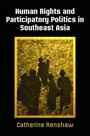
Catherine Renshaw
Human Rights and Participatory Politics in Southeast Asia
E-Book
02/2019
1st Edition
University of Pennsylvania Press
€78.49
Available for download
Person
Catherine Renshaw is Associate Professor of Law and Deputy Head of the Thomas More Law School at Australian Catholic University.
Content
List of Abbreviations
Introduction
PART I. FOUNDATIONS: LEGITIMACY OF A REGIONAL HUMAN RIGHTS REGIME IN THE ABSENCE OF LIBERAL DEMOCRACY
Chapter 1. Democracy and Human Rights in Southeast Asia
Chapter 2. ASEAN's Turn to Democracy and Human Rights
Chapter 3. The ASEAN Human Rights Declaration
PART II. APPLICATIONS: ASSESSING THE REGIONAL DYNAMICS OF HUMAN RIGHTS COMMITMENT AND COMPLIANCE
Chapter 4. The Rights of Women at the Global, Regional, and Local Levels
Chapter 5. Trafficking in Persons
Chapter 6. ASEAN as a Purveyor of Human Rights in Myanmar
Conclusion
Notes
Index
Acknowledgments
Introduction
PART I. FOUNDATIONS: LEGITIMACY OF A REGIONAL HUMAN RIGHTS REGIME IN THE ABSENCE OF LIBERAL DEMOCRACY
Chapter 1. Democracy and Human Rights in Southeast Asia
Chapter 2. ASEAN's Turn to Democracy and Human Rights
Chapter 3. The ASEAN Human Rights Declaration
PART II. APPLICATIONS: ASSESSING THE REGIONAL DYNAMICS OF HUMAN RIGHTS COMMITMENT AND COMPLIANCE
Chapter 4. The Rights of Women at the Global, Regional, and Local Levels
Chapter 5. Trafficking in Persons
Chapter 6. ASEAN as a Purveyor of Human Rights in Myanmar
Conclusion
Notes
Index
Acknowledgments