

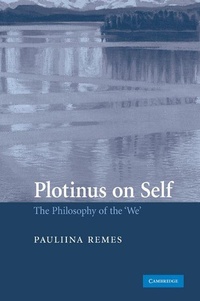
Plotinus on Self
The Philosophy of the 'We'
Published on 3. March 2011
Book
Paperback/Softback
298 pages
978-0-521-20498-9 (ISBN)
Description
Plotinus, the founder of the Neoplatonic school of philosophy, conceptualises two different notions of self (or 'us'): the corporeal and the rational. Personality and imperfection mark the former, while goodness and a striving for understanding mark the latter. In this text, Dr Remes grounds the two selfhoods in deep-seated Platonic ontological commitments, following their manifestations, interrelations and sometimes uneasy coexistence in philosophical psychology, emotional therapy and ethics. Plotinus' interest lies in what it means for a human being to be a temporal and a corporeal thing, yet capable of abstract and impartial reasoning, of self-government and perhaps even invulnerability. The book argues that this involves a philosophically problematic rupture within humanity which is, however, alleviated by the psychological similarities and points of contact between the two aspects of the self. The purpose of life is the cultivation of the latter aspect, the true self.
More details
Language
English
Place of publication
Cambridge
United Kingdom
Target group
Professional and scholarly
Product notice
Paperback (trade)
Illustrations
Worked examples or Exercises
Dimensions
Height: 229 mm
Width: 152 mm
Thickness: 18 mm
Weight
487 gr
ISBN-13
978-0-521-20498-9 (9780521204989)
Copyright in bibliographic data and cover images is held by Nielsen Book Services Limited or by the publishers or by their respective licensors: all rights reserved.
Schweitzer Classification
Other editions
Additional editions
Book
09/2007
Cambridge University Press
€129.60
Shipment within 15-20 days
Person
Content
Introduction; Part I. The Endowed Structures of Selfhood: 1. Two lives, two identities: the ontological and anthropological setting; 2. The conscious centre; 3. The rational self and its knowledge of itself; Part II. Constructing the Self: Between the World and the Ideal: 4. Sculpting your self: self-control, self-determination and self-constitution; 5. Action and other people: the self as a citizen of two communities; 6. Losing the limits of the self?; Conclusion.