

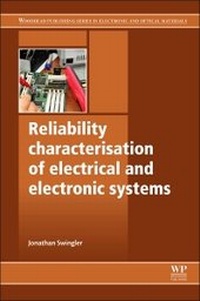
Reliability Characterisation of Electrical and Electronic Systems
Woodhead Publishing Ltd
Published on 12. January 2015
Book
Hardback
274 pages
978-1-78242-221-1 (ISBN)
Description
This book takes a holistic approach to reliability engineering for electrical and electronic systems by looking at the failure mechanisms, testing methods, failure analysis, characterisation techniques and prediction models that can be used to increase reliability for a range of devices.
The text describes the reliability behavior of electrical and electronic systems. It takes an empirical scientific approach to reliability engineering to facilitate a greater understanding of operating conditions, failure mechanisms and the need for testing for a more realistic characterisation. After introducing the fundamentals and background to reliability theory, the text moves on to describe the methods of reliability analysis and charactersation across a wide range of applications.
The text describes the reliability behavior of electrical and electronic systems. It takes an empirical scientific approach to reliability engineering to facilitate a greater understanding of operating conditions, failure mechanisms and the need for testing for a more realistic characterisation. After introducing the fundamentals and background to reliability theory, the text moves on to describe the methods of reliability analysis and charactersation across a wide range of applications.
Reviews / Votes
"One chapter stands out in the book Reliability Characterization of Electrical and Electronic Systems, edited by Jonathan Swingler. That chapter is 'Reliability and Stupidity: Mistakes in Reliability Engineering and How to Avoid Them,"...Following are excerpts from that chapter." --Power ElectronicsMore details
Series
Language
English
Place of publication
Cambridge
United Kingdom
Publishing group
Elsevier Science & Technology
Target group
College/higher education
Dimensions
Height: 229 mm
Width: 152 mm
Weight
1180 gr
ISBN-13
978-1-78242-221-1 (9781782422211)
Copyright in bibliographic data and cover images is held by Nielsen Book Services Limited or by the publishers or by their respective licensors: all rights reserved.
Schweitzer Classification
Other editions
New editions

Jonathan Swingler
Reliability Characterisation of Electrical and Electronic Systems
Book
02/2025
2nd Edition
Woodhead Publishing Ltd
€230.50
Shipment within 10-15 days
Additional editions
Jonathan Swingler
Reliability Characterisation of Electrical and Electronic Systems
E-Book
12/2014
1st Edition
Woodhead Publishing
€180.00
Available for download
Person
Jonathan Swingler is Senior Lecturer in Energy at Heriott-Watt University within the School of Engineering and Physical Sciences (Electrical Engineering). His work is primarily focused on electrical contacts and interconnecting in automotive and aerospace systems.
Content
List of contributors
Woodhead Publishing Series in Electronic and Optical Materials
Foreword
1: Introduction
Abstract
1.1 Introduction
1.2 The focus of the book
1.3 Reliability science and engineering fundamentals (Chapters 2-4)
1.4 Reliability methods in component and system development (Chapters 5-9)
1.5 Reliability modelling and testing in specific applications (Chapters 10 and 11)
1.6 Conclusion
2: Reliability and stupidity: mistakes in reliability engineering and how to avoid them
Abstract
2.1 Introduction
2.2 Common mistakes in reliability engineering
2.3 Conclusion
3: Physics-of-failure (PoF) methodology for electronic reliability
Abstract
3.1 Introduction
3.2 Reliability
3.3 PoF models
3.4 PoF reliability assessment
3.5 Applications of PoF to ensure reliability
3.6 Summary and areas of future interest
4: Modern instruments for characterizing degradation in electrical and electronic equipment
Abstract
4.1 Introduction
4.2 Destructive techniques
4.3 Nondestructive techniques
4.4 In situ measurement techniques
4.5 Conclusions
5: Reliability building of discrete electronic components
Abstract
5.1 Introduction
5.2 Reliability building
5.3 Failure risks and possible corrective actions
5.4 Effect of electrostatic discharge on discrete electronic components
5.5 Conclusions
6: Reliability of optoelectronics
Abstract
6.1 Introduction
6.2 Overview of optoelectronics reliability
6.3 Approaches and recent developments
6.4 Case study: reliability of buried heterostructure (BH) InP semiconductor lasers
6.5 Reliability extrapolation and modeling
6.6 Electrostatic discharge (ESD) and electrical overstress (EOS)
6.7 Conclusions
7: Reliability of silicon integrated circuits
Abstract
Acknowledgments
7.1 Introduction
7.2 Reliability characterization approaches
7.3 Integrated circuit (IC) wear-out failure mechanisms
7.4 Summary and conclusions
8: Reliability of emerging nanodevices
Abstract
8.1 Introduction to emerging nanodevices
8.2 Material and architectural evolution of nanodevices
8.3 Failure mechanisms in nanodevices
8.4 Reliability challenges: opportunities and issues
8.5 Summary and conclusions
9: Design considerations for reliable embedded systems
Abstract
9.1 Introduction
9.2 Hardware faults
9.3 Reliable design principles
9.4 Low-cost reliable design
9.5 Future research directions
9.6 Conclusions
10: Reliability approaches for automotive electronic systems
Abstract
Acknowledgment
10.1 Introduction
10.2 Circuit reliability challenges for the automotive industry
10.3 Circuit reliability checking for the automotive industry
10.4 Using advanced electronic design automation (EDA) tools
10.5 Case studies and examples
10.6 Conclusion
11: Reliability modeling and accelerated life testing for solar power generation systems
Abstract
11.1 Introduction
11.2 Overview
11.3 Challenges
11.4 Modeling
11.5 Accelerated life testing (ALT)
11.6 ALT example: how to craft a thermal cycling ALT plan for SnAgCu (SAC) solder failure mechanism
11.7 How to craft a temperature, humidity, and bias ALT plan for CMOS metallization corrosion
11.8 Developments and opportunities
11.9 Conclusions
11.10 Sources of further information
Index
Woodhead Publishing Series in Electronic and Optical Materials
Foreword
1: Introduction
Abstract
1.1 Introduction
1.2 The focus of the book
1.3 Reliability science and engineering fundamentals (Chapters 2-4)
1.4 Reliability methods in component and system development (Chapters 5-9)
1.5 Reliability modelling and testing in specific applications (Chapters 10 and 11)
1.6 Conclusion
2: Reliability and stupidity: mistakes in reliability engineering and how to avoid them
Abstract
2.1 Introduction
2.2 Common mistakes in reliability engineering
2.3 Conclusion
3: Physics-of-failure (PoF) methodology for electronic reliability
Abstract
3.1 Introduction
3.2 Reliability
3.3 PoF models
3.4 PoF reliability assessment
3.5 Applications of PoF to ensure reliability
3.6 Summary and areas of future interest
4: Modern instruments for characterizing degradation in electrical and electronic equipment
Abstract
4.1 Introduction
4.2 Destructive techniques
4.3 Nondestructive techniques
4.4 In situ measurement techniques
4.5 Conclusions
5: Reliability building of discrete electronic components
Abstract
5.1 Introduction
5.2 Reliability building
5.3 Failure risks and possible corrective actions
5.4 Effect of electrostatic discharge on discrete electronic components
5.5 Conclusions
6: Reliability of optoelectronics
Abstract
6.1 Introduction
6.2 Overview of optoelectronics reliability
6.3 Approaches and recent developments
6.4 Case study: reliability of buried heterostructure (BH) InP semiconductor lasers
6.5 Reliability extrapolation and modeling
6.6 Electrostatic discharge (ESD) and electrical overstress (EOS)
6.7 Conclusions
7: Reliability of silicon integrated circuits
Abstract
Acknowledgments
7.1 Introduction
7.2 Reliability characterization approaches
7.3 Integrated circuit (IC) wear-out failure mechanisms
7.4 Summary and conclusions
8: Reliability of emerging nanodevices
Abstract
8.1 Introduction to emerging nanodevices
8.2 Material and architectural evolution of nanodevices
8.3 Failure mechanisms in nanodevices
8.4 Reliability challenges: opportunities and issues
8.5 Summary and conclusions
9: Design considerations for reliable embedded systems
Abstract
9.1 Introduction
9.2 Hardware faults
9.3 Reliable design principles
9.4 Low-cost reliable design
9.5 Future research directions
9.6 Conclusions
10: Reliability approaches for automotive electronic systems
Abstract
Acknowledgment
10.1 Introduction
10.2 Circuit reliability challenges for the automotive industry
10.3 Circuit reliability checking for the automotive industry
10.4 Using advanced electronic design automation (EDA) tools
10.5 Case studies and examples
10.6 Conclusion
11: Reliability modeling and accelerated life testing for solar power generation systems
Abstract
11.1 Introduction
11.2 Overview
11.3 Challenges
11.4 Modeling
11.5 Accelerated life testing (ALT)
11.6 ALT example: how to craft a thermal cycling ALT plan for SnAgCu (SAC) solder failure mechanism
11.7 How to craft a temperature, humidity, and bias ALT plan for CMOS metallization corrosion
11.8 Developments and opportunities
11.9 Conclusions
11.10 Sources of further information
Index