

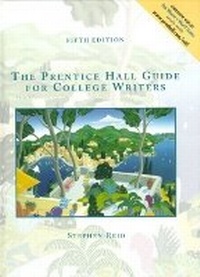
Prentice Hall Guide for College Writers, Full Edition with Handbook
5th Edition
Published on 7. September 1999
Book
Paperback/Softback
701 pages
978-0-13-021028-9 (ISBN)
Description
A comprehensive guide to writing for one- or two-semester freshman composition courses.
This all-in-one text offers hallmark coverage of the purposes of writing, focusing on the importance of a writer's research, critical-reading skills, the ability to organize ideas, and a strategy to assess and develop rhetorical contexts. While the guide emphasizes traditional writing purpose and process, the author also considers the technological changes that influence and enhance contemporary writing, including expanded coverage of researching, evaluating, and documenting internet sources.
This all-in-one text offers hallmark coverage of the purposes of writing, focusing on the importance of a writer's research, critical-reading skills, the ability to organize ideas, and a strategy to assess and develop rhetorical contexts. While the guide emphasizes traditional writing purpose and process, the author also considers the technological changes that influence and enhance contemporary writing, including expanded coverage of researching, evaluating, and documenting internet sources.
More details
Edition
5th edition
Language
English
Place of publication
United States
Publishing group
Pearson Education (US)
Target group
Professional and scholarly
Dimensions
Height: 242 mm
Width: 183 mm
Thickness: 30 mm
Weight
1211 gr
ISBN-13
978-0-13-021028-9 (9780130210289)
Copyright in bibliographic data and cover images is held by Nielsen Book Services Limited or by the publishers or by their respective licensors: all rights reserved.
Schweitzer Classification
Other editions
New editions
Book
11/2003
6th Edition
Pearson
€49.51
Article exhausted; check for reprint
Content
(NOTE: New selections are in bold and marked with an * asterisk.)
1. Writing Myths and Rituals.
Writing Fitness: Rituals and Practice. On Keeping a Journal, Roy Hoffman
2. Purposes and Processes for Writing.
Writing for Myself, Russell Baker. Purposes for Writing. Purpose and Audience. Purpose and Audience in Two Essays. The Struggle to Be an All-American Girl, Elizabeth Wong. I'm OK, but You're Not, Robert Zoellner. Dimensions of the Processes. Writing with a Computer. A Writing Process at Work: Collecting and Shaping. Athletes and Education, Neil H. Petrie. On Writing "Athletes and Education", Neil Petrie. A Writing Process at Work: Drafting. From The Declaration of Independence.
3. Observing and Revising.
Techniques for Writing about Observations. Sierra, John Muir. One Fan's Burden, Danny Drennan. The Snake, Annie Dillard. Observing Wolves, Farley Mowat. *Take this Fish and Look at It , Samuel Scudder. Observing: The Writing Process. Collecting. Observing: Student Writing. Permanent Tracings, Jennifer Macke. Empty Windows, Stephen White.
4. Remembering.
Techniques for Writing about Memories. Remembering: Professional Writing. The Day Language Came into My Life, Helen Keller. Lives on the Boundary, Mike Rose. Beauty: When the Other Dancer Is the Self, Alice Walker. Remembering: The Writing Process. Remembering: Student Writing. The Wind Catcher, Todd Petry . Kit Carson, Brooke Selby.
5. Reading.
Techniques for Writing about Reading. Summarizing and Responding to an Essay. Teach Diversity-with a Smile, Barbara Ehrenreich. Some Don't Like Their Blues at All, Karyn Lewis. Say It Ain't Cool, Joe, Wanda Coleman. Reading: Professional Writing. Animal Rights and Beyond, David Quammen. *IBM and "The X-Files" , Susan Douglas. Reading and Writing Processes. Children and Violence in America, Dudley Erskine Devlin. Reading: Student Writing. Drawing the Line, Paula Fisher. A Response to Deborah Tannen's Essay, Jennifer Koester. Is Deborah Tannen Convincing? Sonja H. Browe.
6. Investigating.
Techniques for Investigative Writing. How the Web Works, Gene Cowan. Investigating: Professional Writing. Plotting a Net Gain, Connie Koenenn. *You, Inc. , Amy Saltzman. The Homeless and Their Children, Jonathan Kozol. Investigating: The Writing Process. Investigating: Student Writing. See Dick Run. Run, Dick, Run. Why, Why, Why? Jan Peterson. My Friend, Michelle, An Alcoholic, Bridgid Stone.
7. Explaining.
Techniques for Explaining. Explaining: Professional Writing. Welcome to Cyberspace, Phillip Elmer-Dewitt. *The Global Village Finally Arrives , Pico Iyer. How Male and Female Students Use Language Differently, Deborah Tannen. Explaining: The Writing Process. Drafting. Explaining: Student Writing. The Police Were Calling Me Names: An Explanation of Hard-Core Punk Rock, Dennis Alexander. Anorexia Nervosa, Nancie Brosseau.
8. Evaluating.
Techniques for Writing Evaluations. *Oprah...Oscar; Oscar...Oprah , Peter Travers. Evaluating: Professional Writing. Watching the Eyewitless News, Elayne Rapping. First Born, Later Born, Geoffrey Cowley. *Girls 'n Spice: All Things Nice? Susan J. Douglas. Evaluating: The Writing Process. Evaluating: Student Writing. Borrowers Can Be Choosy, Linda Meininger. The Big Chill, Kent Y'Blood.
9. Problem Solving.
Techniques for Problem Solving. From Peace in the Streets, Geoffrey Canada. Problem Solving: Professional Writing. Solving for Pattern, Wendell Berry. *The Faces of Famine , Michael Maren. Virtual Students, Digital Classroom, Neil Postman. Problem Solving: The Writing Process. Problem Solving: Student Writing. No Parking, Kristy Busch, Steve Krause, and Keith Wright. Who Should Take Charge? Eui Young Hwang.
10. Arguing.
Techniques for Writing Argument. The Ethics of Endorsing a Product, Mike Royko. Arguing: Professional Writing. Death and Justice, Edward I. Koch. *The Internet: A Clear and Present Danger , Cathleen A. Cleaver. The Damnation of a Canyon, Edward Abbey. Arguing: The Writing Process. Arguing: Student Writing. *Protect Yourself -Buckle Up! Jim Haas. Games the Military Play, David Thomas.
11. Responding To Literature.
The Story of an Hour, Kate Chopin. Techniques for Responding to Literature. Purposes for Responding to Literature. Responding to Short Fiction. Short Fiction: Professional Writing. A Worn Path, Eudora Welty. The Lesson, Toni Cade Bambara. Responding to Literature: The Writing Process. Responding to Literature: Student Writing. On A Worn Path, Julia MacMillan and Brett MacFadden. Death: The Final Freedom, Pat Russell.
12. Writing A Research Paper.
Techniques for Writing a Research Paper. Preparing Yourself for the Research Process. Research Paper: The Writing Process.
Appendix: Writing Under Pressure.
Know Your Audience. Analyze Key Terms. Make a Sketch Outline. Know the Material. Practice Writing. Proofread and Edit. Sample Essay Questions and Responses.
Handbook.
Index.
1. Writing Myths and Rituals.
Writing Fitness: Rituals and Practice. On Keeping a Journal, Roy Hoffman
2. Purposes and Processes for Writing.
Writing for Myself, Russell Baker. Purposes for Writing. Purpose and Audience. Purpose and Audience in Two Essays. The Struggle to Be an All-American Girl, Elizabeth Wong. I'm OK, but You're Not, Robert Zoellner. Dimensions of the Processes. Writing with a Computer. A Writing Process at Work: Collecting and Shaping. Athletes and Education, Neil H. Petrie. On Writing "Athletes and Education", Neil Petrie. A Writing Process at Work: Drafting. From The Declaration of Independence.
3. Observing and Revising.
Techniques for Writing about Observations. Sierra, John Muir. One Fan's Burden, Danny Drennan. The Snake, Annie Dillard. Observing Wolves, Farley Mowat. *Take this Fish and Look at It , Samuel Scudder. Observing: The Writing Process. Collecting. Observing: Student Writing. Permanent Tracings, Jennifer Macke. Empty Windows, Stephen White.
4. Remembering.
Techniques for Writing about Memories. Remembering: Professional Writing. The Day Language Came into My Life, Helen Keller. Lives on the Boundary, Mike Rose. Beauty: When the Other Dancer Is the Self, Alice Walker. Remembering: The Writing Process. Remembering: Student Writing. The Wind Catcher, Todd Petry . Kit Carson, Brooke Selby.
5. Reading.
Techniques for Writing about Reading. Summarizing and Responding to an Essay. Teach Diversity-with a Smile, Barbara Ehrenreich. Some Don't Like Their Blues at All, Karyn Lewis. Say It Ain't Cool, Joe, Wanda Coleman. Reading: Professional Writing. Animal Rights and Beyond, David Quammen. *IBM and "The X-Files" , Susan Douglas. Reading and Writing Processes. Children and Violence in America, Dudley Erskine Devlin. Reading: Student Writing. Drawing the Line, Paula Fisher. A Response to Deborah Tannen's Essay, Jennifer Koester. Is Deborah Tannen Convincing? Sonja H. Browe.
6. Investigating.
Techniques for Investigative Writing. How the Web Works, Gene Cowan. Investigating: Professional Writing. Plotting a Net Gain, Connie Koenenn. *You, Inc. , Amy Saltzman. The Homeless and Their Children, Jonathan Kozol. Investigating: The Writing Process. Investigating: Student Writing. See Dick Run. Run, Dick, Run. Why, Why, Why? Jan Peterson. My Friend, Michelle, An Alcoholic, Bridgid Stone.
7. Explaining.
Techniques for Explaining. Explaining: Professional Writing. Welcome to Cyberspace, Phillip Elmer-Dewitt. *The Global Village Finally Arrives , Pico Iyer. How Male and Female Students Use Language Differently, Deborah Tannen. Explaining: The Writing Process. Drafting. Explaining: Student Writing. The Police Were Calling Me Names: An Explanation of Hard-Core Punk Rock, Dennis Alexander. Anorexia Nervosa, Nancie Brosseau.
8. Evaluating.
Techniques for Writing Evaluations. *Oprah...Oscar; Oscar...Oprah , Peter Travers. Evaluating: Professional Writing. Watching the Eyewitless News, Elayne Rapping. First Born, Later Born, Geoffrey Cowley. *Girls 'n Spice: All Things Nice? Susan J. Douglas. Evaluating: The Writing Process. Evaluating: Student Writing. Borrowers Can Be Choosy, Linda Meininger. The Big Chill, Kent Y'Blood.
9. Problem Solving.
Techniques for Problem Solving. From Peace in the Streets, Geoffrey Canada. Problem Solving: Professional Writing. Solving for Pattern, Wendell Berry. *The Faces of Famine , Michael Maren. Virtual Students, Digital Classroom, Neil Postman. Problem Solving: The Writing Process. Problem Solving: Student Writing. No Parking, Kristy Busch, Steve Krause, and Keith Wright. Who Should Take Charge? Eui Young Hwang.
10. Arguing.
Techniques for Writing Argument. The Ethics of Endorsing a Product, Mike Royko. Arguing: Professional Writing. Death and Justice, Edward I. Koch. *The Internet: A Clear and Present Danger , Cathleen A. Cleaver. The Damnation of a Canyon, Edward Abbey. Arguing: The Writing Process. Arguing: Student Writing. *Protect Yourself -Buckle Up! Jim Haas. Games the Military Play, David Thomas.
11. Responding To Literature.
The Story of an Hour, Kate Chopin. Techniques for Responding to Literature. Purposes for Responding to Literature. Responding to Short Fiction. Short Fiction: Professional Writing. A Worn Path, Eudora Welty. The Lesson, Toni Cade Bambara. Responding to Literature: The Writing Process. Responding to Literature: Student Writing. On A Worn Path, Julia MacMillan and Brett MacFadden. Death: The Final Freedom, Pat Russell.
12. Writing A Research Paper.
Techniques for Writing a Research Paper. Preparing Yourself for the Research Process. Research Paper: The Writing Process.
Appendix: Writing Under Pressure.
Know Your Audience. Analyze Key Terms. Make a Sketch Outline. Know the Material. Practice Writing. Proofread and Edit. Sample Essay Questions and Responses.
Handbook.
Index.