


Johnstone Triangle
The Key to Understanding Chemistry
Published on 29. January 2021
Book
Hardback
194 pages
978-1-83916-168-1 (ISBN)
Description
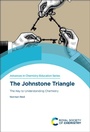
Chemistry is often seen as a difficult subject to understand. This book focusses on the triangle model that Alex H. Johnstone developed in the early 1980s. Originally conceived in the context of making chemistry more accessible to a wider range of learners, the model has been applied in almost every area of education in chemistry at all stages of learning.
In looking at why chemistry is difficult, there are two central questions. Firstly, does the problem relate to the nature of chemistry and, secondly, does it relate to the way humans gain understanding? Both were found to be important and the answers to the two question were found to be connected.
The triangle model arose from sustained research into human learning. The central finding from research is the critical role of working memory and the model rationalises so much evidence from chemistry education research as well as the repeated experiences of teachers of chemistry at all levels. In order to understand chemistry, it is essential to develop sound mental models of molecular reality. It generates major implications for the way a chemistry curriculum should be constructed and the processes of teaching and learning in chemistry when the goal is focussed on understanding the key ideas. Some of these implications are developed and pointers offered to more successful ways forward.
The power of the Johnstone Triangle lies in the way it offers clear directions for all involved in chemistry education. It is hoped that this book will prove helpful to all involved in sharing the exciting story of the way humans have come to understand the molecular world, one of the great examples of great human endeavour.
In looking at why chemistry is difficult, there are two central questions. Firstly, does the problem relate to the nature of chemistry and, secondly, does it relate to the way humans gain understanding? Both were found to be important and the answers to the two question were found to be connected.
The triangle model arose from sustained research into human learning. The central finding from research is the critical role of working memory and the model rationalises so much evidence from chemistry education research as well as the repeated experiences of teachers of chemistry at all levels. In order to understand chemistry, it is essential to develop sound mental models of molecular reality. It generates major implications for the way a chemistry curriculum should be constructed and the processes of teaching and learning in chemistry when the goal is focussed on understanding the key ideas. Some of these implications are developed and pointers offered to more successful ways forward.
The power of the Johnstone Triangle lies in the way it offers clear directions for all involved in chemistry education. It is hoped that this book will prove helpful to all involved in sharing the exciting story of the way humans have come to understand the molecular world, one of the great examples of great human endeavour.
More details
Series
Language
English
Place of publication
Cambridge
United Kingdom
Target group
Professional and scholarly
Product notice
Unsewn / adhesive bound
Dimensions
Height: 237 mm
Width: 159 mm
Thickness: 17 mm
Weight
458 gr
ISBN-13
978-1-83916-168-1 (9781839161681)
DOI
10.1039/9781839163661
Copyright in bibliographic data and cover images is held by Nielsen Book Services Limited or by the publishers or by their respective licensors: all rights reserved.
Schweitzer Classification
Other editions
Additional editions
E-Book
01/2021
1st Edition
Royal Society of Chemistry
€137.99
Available for download
E-Book
01/2021
1st Edition
Royal Society of Chemistry
€137.99
Available for download
Person
Content
The Working Memory Story;
The Central Role of Working Memory;
Johnstone's Triangle;
Johnstone's Triangle and the Curriculum;
Johnstone's Triangle and the Learning Process;
Releasing Understanding;
Tips and Tricks;
Bringing it Together
The Central Role of Working Memory;
Johnstone's Triangle;
Johnstone's Triangle and the Curriculum;
Johnstone's Triangle and the Learning Process;
Releasing Understanding;
Tips and Tricks;
Bringing it Together