

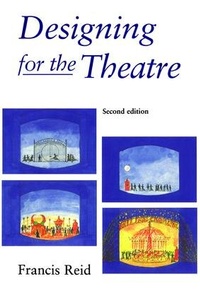
Designing for the Theatre
2nd Edition
Published on 6. October 2017
Book
Hardback
112 pages
978-1-138-47304-1 (ISBN)
Description
Now in its second edition, Designing for the Theatre has established itself as the authoritative introduction to the processes of design for the theatre. Covering the contribution which can be made by costume, sets, props and lighting to a stage production, the author explains the purpose and process involved in their design. Included in this second edition are new photographs and drawings illustrating some of the most exciting and diverse current trends in stage design.
Reviews / Votes
"Well-rounded and useful text book for those interested in the process of theatre design." -- Cue USE THIS"Realistic and valuable overview of the design process." -- Lighting and Sound International USE THIS
More details
Edition
2nd edition
Language
English
Place of publication
London
United Kingdom
Publishing group
Taylor & Francis Ltd
Target group
College/higher education
Dimensions
Height: 234 mm
Width: 156 mm
Weight
453 gr
ISBN-13
978-1-138-47304-1 (9781138473041)
Copyright in bibliographic data and cover images is held by Nielsen Book Services Limited or by the publishers or by their respective licensors: all rights reserved.
Schweitzer Classification
Other editions
Additional editions
Francis Reid
Designing for the Theatre
E-Book
10/2013
2nd Edition
Routledge
€52.49
Available for download
Francis Reid
Designing for the Theatre
E-Book
10/2013
2nd Edition
Routledge
€52.49
Available for download
Francis Reid
Designing for the Theatre
Book
07/1996
2nd Edition
Routledge
€53.50
Shipment within 3-4 weeks
Person
Francis Reid is a well-established figure in the theatre world. He is Director of Studies for British Council International Theatre Lighting seminars.
Content
Chapter 1 The Role of Design; Chapter 2 The Theatre Building; Chapter 3 Visual Style; Chapter 4 Space and Time; Chapter 5 Some Practicalities; Chapter 6 The Design Process; Chapter 7 Design Realisation; Chapter 8 Designing with New Technologies; Chapter 9 Learning to Design; Chapter 10 Critical Evaluation;