

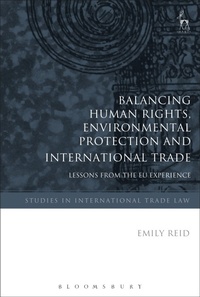
Balancing Human Rights, Environmental Protection and International Trade
Lessons from the EU Experience
Published on 26. January 2017
Book
Paperback/Softback
364 pages
978-1-5099-1380-0 (ISBN)
Description
This book explores the means by which economic liberalisation can be reconciled with human rights and environmental protection in the regulation of international trade. It is primarily concerned with identifying the lessons the international community can learn, specifically in the context of the WTO, from decades of European Community and Union experience in facing this question. The book demonstrates first that it is possible to reconcile the pursuit of economic and non-economic interests, that the EU has found a mechanism by which to do so, and that the application of the principle of proportionality is fundamental to the realisation of this. It is argued that the EU approach can be characterised as a practical application of the principle of sustainable development. Secondly, from the analysis of the EU experience, this book identifies fundamental conditions crucial to achieving this 'reconciliation'. Thirdly, the book explores the implications of lessons from the EU experience for the international community. In so doing it assesses both the potential and limits of the existing international regulatory framework for such reconciliation. The book develops a deeper understanding of the inter-relationship between the legal regulation of economic and non-economic development, adding clarity to the debate in a controversial area. It argues that a more holistic approach to the consideration of 'development', encompassing economic and non-economic concerns - 'sustainable' development - is not only desirable in principle but realisable in practice.
Reviews / Votes
[This] book provides an insightful analysis on the interaction and complex reconciliation of economic and non-economic interests. -- Ioanna Hadjiyianni * Journal of Environmental Law * ...this book offers something to all four readerships which it should attract: EU lawyers, environmental lawyers, human rights lawyers, and trade laywers. -- Chris Hilson * Yearbook of European Law * ...the book combines environmental concerns with human rights concerns and therefore does justice to the concept of sustainable development. For students, practitioners, and academics alike this book is therefore a good starting point... -- Rike Kramer * Journal of International Economic Law *More details
Series
Edition
NIPPOD
Language
English
Place of publication
Oxford
United Kingdom
Publishing group
Bloomsbury Publishing PLC
Target group
Professional and scholarly
College/higher education
Dimensions
Height: 234 mm
Width: 156 mm
Thickness: 20 mm
Weight
556 gr
ISBN-13
978-1-5099-1380-0 (9781509913800)
Copyright in bibliographic data and cover images is held by Nielsen Book Services Limited or by the publishers or by their respective licensors: all rights reserved.
Schweitzer Classification
Other editions
Additional editions
Emily Reid
Balancing Human Rights, Environmental Protection and International Trade
Lessons from the Eu Experience
E-Book
02/2015
1st Edition
Hart Publishing
€32.99
Available for download
Emily Reid
Balancing Human Rights, Environmental Protection and International Trade
Lessons from the Eu Experience
E-Book
02/2015
1st Edition
Hart Publishing
€32.99
Available for download
Person
Emily Reid is Associate Professor in EU Law at the University of Southampton.
Content
I. Introduction
II. Structure of the Book
PART I: THE EU EXPERIENCE
2. The Emergence of Human Rights and Environmental Protection in the EU
I. The Protection of Human Rights in the EU
II. The Protection of the Environment in the EU
III. Human Rights and Environmental Protection in the EU: Conclusions
3. The Standing of Human Rights and Environmental Protection in the EU Legal Order
I. Regulating the Interface between Economic and Non-economic Interests: The Rules of the Internal Market
II. Human Rights and Environmental Protection as Free-Standing Objectives?
III. Conclusions: The Significance of Sustainable Development and Proportionality in Balancing the EU's Economic and Non-economic Interests
4. The EU's Relations with Third States
I. The Basis of External Competence of the EU
II. The Exercise of EU Competence
III. EU Competence in Relation to its Newer Objectives
IV. The Effect of International Agreements in EU Law
V. Concluding Comments
5. Human Rights and Environmental Protection in the EU's Relations with Third States
I. Forms and Types of Agreement between the EU and Third States
II. The Emergence of the Human Rights and Democracy Clause: Lome IV (1990)
III. EU Enforcement of the Human Rights Clause
IV. The Protection of the Environment in the EU's Relations with Third States
V. Conclusions
PART II: BALANCING ECONOMIC AND NON-ECONOMIC INTERESTS IN THE INTERNATIONAL LEGAL ORDER
6. The International Context: The WTO Legal Order
I. The Framework for International Trade: The WTO ............... 196
II. The Relationship between WTO Law and International Law
7. Trade and Environment in the WTO Legal Order
I. Background to the trade-environment nexus under the GATT/WTO
II. Environmental Regulatory Measures and Dispute Settlement
III. Emerging Environmental Measures Posing Particular Challenges for the WTO
IV. Application of the Different Tests in the Determination as to Whether a Measure May Justify a Trade Restriction
V. Conclusions
8. Human Rights Protection and WTO Law
I. Background: International Human Rights Law and the WTO
II. Unpacking the Interaction between Human Rights and WTO Rules
III. Contrasting Approaches: The EU and WTO Approaches Compared
IV. Conclusions
9. Effecting the Reconciliation of Competing Interests: Reconceptualising the Legal Framework
I. The EU Experience
II. Reconceptualising the Objectives of the WTO through the Lens of Sustainable Development
III. Operationalisation of the Sustainable Development-Based Approach
IV. Reconciling the Pursuit of Economic and Non-economic Interests: Lessons from the EU
V. Concluding Comments
II. Structure of the Book
PART I: THE EU EXPERIENCE
2. The Emergence of Human Rights and Environmental Protection in the EU
I. The Protection of Human Rights in the EU
II. The Protection of the Environment in the EU
III. Human Rights and Environmental Protection in the EU: Conclusions
3. The Standing of Human Rights and Environmental Protection in the EU Legal Order
I. Regulating the Interface between Economic and Non-economic Interests: The Rules of the Internal Market
II. Human Rights and Environmental Protection as Free-Standing Objectives?
III. Conclusions: The Significance of Sustainable Development and Proportionality in Balancing the EU's Economic and Non-economic Interests
4. The EU's Relations with Third States
I. The Basis of External Competence of the EU
II. The Exercise of EU Competence
III. EU Competence in Relation to its Newer Objectives
IV. The Effect of International Agreements in EU Law
V. Concluding Comments
5. Human Rights and Environmental Protection in the EU's Relations with Third States
I. Forms and Types of Agreement between the EU and Third States
II. The Emergence of the Human Rights and Democracy Clause: Lome IV (1990)
III. EU Enforcement of the Human Rights Clause
IV. The Protection of the Environment in the EU's Relations with Third States
V. Conclusions
PART II: BALANCING ECONOMIC AND NON-ECONOMIC INTERESTS IN THE INTERNATIONAL LEGAL ORDER
6. The International Context: The WTO Legal Order
I. The Framework for International Trade: The WTO ............... 196
II. The Relationship between WTO Law and International Law
7. Trade and Environment in the WTO Legal Order
I. Background to the trade-environment nexus under the GATT/WTO
II. Environmental Regulatory Measures and Dispute Settlement
III. Emerging Environmental Measures Posing Particular Challenges for the WTO
IV. Application of the Different Tests in the Determination as to Whether a Measure May Justify a Trade Restriction
V. Conclusions
8. Human Rights Protection and WTO Law
I. Background: International Human Rights Law and the WTO
II. Unpacking the Interaction between Human Rights and WTO Rules
III. Contrasting Approaches: The EU and WTO Approaches Compared
IV. Conclusions
9. Effecting the Reconciliation of Competing Interests: Reconceptualising the Legal Framework
I. The EU Experience
II. Reconceptualising the Objectives of the WTO through the Lens of Sustainable Development
III. Operationalisation of the Sustainable Development-Based Approach
IV. Reconciling the Pursuit of Economic and Non-economic Interests: Lessons from the EU
V. Concluding Comments