


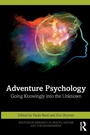
Adventure Psychology
Going Knowingly into the Unknown
1st Edition
Published on 23. December 2022
Book
Hardback
228 pages
978-1-032-00303-0 (ISBN)
Description
In recent years a new set of psychological principles has emerged from research investigating adventure and adventurous activities. Adventure involves a special type of physical activity in natural contexts where participants voluntarily participate in experiences where the environment and activity are challenging, perhaps dangerous and potentially life threatening. To go on an adventure is to participate in an enduring event requiring sustainable effort, where effective performance is measured not only by success but also by survival. This book brings together the emerging literature in 'Adventure Psychology' that supports enduring performance and wellbeing.
The first section examines sustaining performance and wellbeing. The second section studies the transformative aspect of adventure. Adventure Psychology is of use in everyday life and the techniques and understandings can help people and business prepare for the future. This book will help us all thrive despite adversity, volatility and uncertainty.
Written for researchers this book will also be useful for trainers, educators and students of sport, performance and organisational psychology as well as adventurers and endurance athletes. Adventure Psychology is designed to meet the needs of specialists across a variety of fields but importantly also to be accessible and applicable for those wanting to live life fully - to realise our full potential.
The first section examines sustaining performance and wellbeing. The second section studies the transformative aspect of adventure. Adventure Psychology is of use in everyday life and the techniques and understandings can help people and business prepare for the future. This book will help us all thrive despite adversity, volatility and uncertainty.
Written for researchers this book will also be useful for trainers, educators and students of sport, performance and organisational psychology as well as adventurers and endurance athletes. Adventure Psychology is designed to meet the needs of specialists across a variety of fields but importantly also to be accessible and applicable for those wanting to live life fully - to realise our full potential.
More details
Series
Language
English
Place of publication
London
United Kingdom
Publishing group
Taylor & Francis Ltd
Target group
College/higher education
General, Postgraduate, and Undergraduate
Illustrations
1 s/w Abbildung, 1 s/w Zeichnung
1 Line drawings, black and white; 1 Illustrations, black and white
Dimensions
Height: 234 mm
Width: 156 mm
Weight
140 gr
ISBN-13
978-1-032-00303-0 (9781032003030)
Copyright in bibliographic data and cover images is held by Nielsen Book Services Limited or by the publishers or by their respective licensors: all rights reserved.
Schweitzer Classification
Other editions
Additional editions
Book
12/2022
1st Edition
Routledge
€61.30
Shipment within 10-20 days

E-Book
12/2022
1st Edition
Routledge
€53.99
Available for download

E-Book
12/2022
1st Edition
Routledge
€53.99
Available for download
Persons
Paula Reid has a Batchelor of Education (Hons) degree and graduated with a Distinction MSc in Applied Positive Psychology and Coaching Psychology from the University of East London. Her organisation, 'Adventure Psychology', delivers the performance psychology of how to survive, cope and thrive during challenging times. She is based in the UK and is a Fellow of the Royal Geographical Society.
Eric Brymer is a behavioural scientist who specialises in researching the psychology of adventure experiences, performance in extreme environments and the reciprocal nature of health and wellbeing from nature-based experiences. He holds a PhD in Adventure Psychology, a Master's degree in Applied Sport and Exercise Psychology and postgraduate degrees in Education and Business. Eric works with and advises governments and institutional departments. He also holds research positions in health, exercise and outdoor studies in Europe, UK and Australia.
Eric Brymer is a behavioural scientist who specialises in researching the psychology of adventure experiences, performance in extreme environments and the reciprocal nature of health and wellbeing from nature-based experiences. He holds a PhD in Adventure Psychology, a Master's degree in Applied Sport and Exercise Psychology and postgraduate degrees in Education and Business. Eric works with and advises governments and institutional departments. He also holds research positions in health, exercise and outdoor studies in Europe, UK and Australia.
Content
Adventure Psychology: Framing the Discipline
Adventure Psychology - A Long Past, but a Short History
Section 1: Sustaining Performance (while maintaining wellbeing)
1. The Adventurer's Mind: Exploring Mindset, Mindfulness & Wisdom
2. Adventures in Extreme Environments
3. Enduring Performance
4. Dealing with the Unknown
5. Adventure, Positive Psychology and Narrative: The Wellbeing Impacts
of Answering the Call to Adventure
6. The Human-Environment Dynamic: An Ecological Dynamics Approach to
Understanding Human-Environment Interactions in the Context of Adventure Psychology
7. Fear
8. Success and Failure in Adventure
9. Sisu: Answering the Call of Adventure with Strength and Grace
Section 2: Transformational Impact of Adventure
10. How can Adventure Change our Consciousness? An Exploration of Flow, Mindfulness, and Adventure
11. Adventure, Posttraumatic Growth and Wisdom
12. Transformation or Transcendence: Adventure and the Sublime: A Quest for Transformation or Transcendence?
13. Giving Back to Nature: An Autoethnographic Analysis of Adventure as Transformational
Adventure Psychology: Learnings and Implications
Adventure Psychology - A Long Past, but a Short History
Section 1: Sustaining Performance (while maintaining wellbeing)
1. The Adventurer's Mind: Exploring Mindset, Mindfulness & Wisdom
2. Adventures in Extreme Environments
3. Enduring Performance
4. Dealing with the Unknown
5. Adventure, Positive Psychology and Narrative: The Wellbeing Impacts
of Answering the Call to Adventure
6. The Human-Environment Dynamic: An Ecological Dynamics Approach to
Understanding Human-Environment Interactions in the Context of Adventure Psychology
7. Fear
8. Success and Failure in Adventure
9. Sisu: Answering the Call of Adventure with Strength and Grace
Section 2: Transformational Impact of Adventure
10. How can Adventure Change our Consciousness? An Exploration of Flow, Mindfulness, and Adventure
11. Adventure, Posttraumatic Growth and Wisdom
12. Transformation or Transcendence: Adventure and the Sublime: A Quest for Transformation or Transcendence?
13. Giving Back to Nature: An Autoethnographic Analysis of Adventure as Transformational
Adventure Psychology: Learnings and Implications