

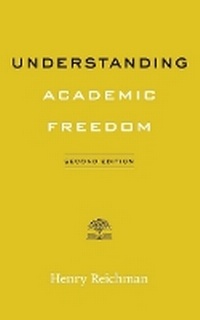
Understanding Academic Freedom
2nd Edition
Published on 20. May 2025
Book
Paperback/Softback
320 pages
978-1-4214-5094-0 (ISBN)
Description
In the evolving landscape of academic freedom in America, this second edition addresses the latest challenges and developments in the field.
Since the publication of the first edition of Understanding Academic Freedom, the never-ending struggle to defend academic freedom has entered a demonstrably new phase. Legislation determining what can and cannot be taught in schools in Florida, Texas, and other states has intensified governing board activism that impinges on widely accepted faculty prerogatives. Major donors in research, teaching, and institutional governance have grown bold in their interference. Highly polarizing controversies over antisemitism and the Israeli-Palestinian conflict, as well as debates over diversity, equity, and inclusion policies, continue to broil.
Taken as a whole, these developments indicate that we have entered a new period in the history of American academic freedom. Academic freedom, long heralded as a core value of American higher education, may now be in as much danger as at any time since the 1950s. But what is academic freedom? Is it the right of faculty members to teach whatever they wish; a value upheld for supporters, but not opponents, amid polarizing controversy; or a narrow claim of privilege by a professorial elite, immune from public accountability? Henry Reichman, who chaired the American Association of University Professors' Committee A on Academic Freedom and Tenure for nearly a decade, mounts a rigorous defense of academic freedom and its principal means of protection: the system of academic tenure.
Probing academic freedom's role in multiple contexts, Reichman draws on a wealth of historical and contemporary examples to offer a comprehensive introduction to the concept in all its manifestations. This second edition addresses the most recent and pressing issues in academic freedom, making it an indispensable resource for understanding the current controversial climate.
Since the publication of the first edition of Understanding Academic Freedom, the never-ending struggle to defend academic freedom has entered a demonstrably new phase. Legislation determining what can and cannot be taught in schools in Florida, Texas, and other states has intensified governing board activism that impinges on widely accepted faculty prerogatives. Major donors in research, teaching, and institutional governance have grown bold in their interference. Highly polarizing controversies over antisemitism and the Israeli-Palestinian conflict, as well as debates over diversity, equity, and inclusion policies, continue to broil.
Taken as a whole, these developments indicate that we have entered a new period in the history of American academic freedom. Academic freedom, long heralded as a core value of American higher education, may now be in as much danger as at any time since the 1950s. But what is academic freedom? Is it the right of faculty members to teach whatever they wish; a value upheld for supporters, but not opponents, amid polarizing controversy; or a narrow claim of privilege by a professorial elite, immune from public accountability? Henry Reichman, who chaired the American Association of University Professors' Committee A on Academic Freedom and Tenure for nearly a decade, mounts a rigorous defense of academic freedom and its principal means of protection: the system of academic tenure.
Probing academic freedom's role in multiple contexts, Reichman draws on a wealth of historical and contemporary examples to offer a comprehensive introduction to the concept in all its manifestations. This second edition addresses the most recent and pressing issues in academic freedom, making it an indispensable resource for understanding the current controversial climate.
More details
Series
Edition
second edition
Language
English
Place of publication
Baltimore, MD
United States
Target group
Professional and scholarly
Edition type
Revised edition
Product notice
Paperback (trade)
Dimensions
Height: 199 mm
Width: 125 mm
Thickness: 22 mm
Weight
336 gr
ISBN-13
978-1-4214-5094-0 (9781421450940)
DOI
10.56021/9781421450940
Copyright in bibliographic data and cover images is held by Nielsen Book Services Limited or by the publishers or by their respective licensors: all rights reserved.
Schweitzer Classification
Other editions
Previous edition
Henry Reichman
Understanding Academic Freedom
Book
11/2021
Johns Hopkins University Press
€30.95
Article exhausted; check for reprint
Person
Henry Reichman is professor emeritus of history at California State University, East Bay. The author of The Future of Academic Freedom-which won the Eli M. Oboler Memorial Award from the American Library Association-and Censorship and Selection: Issues and Answers for Schools, he chaired the American Association of University Professors' Committee A on Academic Freedom and Tenure from 2012 to 2021.
Content
Introduction
1. History
2. Research
3. Teaching
4. Citizenship
5. Tenure
6. Law
7. Students
8. Knowledge
Appendix: Principles of Academic Freedom
Further Reading
Acknowledgments
Notes
Index
1. History
2. Research
3. Teaching
4. Citizenship
5. Tenure
6. Law
7. Students
8. Knowledge
Appendix: Principles of Academic Freedom
Further Reading
Acknowledgments
Notes
Index