

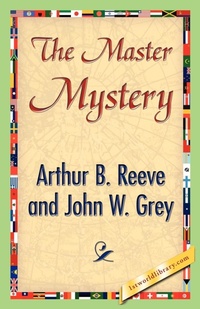
The Master Mystery
Published on 15. June 2007
Book
Paperback/Softback
268 pages
978-1-4218-4227-1 (ISBN)
Description
Peter Brent sat nervously smoking in the library of his great house, Brent Rock. He was a man of about forty-five or-six-a typical, shrewd business man. Something, however, was evidently on his mind, for, though he tried to conceal it, he lacked the self-assurance that was habitually his before the world. A scowl clouded his face as the door of the library was flung open and he heard voices in the hall. A tall, spare, long-haired man forced his way in, crushing his soft black hat in his hands.
More details
Language
English
Product notice
Paperback (trade)
Unsewn / adhesive bound
Dimensions
Height: 216 mm
Width: 140 mm
Thickness: 16 mm
Weight
382 gr
ISBN-13
978-1-4218-4227-1 (9781421842271)
Copyright in bibliographic data and cover images is held by Nielsen Book Services Limited or by the publishers or by their respective licensors: all rights reserved.
Schweitzer Classification
Persons
Arthur B. Reeve was an American author and screenwriter, best known for his contributions to the detective fiction genre in the early 20th century. He gained popularity for creating the character Craig Kennedy, a scientific detective who used innovative forensic techniques to solve crimes. Reeve's writing often reflected his fascination with science and technology, incorporating elements of forensic science that were groundbreaking for the time.
His most notable works include ""The Silent Bullet,"" ""The War Terror,"" and ""The Social Gangster,"" among others. Reeve's stories typically feature intricate plots and strong character development, exploring themes of justice, morality, and the impact of science on society. In addition to his novels, Reeve wrote for film and collaborated on several screenplays during the silent and early sound eras. Though not as widely read today, his contributions laid important groundwork for the detective genre, influencing future writers and shaping the portrayal of scientific investigation in literature.