

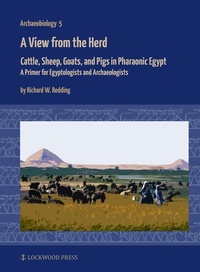
A View from the Herd
Cattle, Sheep, Goats, and Pigs in Pharaonic Egypt: A Primer for Egyptologists and Archaeologists
Will be published approx. on 2. July 2024
Book
Hardback
210 pages
978-1-957454-08-5 (ISBN)
Description
In this book, the late Richard Redding synthesizes his decades-long work on the ancient agricultural economy of Egypt. Drawing on a diverse range of data, including zooarchaeology, ancient texts, and iconographic sources, he explores the role of cattle, sheep, goats and pigs in the economic infrastructure of ancient, mainly Pharaonic, Egypt, along with the complexities of decision-making processes that shaped the use and management of these vital livestock resources.
The book integrates zooarchaeological and historical data with information on unimproved breeds of agricultural livestock from Egypt and the broader Middle East as well as considering texts and tomb paintings. Redding argues that understanding the interplay between economic forces, environmental factors and herders' knowledge of animal characteristics is crucial for unravelling the dynamic nature of decision-making. He explores herd growth rates, meat yields, caloric and nutritional benefits, and optimal herd structures. By employing that data and ecological models, including the annual Nile floods, he provides insights into the adaptive strategies employed by ancient Egyptian herders. In this way, Redding examines the economic rationale behind ancient Egyptian herding communities. His models of Pharaonic herding strategies generate expectations tested using zooarchaeological evidence.
Redding long advocated the modelling approach that he demonstrates here, understanding zooarchaeological data through a lens of animal biology and environmental context. This work should spark wide interest among archaeologists working in disparate regions.
The book integrates zooarchaeological and historical data with information on unimproved breeds of agricultural livestock from Egypt and the broader Middle East as well as considering texts and tomb paintings. Redding argues that understanding the interplay between economic forces, environmental factors and herders' knowledge of animal characteristics is crucial for unravelling the dynamic nature of decision-making. He explores herd growth rates, meat yields, caloric and nutritional benefits, and optimal herd structures. By employing that data and ecological models, including the annual Nile floods, he provides insights into the adaptive strategies employed by ancient Egyptian herders. In this way, Redding examines the economic rationale behind ancient Egyptian herding communities. His models of Pharaonic herding strategies generate expectations tested using zooarchaeological evidence.
Redding long advocated the modelling approach that he demonstrates here, understanding zooarchaeological data through a lens of animal biology and environmental context. This work should spark wide interest among archaeologists working in disparate regions.
Reviews / Votes
This volume of R.'s work on the animal economy of ancient Egypt has been published posthumously thanks to careful work by the series editors and peer-reviewers, as well as R.'s colleagues and family. The result of this endeavour is a worthy synthesis of R.'s diverse investigations into the herded animals of pharaonic Egypt which serves as an invaluable guide to this area. This rich volume is supplemented with forty-two figures (including full-colour images), thirty-six tables, a comprehensive list of references, and an accessible index. Peter J. Atkins, SOTS 2025 book listMore details
Series
Language
English
Place of publication
Atlanta
United States
Target group
Professional and scholarly
Illustrations
42 figures in colour and b&w; 36 tables
Dimensions
Height: 282 mm
Width: 215 mm
Thickness: 20 mm
Weight
836 gr
ISBN-13
978-1-957454-08-5 (9781957454085)
Copyright in bibliographic data and cover images is held by Nielsen Book Services Limited or by the publishers or by their respective licensors: all rights reserved.
Schweitzer Classification
Other editions
Additional editions
Richard W. Redding
View from the Herd
Cattle, Sheep, Goats, and Pigs in Pharaonic Egypt: A Primer for Egyptologists and Archaeologists
E-Book
04/2024
Lockwood Press
€68.99
Available for download
Person
Richard Redding was a research scientist at the Kelsey Museum of Archaeology, University of Michigan. He directed the Kom el-Hisn project with Robert Wenke in the 1980s, and later joined the AERA team at Heit el-Ghurab, a settlement at Giza. He is co-author (with Robert Wenke and Anthony Cagle) of Kom El-Hisn (ca. 2500-1900 BC): An Ancient Settlement in the Nile Delta (Lockwood, 2016).