

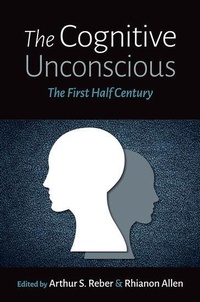
The Cognitive Unconscious
The First Half Century
Published on 29. September 2022
Book
Hardback
400 pages
978-0-19-750157-3 (ISBN)
Description
The term 'Implicit Learning' refers to the way in which knowledge of fairly complex, patterned material can be acquired without any conscious effort to learn it and with little to no awareness of what has been learned. Over the past fifty years, Implict Learning has became a vigorously researched area in the social sciences.
In The Cognitive Unconscious, Arthur S. Reber and Rhianon Allen bring together several dozen experts from social science and neuroscience to present a broad overview of the exploration of the cognitive unconscious. Each chapter delves deeper into a subject that has become an interdisciplinary domain of research to which contributions have been made by sociologists, neuroscientists, evolutionary biologists, linguists, social and organizational psychologists, and sport psychologists, amongst many others. The book shows that unconscious, implicit cognitive processes play a role in virtually everything interesting that human beings do. As the contributors demonstrate, the implicit and explicit elements of cognition form a rich and complex interactive framework that make up who we are.
With contributions from over thirty distinguished authors from nine different countries, The Cognitive Unconscious gives a balanced and thorough overview of where the field is today, over a half-century since the first experiments were run.
In The Cognitive Unconscious, Arthur S. Reber and Rhianon Allen bring together several dozen experts from social science and neuroscience to present a broad overview of the exploration of the cognitive unconscious. Each chapter delves deeper into a subject that has become an interdisciplinary domain of research to which contributions have been made by sociologists, neuroscientists, evolutionary biologists, linguists, social and organizational psychologists, and sport psychologists, amongst many others. The book shows that unconscious, implicit cognitive processes play a role in virtually everything interesting that human beings do. As the contributors demonstrate, the implicit and explicit elements of cognition form a rich and complex interactive framework that make up who we are.
With contributions from over thirty distinguished authors from nine different countries, The Cognitive Unconscious gives a balanced and thorough overview of where the field is today, over a half-century since the first experiments were run.
Reviews / Votes
This substantial collection of chapters examining what has been called by many names-the unconscious, the non-conscious, implicit memory, or tacit memory-will serve a number of different audiences...the text reads well, and is representative of modern views on the issues from researchers who have spent long and fruitful time in the field. * J. F. Heberle, CHOICE * Research on implicit learning and memory has played a pivotal role in modern psychology and neuroscience. The Cognitive Unconscious provides a comprehensive and engaging overview of the impressive progress that has been made during the past half-century. With contributions from leading experts, this authoritative volume is must reading for anyone interested in the implicit influences that shape the human mind and behavior. * Daniel L. Schacter, author of The Seven Sins of Memory Updated Edition * One of the great discoveries about the structure of cognition is the extent to which implicit (unconscious) processes determine what we see and how we learn. This engaging and wide-ranging collection of ably edited chapters describes the origin of this idea and shows how unconscious cognitive processes have proven to be ubiquitous and fundamental to mental life. * Larry Squire, coauthor of Memory: From Mind to Molecules * This book is a tour de force, a definitive guide for still mysterious topic of the cognitive unconscious. Reber and Allen organized an excellent collection of authors and writings at the forefront of this vibrant but oft-neglected topic, reaching out into areas including general neuro-physiology and biology. Chapters are written in informative style, accessible also to general readers. An absolute must for anybody interested in implicit learning and the cognitive unconscious. * Frantisek Baluska, Professor of Cell and Molecular Biology, University of Bonn, Germany * Implicit learning is an exacting field in which experimental designs must be explicitly clever. The Cognitive Unconscious is a remarkable collaboration of renowned experts and a tour de force contribution to this field. Its insights transcend psychology, encompassing all disciplines that investigate cognitive awareness, the subconscious mind, and their adaptive role in evolution, extending from the primordial conscious cell forward. I highly recommend this absorbing, benchmark book. * William B. Miller, Jr., coauthor of Cellular-Molecular Mechanisms in Epigenetic Evolutionary Biology and The Singularity of Nature * This volume provides comprehensive coverage of a remarkable array of topics related to the cognitive unconscious. It is rare, in our increasingly fragmented academic environment, to integrate such a diverse range of approaches through a cohesive organizing theme. The personal notes throughout the volume offer an engaging first-hand perspective on the development and flowering of research on implicit learning and the cognitive unconscious. * Jenny Saffran, Rubenstein Professor of Psychology, University of Wisconsin, Madison * This book is bursting with insights into what lies below the surface of our conscious minds. We may not be privy to the cognitive unconscious directly, but this fascinating underworld (what Kahneman called System 1) actually dictates much of what we do and who we are. * Ken Paller, Professor and James Padilla Chair in Arts & Sciences, Northwestern University *More details
Language
English
Place of publication
New York
United States
Target group
College/higher education
Product notice
sewn/stitched
Cloth over boards
Dimensions
Height: 237 mm
Width: 160 mm
Thickness: 29 mm
Weight
703 gr
ISBN-13
978-0-19-750157-3 (9780197501573)
Copyright in bibliographic data and cover images is held by Nielsen Book Services Limited or by the publishers or by their respective licensors: all rights reserved.
Schweitzer Classification
Other editions
Additional editions
E-Book
07/2022
OUP eBook
€47.49
Available for download
Persons
Arthur S. Reber is an Adjunct Professor in the Department of Psychology at the University of British Columbia. He completed his Ph.D. at Brown University under the direction of Richard Millward. His primary focus has been on implicit or unconscious learning based on principles of evolutionary biology.
Rhianon Allen is Professor Emerita at Long Island University and an Affiliate Professor at the University of British Columbia.
Rhianon Allen is Professor Emerita at Long Island University and an Affiliate Professor at the University of British Columbia.
Content
- I. Foundational Issues
- Chapter 1: Implicit Learning: Background, History, Theory
- Arthur S. Reber
- Chapter 2: Procedural Memory: The Role of Competitive Neurocognitive Networks Across Development
- Karolina Janacsek and Dezso Nemeth
- Chapter 3: Cognitive Neuroscience of Implicit Learning: Implications for Complex Learning and Expertise
- Y. Catherine Han, Kevin D. Schmidt, Evan Grandoit, Peigen Shu, Caelie P. McRobert, and Paul J. Reber
- Chapter 4: Implicit Cognition in the Face of Neurological Disorders: Implications for Neural Mechanisms and Evolution
- Leib Litman and Shalom Noach Jaffe
- Chapter 5: The Cognitive Unconscious in Everyday Life
- John A. Bargh
- II. Distinctions between Implicit and Explicit Functions
- Chapter 6: Implicit Learning and Language Acquisition: Three Approaches, One Phenomenon
- Patrick Rebuschat
- Chapter 7: Implicit Learning in Healthy Aging: Evidence from Probabilistic Sequence Learning
- Darlene V. Howard and James H. Howard, Jr.
- Chapter 8: Implicit Learning of Motor and Perceptual Skills
- Julia M. Schorn and Barbara J. Knowlton
- Chapter 9: IQ, Adaptive Intelligence and Unconscious Processes
- Rhianon Allen
- III. Extensions and Applications
- Chapter 10: Human Unconscious Processes in situ: The Kind of Awareness that Really Matters
- John A. Bargh and Ran R. Hassin
- Chapter 11: The Cognitive Unconscious and Dual Process Theories of Reasoning
- Wim De Neys
- Chapter 12: Implicit Learning in Primates: Insights from Comparative Research
- Benjamin Wilson and Holly E. Jenkins
- Chapter 13: The Locus of Focus and Curing the Yips
- Stephen M. Weiss and Richard S. W. Masters
- Chapter 14: From the Cognitive to the Collective: A Conceptualization of the Unconscious in Organizations
- Elisabeth Brauner
- Chapter 15: The Unexplicated and its Consequences
- Harry Collins
- Chapter 16: Belief and the Cognitive Unconscious
- James E. Alcock
- Chapter 17: Implicit Social Cognition: A Brief (and Gentle) Introduction
- Benedek Kurdi and Mahzarin R. Banaji
- Chapter 18: Implicit Learning of Emotional Structures: Implications for Cognitive-Behavior Therapies
- Razvan Jurchis, Andrei Costea, and Adrian Opre
- Chapter 19: Perspectives on the Cognitive Unconscious
- Antonio Damasio