

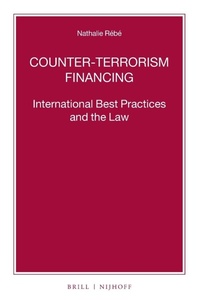
Counter-Terrorism Financing
International Best Practices and the Law
Published on 21. November 2019
Book
Paperback/Softback
432 pages
978-90-04-40966-8 (ISBN)
Description
In Counter-Terrorism Financing: International Best Practices and the Law, Nathalie Rebe, offers a new comprehensive framework for CTF worldwide and reviews the strengths and weaknesses of current regulations and policies.
Both accessible, interesting and engaging in how it approaches chronic problems of Counter-Terrorism Financing, this book provides general understanding of this topic with a literature review and a gap-analysis based on CTF experts' advices, as well as a very detailed analysis of current international regulatory tools.
Nathalie Rebe's 'all-in'one' CTF manual is innovative in this field and provides answers for the international community to fight terrorism financing together more effectively, using a set of standards which promotes strong and diligent cooperation between countries concerning reporting, information exchange and gathering, as well as enforcement.
Both accessible, interesting and engaging in how it approaches chronic problems of Counter-Terrorism Financing, this book provides general understanding of this topic with a literature review and a gap-analysis based on CTF experts' advices, as well as a very detailed analysis of current international regulatory tools.
Nathalie Rebe's 'all-in'one' CTF manual is innovative in this field and provides answers for the international community to fight terrorism financing together more effectively, using a set of standards which promotes strong and diligent cooperation between countries concerning reporting, information exchange and gathering, as well as enforcement.
More details
Series
Language
English
Place of publication
Netherlands
Publishing group
Brill
Target group
Professional and scholarly
Product notice
Paperback (trade)
Unsewn / adhesive bound
Dimensions
Height: 234 mm
Width: 158 mm
Thickness: 25 mm
Weight
598 gr
ISBN-13
978-90-04-40966-8 (9789004409668)
Copyright in bibliographic data and cover images is held by Nielsen Book Services Limited or by the publishers or by their respective licensors: all rights reserved.
Schweitzer Classification
Person
Nathalie Rebe, J.S.D. (2018) & LL.M. (2012) in International Tax and Financial Services, in Compliance & Risk Management, at Thomas Jefferson School of Law. D.B.A. in Financial Strategy & Risk Management (2013), Paris School of Business.
Content
Acronyms and Abbreviations
Acknowledgements
Introduction
Part 1: Counter Terrorism Financing Worldwide Overview
?Introduction to Part 1
1 What is the Current Situation Concerning Counter-Terrorism Financing?
?A?Terrorism's Purpose and Modus Operandi
?B?The Struggle to Define Terrorism
?C?Defining Terrorism Financing
?D?International Specialized Agencies Fighting TF
?E?Current Counter-Terrorism Financing Regulations
2 Can Terrorism Financing Detected?
?A?The Links between Terrorism Financing and Anti Money Laundering
?B?Traditional Terrorism Financing Methods
??i)?Cash Schemes
??ii)?Merchandising and Movable Assets Laundering
??iii)?Wire and International Transfers
??iv)?Investments
??v)?White Collar Crimes
??vi)?Secret Banking Systems, Private Donations and Charities
??vii)?Gambling
??viii)?New Payment Technologies
?C?Terrorism Financing Risks Faced by Financial Institutions
??i)?CTF Red Flags
??ii)?Cases from FIU Reports
3 Existing Compliance Measures to Prevent Terrorism Financing
?A?Internationally used Tools to Detect and Report TF
??i)?How Institutions Model Terrorism Financing Risk
???a?Counter-terrorism Risk Models
???b?Risk Assessment
???c?Risk-Based Supervision
??ii)?Identification
???a?Customer Due Diligence (CDD)
???b?Know Your Customer (KYC)
???c?Enhanced Due Diligence (EDD)
???d?Politically Exposed Persons (PEPs)
????1?Defining PEPs
????2?PEP Affiliated Risks
????3?Risk Mitigation and Management
???e?Customer Identification Programs (CIPs)
???f?Comparison with Government Terrorist lists
??iii)?Reporting
???a?Currency Transaction Reports (CTRs)
???b?National Security Letters (NSLs)
???c?Suspicious Activity Reports (SARs)
?B?The Egmont Group and Financial Intelligence Units
Part 2: Main Threats to the Accomplishment and Success of a New Counter Terrorism Financing Convention
?Introduction to Part 2
4 Key Challenges at the International Level
?A?Main Problems Encountered While Trying to Detect TF Activities
??i)?Anonymity
??ii)?Cross-border Activities
??iii)?Third-party Involvement
???a?Employee Participation in the Financing Scheme
???b?Third-party Reliance
???c?Third-party Funding
?B?The Emergence of New Payment Technologies
?C?International Cooperation between Actors and Agencies
?D?Political Pressure
5 The Ineffectiveness of the Current Enforcement System Mechanism
?A?Cross-Border Enforcement
?B?Assets Tracing, Freezing of Assets and Assets Recovery
6 Potential Conflicts between a New CTF Tool and Human Rights
?A?International Privacy Laws
?B?Civil Liberties and Humanitarian Laws
Part 3: Current Regulatory Instruments
?Introduction to Part 3
7 Analysis of Existing Counter Terrorism Tools with Regards to Counter Terrorism Financing
?1?International Counter Terrorism Regulations
?2?Agencies and Financial Institutions Recommendations
?3?Countries Legislative Contribution
8 Current Counter Terrorism Tools and Regulations Successes and Failures
?A?A Critique of Current Counter Terrorism Financing Tools and Regulations
?B?Counter Terrorism Financing Regulations' Gap Analysis
?C?Constructive Criticism and Advice by International Experts for Building a New Model
Part 4: New Counter Terrorism Financing Convention Model and Recommendations
?Introduction to Part 4
9 The importance of a New CTF Framework
10 Building a New Counter-Terrorism Financing Model
11 Ways to Strengthen Worldwide Detection, Prevention and Enforcement
?A?Actors' Involvement and Cooperation at the Domestic and International Levels
?B?Collaboration with the Private Sector
?C?The Positive Development of Global Financial Intelligence Units
?Conclusion
Part 5: Matters for Further Consideration
?Introduction to Part 5
?Bibliography
?Annexes
?Index
Acknowledgements
Introduction
Part 1: Counter Terrorism Financing Worldwide Overview
?Introduction to Part 1
1 What is the Current Situation Concerning Counter-Terrorism Financing?
?A?Terrorism's Purpose and Modus Operandi
?B?The Struggle to Define Terrorism
?C?Defining Terrorism Financing
?D?International Specialized Agencies Fighting TF
?E?Current Counter-Terrorism Financing Regulations
2 Can Terrorism Financing Detected?
?A?The Links between Terrorism Financing and Anti Money Laundering
?B?Traditional Terrorism Financing Methods
??i)?Cash Schemes
??ii)?Merchandising and Movable Assets Laundering
??iii)?Wire and International Transfers
??iv)?Investments
??v)?White Collar Crimes
??vi)?Secret Banking Systems, Private Donations and Charities
??vii)?Gambling
??viii)?New Payment Technologies
?C?Terrorism Financing Risks Faced by Financial Institutions
??i)?CTF Red Flags
??ii)?Cases from FIU Reports
3 Existing Compliance Measures to Prevent Terrorism Financing
?A?Internationally used Tools to Detect and Report TF
??i)?How Institutions Model Terrorism Financing Risk
???a?Counter-terrorism Risk Models
???b?Risk Assessment
???c?Risk-Based Supervision
??ii)?Identification
???a?Customer Due Diligence (CDD)
???b?Know Your Customer (KYC)
???c?Enhanced Due Diligence (EDD)
???d?Politically Exposed Persons (PEPs)
????1?Defining PEPs
????2?PEP Affiliated Risks
????3?Risk Mitigation and Management
???e?Customer Identification Programs (CIPs)
???f?Comparison with Government Terrorist lists
??iii)?Reporting
???a?Currency Transaction Reports (CTRs)
???b?National Security Letters (NSLs)
???c?Suspicious Activity Reports (SARs)
?B?The Egmont Group and Financial Intelligence Units
Part 2: Main Threats to the Accomplishment and Success of a New Counter Terrorism Financing Convention
?Introduction to Part 2
4 Key Challenges at the International Level
?A?Main Problems Encountered While Trying to Detect TF Activities
??i)?Anonymity
??ii)?Cross-border Activities
??iii)?Third-party Involvement
???a?Employee Participation in the Financing Scheme
???b?Third-party Reliance
???c?Third-party Funding
?B?The Emergence of New Payment Technologies
?C?International Cooperation between Actors and Agencies
?D?Political Pressure
5 The Ineffectiveness of the Current Enforcement System Mechanism
?A?Cross-Border Enforcement
?B?Assets Tracing, Freezing of Assets and Assets Recovery
6 Potential Conflicts between a New CTF Tool and Human Rights
?A?International Privacy Laws
?B?Civil Liberties and Humanitarian Laws
Part 3: Current Regulatory Instruments
?Introduction to Part 3
7 Analysis of Existing Counter Terrorism Tools with Regards to Counter Terrorism Financing
?1?International Counter Terrorism Regulations
?2?Agencies and Financial Institutions Recommendations
?3?Countries Legislative Contribution
8 Current Counter Terrorism Tools and Regulations Successes and Failures
?A?A Critique of Current Counter Terrorism Financing Tools and Regulations
?B?Counter Terrorism Financing Regulations' Gap Analysis
?C?Constructive Criticism and Advice by International Experts for Building a New Model
Part 4: New Counter Terrorism Financing Convention Model and Recommendations
?Introduction to Part 4
9 The importance of a New CTF Framework
10 Building a New Counter-Terrorism Financing Model
11 Ways to Strengthen Worldwide Detection, Prevention and Enforcement
?A?Actors' Involvement and Cooperation at the Domestic and International Levels
?B?Collaboration with the Private Sector
?C?The Positive Development of Global Financial Intelligence Units
?Conclusion
Part 5: Matters for Further Consideration
?Introduction to Part 5
?Bibliography
?Annexes
?Index