

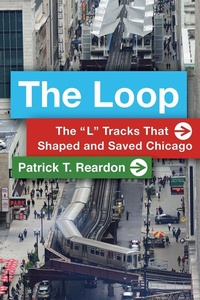
The Loop
The "L" Tracks That Shaped and Saved Chicago
Published on 30. November 2020
Book
Paperback/Softback
304 pages
978-0-8093-3810-8 (ISBN)
Description
The structure that anchors Chicago.
Every day Chicagoans rely on the loop of elevated train tracks to get to their jobs, classrooms, or homes in the city's downtown. But how much do they know about the single most important structure in the history of the Windy City? In engagingly brisk prose, Patrick T. Reardon unfolds the fascinating story about how Chicago's elevated Loop was built, gave its name to the downtown, helped unify the city, saved the city's economy, and was itself saved from destruction in the 1970s.
This unique volume combines urban history, biography, engineering, architecture, transportation, culture, and politics to explore the elevated Loop's impact on the city's development and economy and on the way Chicagoans see themselves. The Loop rooted Chicago's downtown in a way unknown in other cities, and it protected that area-and the city itself-from the full effects of suburbanization during the second half of the twentieth century. Masses of data underlie new insights into what has made Chicago's downtown, and the city as a whole, tick.
The Loop features a cast of colorful Chicagoans, such as legendary lawyer Clarence Darrow, poet Edgar Lee Masters, mayor Richard J. Daley, and the notorious Gray Wolves of the Chicago City Council. Charles T. Yerkes, an often-demonized figure, is shown as a visionary urban planner, and engineer John Alexander Low Waddell, a world-renowned bridge creator, is introduced to Chicagoans as the designer of their urban railway.
This fascinating exploration of how one human-built structure reshaped the social and economic landscape of Chicago is the definitive book on Chicago's elevated Loop.
Every day Chicagoans rely on the loop of elevated train tracks to get to their jobs, classrooms, or homes in the city's downtown. But how much do they know about the single most important structure in the history of the Windy City? In engagingly brisk prose, Patrick T. Reardon unfolds the fascinating story about how Chicago's elevated Loop was built, gave its name to the downtown, helped unify the city, saved the city's economy, and was itself saved from destruction in the 1970s.
This unique volume combines urban history, biography, engineering, architecture, transportation, culture, and politics to explore the elevated Loop's impact on the city's development and economy and on the way Chicagoans see themselves. The Loop rooted Chicago's downtown in a way unknown in other cities, and it protected that area-and the city itself-from the full effects of suburbanization during the second half of the twentieth century. Masses of data underlie new insights into what has made Chicago's downtown, and the city as a whole, tick.
The Loop features a cast of colorful Chicagoans, such as legendary lawyer Clarence Darrow, poet Edgar Lee Masters, mayor Richard J. Daley, and the notorious Gray Wolves of the Chicago City Council. Charles T. Yerkes, an often-demonized figure, is shown as a visionary urban planner, and engineer John Alexander Low Waddell, a world-renowned bridge creator, is introduced to Chicagoans as the designer of their urban railway.
This fascinating exploration of how one human-built structure reshaped the social and economic landscape of Chicago is the definitive book on Chicago's elevated Loop.
More details
Language
English
Place of publication
Carbondale
United States
Target group
Professional and scholarly
Illustrations
32 illustrations
Dimensions
Height: 224 mm
Width: 152 mm
Thickness: 30 mm
Weight
476 gr
ISBN-13
978-0-8093-3810-8 (9780809338108)
Copyright in bibliographic data and cover images is held by Nielsen Book Services Limited or by the publishers or by their respective licensors: all rights reserved.
Schweitzer Classification
Other editions
Additional editions
E-Book
11/2020
1st Edition
Southern Illinois University Press
€38.99
Available for download
Person
For more than three decades Patrick T. Reardon was an urban affairs writer, a feature writer, a columnist, and an editor for the Chicago Tribune. In 2000 he was one of a team of 50 staff members who won a Pulitzer Prize for explanatory reporting. Now a freelance writer and poet, he has contributed chapters to several books and is the author of Faith Stripped to Its Essence. His website is https://patricktreardon.com/.
Content
Contents
Introduction
1. The Loop, New Year's Eve, 1911
Part One - Lots of loops
2. Academic fashion
3. Silence
4. Lots of Loops
5. The Word "loop"
6. The Last Cable Car
Part Two - The Union Loop
7. Dreaming of a "Union Loop"
8. Willing the Union Loop into Existence
9. The Birth of the Union Loop
Part Three - The Loop
10. The Rectangular Bridge and the Bridge Builder
11. Inside and outside the Loop
12. The Name "Loop"
Part Four - The Heart of Chicago
13. "My 'Other Neighborhood'"
14. Wandering Downtowns
15. Raze the Loop
16. The Loop, New Year's Day, 2019
Acknowledgments and Permissions
Bibliography
Notes
Index
Introduction
1. The Loop, New Year's Eve, 1911
Part One - Lots of loops
2. Academic fashion
3. Silence
4. Lots of Loops
5. The Word "loop"
6. The Last Cable Car
Part Two - The Union Loop
7. Dreaming of a "Union Loop"
8. Willing the Union Loop into Existence
9. The Birth of the Union Loop
Part Three - The Loop
10. The Rectangular Bridge and the Bridge Builder
11. Inside and outside the Loop
12. The Name "Loop"
Part Four - The Heart of Chicago
13. "My 'Other Neighborhood'"
14. Wandering Downtowns
15. Raze the Loop
16. The Loop, New Year's Day, 2019
Acknowledgments and Permissions
Bibliography
Notes
Index