

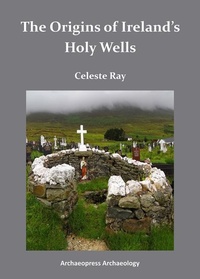
The Origins of Ireland's Holy Wells
Published on 19. January 2014
Book
Paperback/Softback
176 pages
978-1-78491-044-0 (ISBN)
Description
This book re-assesses archaeological research into holy well sites in Ireland and the evidence for votive deposition at watery sites throughout northwest European prehistory. Ray examines a much-ignored and diminishing archaeological resource; moving beyond debates about the possible Celticity of these sites in order to gain a deeper understanding of patterns among sacred watery sites. The work considers how and why sacred springs are archaeologically-resistant sites and what has actually been found at the few excavated in Ireland. Drawing on the early Irish literature (the myths, hagiographies, penitentials and annals), the author gives an account of pre-Christian supermundane wells in Ireland and what we know about their early Christian use for baptism, and concludes by considering the origins of "rounding" rituals at holy wells.
More details
Language
English
Place of publication
Oxford
United Kingdom
Publishing group
Archaeopress
Target group
Professional and scholarly
Product notice
B5: Tankobon
Illustrations
illustrated throughout in colour and black & white
Dimensions
Height: 246 mm
Width: 176 mm
Thickness: 10 mm
Weight
524 gr
ISBN-13
978-1-78491-044-0 (9781784910440)
Copyright in bibliographic data and cover images is held by Nielsen Book Services Limited or by the publishers or by their respective licensors: all rights reserved.
Schweitzer Classification
Person
Celeste Ray is Professor of Anthropology at the University of the South in Sewanee, Tennessee. Trained in Anthropology, Archaeology and Cultural Resource Management, she has previously published on Ethnicity, Scottish-Americans, and Regionalism.
Content
1: Water Veneration and Votive Deposition in Prehistoric Northern and Western Europe ;
2: Iron Age Evidence, Continuity, and the "Celtic" Question ;
3: Iron Age Water Deities ;
4: Holy Wells and Sacred Springs as Archaeologically-Resistant Sites ;
5: The Contested Origins and Materiality of Irish Holy Wells ;
6: Supermundane Wells of the Iron Age and the Early Irish Literature ;
7: Irish Sacred Wells of the Early Christian Era and the Conversion Model ;
8: Sacred Springs and Conversion Strategies in Britain and on the Continent ;
9: Christian Holy Wells and Baptism ;
10: The Origins of Rounding and the Interconnectedness of Wells ;
Appendix A: Irish Excavation Reports of "holy wells" from Excavations.ie (as of June 2014) ;
Appendix B: Holy Wells in the County Archaeological Inventories of Ireland
2: Iron Age Evidence, Continuity, and the "Celtic" Question ;
3: Iron Age Water Deities ;
4: Holy Wells and Sacred Springs as Archaeologically-Resistant Sites ;
5: The Contested Origins and Materiality of Irish Holy Wells ;
6: Supermundane Wells of the Iron Age and the Early Irish Literature ;
7: Irish Sacred Wells of the Early Christian Era and the Conversion Model ;
8: Sacred Springs and Conversion Strategies in Britain and on the Continent ;
9: Christian Holy Wells and Baptism ;
10: The Origins of Rounding and the Interconnectedness of Wells ;
Appendix A: Irish Excavation Reports of "holy wells" from Excavations.ie (as of June 2014) ;
Appendix B: Holy Wells in the County Archaeological Inventories of Ireland