

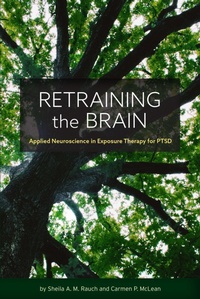
Retraining the Brain
Applied Neuroscience in Exposure Therapy for PTSD
Published on 11. May 2021
Book
Paperback/Softback
219 pages
978-1-4338-3404-2 (ISBN)
Description
Rauch and McLean bridge the gap between neuroscience research and the treatment of PTSD patients.
Individuals with PTSD have developed automatic associations between specific stimuli and traumatic events. As a result, these individuals experience intense fear when exposed to the stimuli, even though the original threat is no longer present.
This book presents prolonged exposure therapy (PE), a specific manualized exposure therapy program for PTSD. A variant of exposure therapy, PE is a cognitive behavioral approach designed to reduce pathological anxiety and related emotions by helping patients approach relatively safe but distress-provoking thoughts, memories, situations, and stimuli, with the goal of reducing unhelpful emotional reactions to those stimuli.
Informed by extensive research but written for clinicians, the book explains how neuroscience can guide our application of the three key components of PE: ( ) psychoeducation about the nature of trauma, (2) in vivo exposure to trauma reminders, and (3) imaginal exposure to the memory of the traumatic event followed by processing of the imaginal and other exposures.
Individuals with PTSD have developed automatic associations between specific stimuli and traumatic events. As a result, these individuals experience intense fear when exposed to the stimuli, even though the original threat is no longer present.
This book presents prolonged exposure therapy (PE), a specific manualized exposure therapy program for PTSD. A variant of exposure therapy, PE is a cognitive behavioral approach designed to reduce pathological anxiety and related emotions by helping patients approach relatively safe but distress-provoking thoughts, memories, situations, and stimuli, with the goal of reducing unhelpful emotional reactions to those stimuli.
Informed by extensive research but written for clinicians, the book explains how neuroscience can guide our application of the three key components of PE: ( ) psychoeducation about the nature of trauma, (2) in vivo exposure to trauma reminders, and (3) imaginal exposure to the memory of the traumatic event followed by processing of the imaginal and other exposures.
More details
Language
English
Place of publication
Washington DC
United States
Target group
Professional and scholarly
Product notice
Paperback (trade)
Dimensions
Height: 229 mm
Width: 152 mm
Thickness: 10 mm
Weight
272 gr
ISBN-13
978-1-4338-3404-2 (9781433834042)
Copyright in bibliographic data and cover images is held by Nielsen Book Services Limited or by the publishers or by their respective licensors: all rights reserved.
Schweitzer Classification
Persons
Sheila A. M. Rauch, PhD, ABPP, is a professor in the Department of Psychiatry and Behavioral Sciences at the Emory University School of Medicine and serves as deputy director of the Emory Healthcare Veterans Program and director of mental health research and program evaluation at the VA Atlanta Healthcare System. She has been developing programs, conducting research, and providing treatment for PTSD and anxiety disorders for over 2 years. She has published scholarly articles, chapters, and books on anxiety disorders and PTSD, focusing on neurobiology and factors involved in the development, maintenance, and treatment of anxiety disorders.
Carmen P. McLean, PhD, is a clinical psychologist at the National Center for PTSD amp rsquo s Dissemination and Training Division at the Palo Alto VA and a clinical associate professor (affiliate) at Stanford University. She amp rsquo s an associate editor for Cognitive Behavioral Practice and a 2 8 recipient of the Anne Marie Albano Early Career Award for Excellence in the Integration of Science and Practice from the Association for Cognitive and Behavioral Therapies. She amp rsquo s published over articles and chapters on PTSD and anxiety. Her research examines ways to increase the reach of exposure therapy for PTSD by addressing implementation barriers and testing eHealth interventions.
Carmen P. McLean, PhD, is a clinical psychologist at the National Center for PTSD amp rsquo s Dissemination and Training Division at the Palo Alto VA and a clinical associate professor (affiliate) at Stanford University. She amp rsquo s an associate editor for Cognitive Behavioral Practice and a 2 8 recipient of the Anne Marie Albano Early Career Award for Excellence in the Integration of Science and Practice from the Association for Cognitive and Behavioral Therapies. She amp rsquo s published over articles and chapters on PTSD and anxiety. Her research examines ways to increase the reach of exposure therapy for PTSD by addressing implementation barriers and testing eHealth interventions.
Content
Preface
I. Overview of Prolonged Exposure and Theory
Chapter . Theory and Prolonged Exposure
Chapter 2. What Is Prolonged Exposure Therapy?
II. Neuroscience Methods for Clinicians
Chapter 3. Neurosteroids, Cortisol, and Other Neurochemicals
Chapter 4. Imaging
Chapter 5. Electroencephalography
Chapter . Psychophysiology
Chapter 7. Genetics and Genomics
III. Applied Neuroscience: Prolonged Exposure for PTSD
Chapter 8. Psychoeducation and Neuroscience
Chapter 9. In Vivo Exposure and Neuroscience
Chapter . Imaginal Exposure and Neuroscience
Chapter . Processing and Neuroscience
IV. Future Directions
Chapter 2. Augmentation of Prolonged Exposure
Chapter 3. New Models of Care Delivery
References
Glossary
I. Overview of Prolonged Exposure and Theory
Chapter . Theory and Prolonged Exposure
Chapter 2. What Is Prolonged Exposure Therapy?
II. Neuroscience Methods for Clinicians
Chapter 3. Neurosteroids, Cortisol, and Other Neurochemicals
Chapter 4. Imaging
Chapter 5. Electroencephalography
Chapter . Psychophysiology
Chapter 7. Genetics and Genomics
III. Applied Neuroscience: Prolonged Exposure for PTSD
Chapter 8. Psychoeducation and Neuroscience
Chapter 9. In Vivo Exposure and Neuroscience
Chapter . Imaginal Exposure and Neuroscience
Chapter . Processing and Neuroscience
IV. Future Directions
Chapter 2. Augmentation of Prolonged Exposure
Chapter 3. New Models of Care Delivery
References
Glossary