

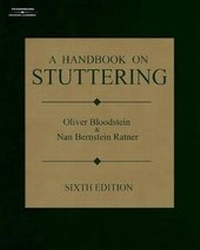
A Handbook on Stuttering
6th Edition
Published on 25. October 2007
Book
Paperback/Softback
568 pages
978-1-4180-4203-5 (ISBN)
Description
Rarely does a textbook transcend the ordinary to be universally considered a "classic". The esteemed A Handbook on Stuttering, now in its 6th edition, continues to be the only existing work that offers a comprehensive review of evidence-based knowledge about the etiology, nature, and treatment of stuttering. Since the last edition was published there have been numerous important advances in research on stuttering, particularly with regard to brain research and language development. This edition captures these new developments, without losing the historical information that makes it so unique.
Reviews / Votes
1. Symptomatology 2. Theories of stuttering 3. Prevalence and incidence 4. The person who stutters: central neurological findings 5. The person who stutters: motor abilities 6. The person who stutters: other physical findings 7. The person who stutters: personality 8. The person who stutters: cognitive and linguistic abilities 9. The person who stutters: developmental history and home environment 10. Stuttering as a response 11. Stuttering as a response: some controversial phenomena 12. Early stuttering and normal disfluency 13. Inferences and conclusions 14. Diagnosis and treatment Appendix: Results of Treatment References. Subject Index. Author IndexMore details
Edition
International Edition
Language
English
Place of publication
Clifton Park
United States
Publishing group
Cengage Learning, Inc
Target group
College/higher education
Professional and scholarly
Dimensions
Height: 236 mm
Width: 189 mm
Thickness: 22 mm
Weight
846 gr
ISBN-13
978-1-4180-4203-5 (9781418042035)
Copyright in bibliographic data and cover images is held by Nielsen Book Services Limited or by the publishers or by their respective licensors: all rights reserved.
Schweitzer Classification
Persons
University of Maryland, College Park, MD Brooklyn College, Brooklyn, NY
Content
1. Symptomatology
2. Theories of stuttering
3. Prevalence and incidence
4. The person who stutters: central neurological findings
5. The person who stutters: motor abilities
6. The person who stutters: other physical findings
7. The person who stutters: personality
8. The person who stutters: cognitive and linguistic abilities
9. The person who stutters: developmental history and home environment
10. Stuttering as a response
11. Stuttering as a response: some controversial phenomena
12. Early stuttering and normal disfluency
13. Inferences and conclusions
14. Diagnosis and treatment
Appendix: Results of Treatment References.
Subject Index.
Author Index
2. Theories of stuttering
3. Prevalence and incidence
4. The person who stutters: central neurological findings
5. The person who stutters: motor abilities
6. The person who stutters: other physical findings
7. The person who stutters: personality
8. The person who stutters: cognitive and linguistic abilities
9. The person who stutters: developmental history and home environment
10. Stuttering as a response
11. Stuttering as a response: some controversial phenomena
12. Early stuttering and normal disfluency
13. Inferences and conclusions
14. Diagnosis and treatment
Appendix: Results of Treatment References.
Subject Index.
Author Index