

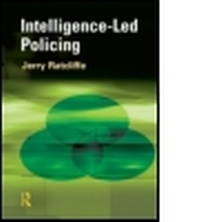
Intelligence-Led Policing
1st Edition
Published on 29. February 2008
Book
Hardback
288 pages
978-1-84392-340-4 (ISBN)
Description
What is intelligence-led policing? Who came up with the idea? Where did it come from? How does it relate to other policing paradigms? What distinguishes an intelligence-led approach to crime reduction? How is it designed to have an impact on crime? Does it prevent crime? What is crime disruption? Is intelligence-led policing just for the police? These are questions asked by many police professionals, including senior officers, analysts and operational staff. Similar questions are also posed by students of policing who have witnessed the rapid emergence of intelligence-led policing from its British origins to a worldwide movement. These questions are also relevant to crime prevention practitioners and policymakers seeking long-term crime benefits. The answers to these questions are the subject of this book.
This book brings the concepts, processes and practice of intelligence-led policing into focus, so that students, practitioners and scholars of policing, criminal intelligence and crime analysis can better understand the evolving theoretical and empirical dynamics of this rapidly growing paradigm. The first book of its kind, enhanced by viewpoint contributions from intelligence experts and case studies of police operations, provides a much-needed and timely in-depth synopsis of this emerging movement in a practical and accessible style.
This book brings the concepts, processes and practice of intelligence-led policing into focus, so that students, practitioners and scholars of policing, criminal intelligence and crime analysis can better understand the evolving theoretical and empirical dynamics of this rapidly growing paradigm. The first book of its kind, enhanced by viewpoint contributions from intelligence experts and case studies of police operations, provides a much-needed and timely in-depth synopsis of this emerging movement in a practical and accessible style.
Reviews / Votes
'Dr Ratcliffe has that rare ability to combine theory and practice using language that practitioners will find both useful and applicable in an operational environment. This is a book for everyone with a stake in understanding crime and the value of intelligence-led approaches as an effective response.' ? R. Mark Evans, Director, Analytical Services, Police Service of Northern IrelandMore details
Language
English
Place of publication
Cullompton
United Kingdom
Publishing group
Taylor & Francis Ltd
Target group
College/higher education
Dimensions
Height: 248 mm
Width: 171 mm
Weight
680 gr
ISBN-13
978-1-84392-340-4 (9781843923404)
Copyright in bibliographic data and cover images is held by Nielsen Book Services Limited or by the publishers or by their respective licensors: all rights reserved.
Schweitzer Classification
Other editions
New editions
Jerry H. Ratcliffe
Intelligence-Led Policing
Book
04/2016
2nd Edition
Routledge
€282.25
Shipment within 10-20 days
Additional editions
Jerry H. Ratcliffe
Intelligence-Led Policing
Book
02/2008
Willan Publishing
€62.08
Article exhausted; check for reprint
Person
Jerry Ratcliffe is Professor at the Department of Criminal Justice, Temple University, Philadelphia.
Content
1. Introduction. Reimagining policing. What is intelligence-led policing?. What makes intelligence-led policing unique?. A holistic approach to crime control. Case study: Operation Nine Connect. The structure of this book 2. Origins of intelligence-led policing. Drivers for change. Complexity in policing and the performance culture. Managing risk. The demand gap. Limitations of the standard model of policing. Organised and transnational crime. Changes in technology. The US policing landscape. Fragmented and uncoordinated. Viewpoint: Fragmented policing and the role of fusion centers. Demonising intelligence. The community policing era. Slow emergence of problem-oriented policing. Rapid emergence of Compstat. 9/11 and homeland security. The British policing landscape. New public managerialism and oversight. Sporadic emergence of problem-oriented policing in the UK. Helping with enquiries and policing with intelligence. The National Intelligence Model. Summary. Notes 3. The magnitude of the crime challenge. The crime funnel. How much crime gets reported?. Case study: Calls for service in America's most dangerous city. Crime-prone places. Completing the crime funnel. The offender problem. Individual offending and recidivism. Predicting prolific offenders. Can the police identify prolific offenders?. Organised crime. Viewpoint: Threat measurement techniques for organised crime. Summary 4. Defining intelligence-led policing. Related policing frameworks. Community policing. Problem-oriented policing. Compstat. Conceptual confusion. Viewpoint: Policing conceptual frameworks from the analyst's perspective. Intelligence-led policing defined. Original tenets. Revising the original model. Intelligence-led policing components. Summary 5. Analytical frameworks. Awash with terminology. What is criminal intelligence?. What is crime analysis?. Data, information and knowledge?. DIKI continuum. From knowledge to intelligence. Levels of crime intelligence. NIM levels. Viewpoint: A practitioner's perspective on the National Intelligence Model. Conceptualising analysis. NIM business model. The 3-i model. Can models reflect reality?. Summary 6. Interpreting the criminal environment. Target selection. Recording crime details. Threat assessments. Objective targeting and offender self-selection. Playing well with others. Viewpoint: Information sharing at the national level. Information collation. Improving information sharing. A role for liaison officers?. Confidential informants. Analytical tehcniques. Strategic thinking. Summary note 7. Influencing decision-makers. Who are decision-makers?. Front-line officers. Police leadership. Non-law enforcement. The general public. Security networks. Viewpoint: The responsibilities of intelligence-led police leadership. Understanding the client's environment. Working with the audience. Maximising influence. Embracing networks. Recommending action. Summary 8. Having an impact on crime. Revisiting the crime funnel. Estimating prevention benefits. Reduction, disruption and prevention. The changing leadership role. Viewpoint: The leadership role in intelligence-led policing. Steering the rowers in the right direction. The police impact on crime. Does police targeting prevent crime?. Does increasing arrests reduce crime?. Intelligence-led crime reduction. Summary 9. Evaluating intelligence-led policing. Evaluation concepts and practice. What are we evaluating?. Types of evaluations. Operation Vendas and Operation Safe Streets. Evaluation skills. Pure evaluations and realistic evaluations. Case study: Operation Anchorage. Viewpoint: Refining strategy after Operation Anchorage. Measuring success in different ways. The cost-benefit of surveillance and confidential informants. Measuring disruption. Measuring success in changing business practice. Measuring success in performance indicators. Summary. Notes 10. Challenges for the future. The challenges of covert activity. The risks of greater informant use in covert activities. Principle of proportionality. Storing private information. Human rights and surveillance. Viewpoint: Intelligence-led policing and public trust. The widening security agenda. Greater strategic application. Merging criminal intelligence and national security. An agenda for the future. Conceptual training for analysts and executives. Disseminating success. Looking beyond the tactical imperatives. Engage the next cohort of police leaders. Ten yardsticks for intelligence-led policing. Summary