

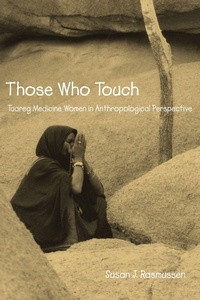
Those Who Touch
Tuareg Medicine Women in Anthropolotical Perspective
Published on 5. April 2006
Book
Paperback/Softback
246 pages
978-0-87580-610-5 (ISBN)
Description
A twenty-five-year veteran of field research in Niger and Mali, anthropologist Susan J. Rasmussen examines the female-dominated practice of herbalism in the seminomadic Muslim communities of Tuareg. Medicine women, known as tinesmegelen, diagnose by touch and treat their patients-mostly women and children-with leaves, bark, and roots from trees associated with ancestral spirits. In addition to healing, they relate oral traditions, offer marital counseling, protect patients against potential domestic violence, and practice divination.
By earning the trust of nearly twenty medicine women over the course of her fieldwork, Rasmussen is able to provide an in-depth profile of these healers and their beliefs. The women come from diverse backgrounds, many of noble origins. Whereas they must be mothers, most do not practice their profession fully until their post-childbearing years. Rasmussen traces the mythical-historical origins of female herbalism and the initiation process for entering the profession. Significantly, she investigates the powerful relationships between medicine women and various authorities: Islamic leaders, state officials, and the medical staff of nongovernment clinics.
Rasmussen draws the reader into this fascinating world of medicine women through interviews, guided conversations, life histories, illustrative case studies, and, most importantly, the words of the healers and their patients. As a participant-observer, she shares her own experiences with descriptions of the treatments she herself received. Then, moving from a focused analysis to a broader contextual frame, she addresses central questions in anthropology about gender, knowledge, and the interface between religion and medicine.
By earning the trust of nearly twenty medicine women over the course of her fieldwork, Rasmussen is able to provide an in-depth profile of these healers and their beliefs. The women come from diverse backgrounds, many of noble origins. Whereas they must be mothers, most do not practice their profession fully until their post-childbearing years. Rasmussen traces the mythical-historical origins of female herbalism and the initiation process for entering the profession. Significantly, she investigates the powerful relationships between medicine women and various authorities: Islamic leaders, state officials, and the medical staff of nongovernment clinics.
Rasmussen draws the reader into this fascinating world of medicine women through interviews, guided conversations, life histories, illustrative case studies, and, most importantly, the words of the healers and their patients. As a participant-observer, she shares her own experiences with descriptions of the treatments she herself received. Then, moving from a focused analysis to a broader contextual frame, she addresses central questions in anthropology about gender, knowledge, and the interface between religion and medicine.
Reviews / Votes
Highly recommended... sure to become the authoritative ethnography of a unique and impressive healing tradition.(AMERICAN HISTORICAL REVIEW) Packed with rich and valuable ethnographic material. This is a valuable and provocative ethnography that merits the attention of medical and psychological anthropologists, as well as anthropologists of religion and gender.
(Ethos) The author has intimate knowledge of two generations of [medicine] women, the kind of knowledge unavailable to most anthropologists. The book's strength rests in the quality and quantity of its data.
(Choice)
More details
Language
English
Place of publication
United States
Publishing group
Cornell University Press
Target group
College/higher education
Professional and scholarly
Edition type
Annotated edition
Product notice
Paperback (trade)
Dimensions
Height: 228 mm
Width: 154 mm
Thickness: 18 mm
Weight
386 gr
ISBN-13
978-0-87580-610-5 (9780875806105)
Copyright in bibliographic data and cover images is held by Nielsen Book Services Limited or by the publishers or by their respective licensors: all rights reserved.
Schweitzer Classification
Person
Susan J. Rasmussen is Professor of Anthropology at the University of Houston and the author of The Poetics and Politics of Tuareg Aging, Spirit Possession and Personhood among the Kel Ewey Tuareg, and Healing in Community.
Content
Table of Contents
Deconstructing and Recasting Female Healing: Preliminary Remarks
PART ONE: Departures-Herbal Medicine and Local and Authoritative Systems of Thought
1. The Vexing Problem of Difference and Classifications in Anthropology and the Local Ethnographic Setting
2. Herbalism, Medicine, and Curing-Medicine Women's Concepts of Wellness, Illness, and Healing
PART TWO: Touch and Word-Learning and Transmitting Medicine
3. Touch, Body, and Senses
4. Word and Deed-Oral Traditions and the Mythico-History of Herbal Medicine
5. Medicine Women, Gender, and Physical and Social Reproduction over the Life Course
6. Natural Imagery (Arboreal Tropes) in Herbalism-Plant Uses in Nature and Culture
PART THREE: Medicine Women and Wider Systems of Power
7. Medicine Women, Sacred Places, and Al Baraka Ritual Benediction
8. Medicine Women and Islam-Relations with Marabouts
9. Medicine Women and Other "Shamans"-Herbalism, the Spirits of the Wild, Divination, and Power
10. Changes in the Wind-Medicine Women's Relations with Established Biomedicine
Conclusions-Herbal Healing, Modes of Thought, and Gender
Notes
Works Cited
Index
Deconstructing and Recasting Female Healing: Preliminary Remarks
PART ONE: Departures-Herbal Medicine and Local and Authoritative Systems of Thought
1. The Vexing Problem of Difference and Classifications in Anthropology and the Local Ethnographic Setting
2. Herbalism, Medicine, and Curing-Medicine Women's Concepts of Wellness, Illness, and Healing
PART TWO: Touch and Word-Learning and Transmitting Medicine
3. Touch, Body, and Senses
4. Word and Deed-Oral Traditions and the Mythico-History of Herbal Medicine
5. Medicine Women, Gender, and Physical and Social Reproduction over the Life Course
6. Natural Imagery (Arboreal Tropes) in Herbalism-Plant Uses in Nature and Culture
PART THREE: Medicine Women and Wider Systems of Power
7. Medicine Women, Sacred Places, and Al Baraka Ritual Benediction
8. Medicine Women and Islam-Relations with Marabouts
9. Medicine Women and Other "Shamans"-Herbalism, the Spirits of the Wild, Divination, and Power
10. Changes in the Wind-Medicine Women's Relations with Established Biomedicine
Conclusions-Herbal Healing, Modes of Thought, and Gender
Notes
Works Cited
Index