

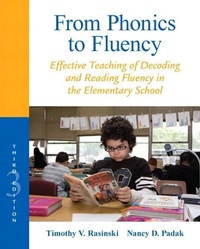
From Phonics to Fluency
Effective Teaching of Decoding and Reading Fluency in the Elementary School
3rd Edition
Published on 9. November 2012
Book
Paperback/Softback
336 pages
978-0-13-285522-8 (ISBN)
Description
KEY BENEFIT: Two of today's most respected literacy educators provide aspiring and veteran teachers alike with practical, workable, fresh approaches to word study that students find authentic, engaging, and enjoyable.
KEY TOPICS: Word study and fluency; assessment; instructional routines; using authentic texts; teaching phonemic awareness; onsets, rimes, and basic phonic patterns; teaching advanced word patterns; understanding word walls, word banks, and word sorts; making and writing words; contextual word recognition; LEAs; word games; using spelling in word learning; reading fluency; teaching phonics and fluency; involving parents.
MARKET: Aspiring and in-service pre-K and elementary teachers, reading specialists, and coaches
KEY TOPICS: Word study and fluency; assessment; instructional routines; using authentic texts; teaching phonemic awareness; onsets, rimes, and basic phonic patterns; teaching advanced word patterns; understanding word walls, word banks, and word sorts; making and writing words; contextual word recognition; LEAs; word games; using spelling in word learning; reading fluency; teaching phonics and fluency; involving parents.
MARKET: Aspiring and in-service pre-K and elementary teachers, reading specialists, and coaches
Reviews / Votes
Full of practical advice and even the newest teacher will be able to implement a thoughtful, sensible, and engaging reading program.This text represents the BEST of advice for beginning reading instruction. I wholeheartedly believe that From Phonics to Fluency should be required reading for EVERY reading teacher from kindergarten to 5th grade. This text is easy to read, chock-full of brilliant advice, and eminently doable for every teacher.
- Judy Mazur, 5th Grade Teacher, Buena Vista Elementary School, Walnut Creek, CA
Dr. Rasinski and Dr. Padak know the hearts and minds of today's classroom teachers because they do something few reading researchers do-they still work with children.
- Tracy Hendrix, Academic Coach, Carnesville Elementary School, Carnesville, GA
More details
Edition
3rd edition
Language
English
Place of publication
United States
Publishing group
Pearson Education (US)
Target group
Professional and scholarly
Product notice
Paperback (trade)
Unsewn / adhesive bound
Dimensions
Height: 229 mm
Width: 185 mm
Thickness: 18 mm
Weight
408 gr
ISBN-13
978-0-13-285522-8 (9780132855228)
Schweitzer Classification
Other editions
Previous edition
Timothy V. Rasinski | Nancy D. Padak
From Phonics to Fluency
Effective Teaching of Decoding and Reading Fluency in the Elementary School
Book
02/2008
2nd Edition
Pearson
€33.12
Article exhausted; check for reprint
Persons
Dr. Timothy Rasinski is a Professor of Education in the Department of Teaching, Leadership, and Curriculum Studies. He teaches graduate and undergraduate courses in literacy education. His major interests include working with children who find reading difficult, phonics and reading fluency instruction, and teacher development in literacy education. He has published over 100 articles and 10 books on various aspects of reading education. Dr. Rasinski is past editor of The Reading Teacher and is currently an editor for the Journal of Literacy Research. He has served as president of the College Reading Association and he currently serves on the Board of Directors of the International Reading Association. He earned bachelor degrees in economics and education at the University of Akron and the University of Nebraska at Omaha. His master's degree in special education also comes from the University of Nebraska at Omaha. Dr. Rasinski was awarded the Ph.D. from The Ohio State University.
Nancy Padak was a Distinguished Professor of Education at Kent State University where she directed the Reading and Writing Center and taught graduate courses in literacy education. She received the honor of Kent State University Distinguished Professor. She was a part of the team that wrote the initial grant to fund the state literacy resource center at Kent State University-Ohio Literacy Resource Center (OLRC) and has been a middle school and high school classroom teacher and K-12 administrator in a large urban school district. She frequently works with teachers and has written or edited a dozen books and more than 100 scholarly articles. Nancy is a past College Reading Association President and a former Editor of The Reading Teacher and the Journal of Literacy Research.
Nancy Padak was a Distinguished Professor of Education at Kent State University where she directed the Reading and Writing Center and taught graduate courses in literacy education. She received the honor of Kent State University Distinguished Professor. She was a part of the team that wrote the initial grant to fund the state literacy resource center at Kent State University-Ohio Literacy Resource Center (OLRC) and has been a middle school and high school classroom teacher and K-12 administrator in a large urban school district. She frequently works with teachers and has written or edited a dozen books and more than 100 scholarly articles. Nancy is a past College Reading Association President and a former Editor of The Reading Teacher and the Journal of Literacy Research.
Content
PREFACE
FOREWORD
CHAPTER 1. Word Study and Fluency
In Conclusion
References
CHAPTER 2. Basic Concepts and Terminology
In Conclusion
References
CHAPTER 3. Assessing Word Recognition and Reading Fluency
Initial Assessment
Measuring Continuous Progress and Making Initial Diagnoses
Diagnostic Assessment
In Conclusion
References
CHAPTER 4. Instructional Routines for Word Study and Fluency
Planning a Word-Learning Curriculum
Principles for Routines
Types of Routines
When Readers Struggle
In Conclusion
References
CHAPTER 5. Using Authentic Texts to Learn New Words and Develop Fluency
What Is Easy to Read?
Types of Authentic Text
Using Authentic Text
Just Good Books
Texts and Phonics
Dictated Texts
Texts and Reading Fluency
In Conclusion
References
Children's Literature Cited
CHAPTER 6. Teaching Phonemic Awareness
Assessing Phonemic Awareness
Teaching and Nurturing Phonemic Awareness through Text Play and Writing
Teaching and Nurturing Phonemic Awareness through More Focused Activities
In Conclusion
References
CHAPTER 7. Onsets, Rimes, and Basic Phonic Patterns
Beginning Letter-Sound (Onsets) Relationships
Moving on to Patterns (Rimes) Beyond Initial Letters
In Conclusion
References
CHAPTER 8. Teaching Advanced Word Patterns
Teaching Affixes
Teaching Derivational Patterns
Be Creative with Word Study
In Conclusion
Appendix: Essential Words and Derivations for Upper Elementary and Middle Grades
References
CHAPTER 9. Word Walls
What Is a Word Wall?
Sources of Words
Using Word Walls
In Conclusion
References
Children's Literature Cited
CHAPTER 10. Building Words
Making and Writing Words
Making and Writing Words Using Letter Patterns
In Conclusion
References
CHAPTER 11. Word Banks and Word Sorts
What Is a Word Bank?
Using Word Banks
In Conclusion
References
CHAPTER 12. Contextual Word Recognition
What Is Context?
Why Is Context Important?
Talking about Context
Cloze and Maze Activities
Helping Readers See Their Options
In Conclusion
References
Children's Literature Cited
CHAPTER 13. Student-Created Texts and Word Learning
What Is LEA?
LEA: The Basics
Obtaining Dictations
LEA and Individual Students
Using LEA Texts for Extended Reading and Word Exploration
Copy Change
In Conclusion
References
Children's Literature Cited
CHAPTER 14. Word Games
Wordo
Word War
Pick Up Sticks
Match (Concentration)
Go Fish
Make Words with Cubes
Word Maker Cups
Scattergories
Sentencing
Other Games
In Conclusion
References
CHAPTER 15. Spelling and Word Learning
Learning about Written Language through Spelling Approximations
Discovering What Children Know about Sounds through Spelling
Supporting Young Writers
Parents and the Spelling Program
In Conclusion
References
CHAPTER 16. Beyond Word Study: Reading Fluency
What Is Fluency?
Why Is Fluency Important?
Helping Students Become Fluent Readers
Focus on Phrases and Phrase Boundaries
Choose Texts Carefully
Synergistic Instruction-The Fluency Development Lesson
In Conclusion
References
CHAPTER 17. Teaching Phonics and Fluency: Making Critical Choices for Authentic and Effective Instruction
Our Orientation for This Book
The Sad Reality
Fluency Too
Choose Wisely
In Conclusion
References
CHAPTER 18. Involving Parents in Word Study and Reading Fluency Instruction
Advising Parents
Literacy at Home
Reading to Children
Writing at Home
Captioned Television
More Home Activities for Improving Word Recognition
Family Workshops
Systematic Routines
In Conclusion
References
APPENDIX A: Common Rimes (Phonograms or Word Families)
APPENDIX B: Fry Instant Word List
APPENDIX C: Prefixes
APPENDIX D: Suffixes
APPENDIX E: Greek and Latin Word Patterns
APPENDIX F: Websites for Word Study
NAME INDEX
SUBJECT INDEX
FOREWORD
CHAPTER 1. Word Study and Fluency
In Conclusion
References
CHAPTER 2. Basic Concepts and Terminology
In Conclusion
References
CHAPTER 3. Assessing Word Recognition and Reading Fluency
Initial Assessment
Measuring Continuous Progress and Making Initial Diagnoses
Diagnostic Assessment
In Conclusion
References
CHAPTER 4. Instructional Routines for Word Study and Fluency
Planning a Word-Learning Curriculum
Principles for Routines
Types of Routines
When Readers Struggle
In Conclusion
References
CHAPTER 5. Using Authentic Texts to Learn New Words and Develop Fluency
What Is Easy to Read?
Types of Authentic Text
Using Authentic Text
Just Good Books
Texts and Phonics
Dictated Texts
Texts and Reading Fluency
In Conclusion
References
Children's Literature Cited
CHAPTER 6. Teaching Phonemic Awareness
Assessing Phonemic Awareness
Teaching and Nurturing Phonemic Awareness through Text Play and Writing
Teaching and Nurturing Phonemic Awareness through More Focused Activities
In Conclusion
References
CHAPTER 7. Onsets, Rimes, and Basic Phonic Patterns
Beginning Letter-Sound (Onsets) Relationships
Moving on to Patterns (Rimes) Beyond Initial Letters
In Conclusion
References
CHAPTER 8. Teaching Advanced Word Patterns
Teaching Affixes
Teaching Derivational Patterns
Be Creative with Word Study
In Conclusion
Appendix: Essential Words and Derivations for Upper Elementary and Middle Grades
References
CHAPTER 9. Word Walls
What Is a Word Wall?
Sources of Words
Using Word Walls
In Conclusion
References
Children's Literature Cited
CHAPTER 10. Building Words
Making and Writing Words
Making and Writing Words Using Letter Patterns
In Conclusion
References
CHAPTER 11. Word Banks and Word Sorts
What Is a Word Bank?
Using Word Banks
In Conclusion
References
CHAPTER 12. Contextual Word Recognition
What Is Context?
Why Is Context Important?
Talking about Context
Cloze and Maze Activities
Helping Readers See Their Options
In Conclusion
References
Children's Literature Cited
CHAPTER 13. Student-Created Texts and Word Learning
What Is LEA?
LEA: The Basics
Obtaining Dictations
LEA and Individual Students
Using LEA Texts for Extended Reading and Word Exploration
Copy Change
In Conclusion
References
Children's Literature Cited
CHAPTER 14. Word Games
Wordo
Word War
Pick Up Sticks
Match (Concentration)
Go Fish
Make Words with Cubes
Word Maker Cups
Scattergories
Sentencing
Other Games
In Conclusion
References
CHAPTER 15. Spelling and Word Learning
Learning about Written Language through Spelling Approximations
Discovering What Children Know about Sounds through Spelling
Supporting Young Writers
Parents and the Spelling Program
In Conclusion
References
CHAPTER 16. Beyond Word Study: Reading Fluency
What Is Fluency?
Why Is Fluency Important?
Helping Students Become Fluent Readers
Focus on Phrases and Phrase Boundaries
Choose Texts Carefully
Synergistic Instruction-The Fluency Development Lesson
In Conclusion
References
CHAPTER 17. Teaching Phonics and Fluency: Making Critical Choices for Authentic and Effective Instruction
Our Orientation for This Book
The Sad Reality
Fluency Too
Choose Wisely
In Conclusion
References
CHAPTER 18. Involving Parents in Word Study and Reading Fluency Instruction
Advising Parents
Literacy at Home
Reading to Children
Writing at Home
Captioned Television
More Home Activities for Improving Word Recognition
Family Workshops
Systematic Routines
In Conclusion
References
APPENDIX A: Common Rimes (Phonograms or Word Families)
APPENDIX B: Fry Instant Word List
APPENDIX C: Prefixes
APPENDIX D: Suffixes
APPENDIX E: Greek and Latin Word Patterns
APPENDIX F: Websites for Word Study
NAME INDEX
SUBJECT INDEX