

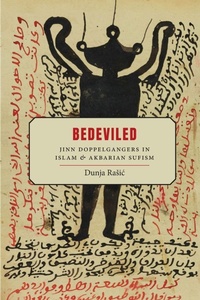
Bedeviled
Jinn Doppelgangers in Islam and Akbarian Sufism
Published on 2. September 2024
Book
Paperback/Softback
220 pages
978-1-4384-9688-7 (ISBN)
Description
A groundbreaking study of jinn doppelgangers and the problem of evil in Akbarian Sufism.
Ghouls, ifrits, and a panoply of other jinn have long haunted Muslim cultures and societies. These also include jinn doppelgangers (qarin, pl. qurana?), the little-studied and much-feared denizens of the hearts and blood of humans. This book seeks out jinn doppelgangers in the Islamic normative tradition, philosophy, folklore, and Sufi literature, with special emphasis on Akbarian Sufism.
Mu?yi al-Din Ibn ?Arabi (d. 1240) wrote on jinn in substantial detail, uncovering the physiognomy, culture, and behavior of this unseen species. Akbarians believed that the good God assigned each human with an evil doppelganger. Ibn ?Arabi's reasoning as to why this was the case mirrors his attempts to expound the problem of evil in Islamic religious philosophy. No other Sufi, Ibn ?Arabi claimed, ever managed to get to the heart of this matter before him. As well as offering the reader knowledge and safety from evil, Ibn ?Arabi's writings on jinnealogy tackle the even larger issues of spiritual ascension, predestination, and the human relationship to the Divine.
Ghouls, ifrits, and a panoply of other jinn have long haunted Muslim cultures and societies. These also include jinn doppelgangers (qarin, pl. qurana?), the little-studied and much-feared denizens of the hearts and blood of humans. This book seeks out jinn doppelgangers in the Islamic normative tradition, philosophy, folklore, and Sufi literature, with special emphasis on Akbarian Sufism.
Mu?yi al-Din Ibn ?Arabi (d. 1240) wrote on jinn in substantial detail, uncovering the physiognomy, culture, and behavior of this unseen species. Akbarians believed that the good God assigned each human with an evil doppelganger. Ibn ?Arabi's reasoning as to why this was the case mirrors his attempts to expound the problem of evil in Islamic religious philosophy. No other Sufi, Ibn ?Arabi claimed, ever managed to get to the heart of this matter before him. As well as offering the reader knowledge and safety from evil, Ibn ?Arabi's writings on jinnealogy tackle the even larger issues of spiritual ascension, predestination, and the human relationship to the Divine.
Reviews / Votes
"This is the first solid treatment in English of Jinn in Akbarian Sufism, which is the least studied aspect of Ibn ?Arabi's teachings. Rasic has a firm grasp of Ibn ?Arabi and articulates his recondite teachings in clear and simple language without compromising the nuances of his ideas." - Mukhtar H. Ali, University of Illinois Urbana ChampaignMore details
Series
Language
English
Place of publication
Albany, NY
United States
Target group
Professional and scholarly
US School Grade: College Graduate Student and over
Product notice
Paperback (trade)
Illustrations
2 Tables, black and white; 17 Figures
Dimensions
Height: 229 mm
Width: 152 mm
Thickness: 14 mm
Weight
368 gr
ISBN-13
978-1-4384-9688-7 (9781438496887)
Copyright in bibliographic data and cover images is held by Nielsen Book Services Limited or by the publishers or by their respective licensors: all rights reserved.
Schweitzer Classification
Other editions
Additional editions
E-Book
03/2024
1st Edition
De Gruyter
from
€84.99
Available for download
Person
Dunja Rasic is a researcher at the University of Religions and Denominations, in Qom, Iran. She is the author of The Written World of God: The Cosmic Script and the Art of Ibn ?Arabi.
Content
List of Illustrations
Acknowledgments
Transcription and Transliteration System
1. Neither of the East, nor of the West
2. Signs on the Horizons
3. The Devil Within
4. The Red Death
Notes
Bibliography
Index
Acknowledgments
Transcription and Transliteration System
1. Neither of the East, nor of the West
2. Signs on the Horizons
3. The Devil Within
4. The Red Death
Notes
Bibliography
Index