

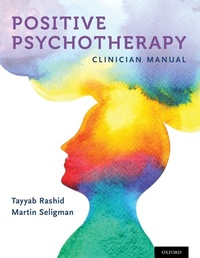
Positive Psychotherapy
Clinician Manual
Published on 20. September 2018
Book
Paperback/Softback
376 pages
978-0-19-532538-6 (ISBN)
Description
For over a century the focus of psychotherapy has been on what ails us, with the therapeutic process resting upon the assumption that unearthing past traumas, correcting faulty thinking, and restoring dysfunctional relationships is curative. And indeed, they are - but in the rush to identify and reduce symptoms of mental disorder, something important has been overlooked: the positives. Should enhancing well-being, and building upon character strengths and virtues, be explicit goals of therapy?
Positive Psychotherapy provides therapists with a session-by-session therapeutic approach based on the principles of positive psychology, a burgeoning area of study examining the conditions and processes that enable individuals, communities, and institutions to flourish. This clinician's manual begins with an overview of the theoretical framework for positive psychotherapy, exploring character strengths and positive psychology practices, processes, and mechanisms of change. The second half of the book is contains 15 positive psychotherapy sessions, each complete with core concepts, guidelines, skills, and worksheets for practicing skills learned in session. Each session also includes at least one vignette as well as discussion of cross-cultural implications. Mental health professionals of all orientations will find in Positive Psychotherapy a refreshing alternative to symptom-based approaches that will endow clients with a sense of purpose and meaning that many have found lacking in more traditional therapies.
Positive Psychotherapy provides therapists with a session-by-session therapeutic approach based on the principles of positive psychology, a burgeoning area of study examining the conditions and processes that enable individuals, communities, and institutions to flourish. This clinician's manual begins with an overview of the theoretical framework for positive psychotherapy, exploring character strengths and positive psychology practices, processes, and mechanisms of change. The second half of the book is contains 15 positive psychotherapy sessions, each complete with core concepts, guidelines, skills, and worksheets for practicing skills learned in session. Each session also includes at least one vignette as well as discussion of cross-cultural implications. Mental health professionals of all orientations will find in Positive Psychotherapy a refreshing alternative to symptom-based approaches that will endow clients with a sense of purpose and meaning that many have found lacking in more traditional therapies.
Reviews / Votes
"This authoritative and much-anticipated volume offers a measured and clear-eyed synthesis of the theories and research that undergird positive psychotherapy. It shares the why and the how of good practice alongside valuable and hope-inspiring case examples. I'm heartened to imagine all the many lives these important new ideas will touch in the decades to come."-- Barbara L. Fredrickson, Ph.D., Kenan Distinguished Professor of Psychology and Neuroscience, University of North Carolina at Chapel Hill, and author of Positivity and Love 2.0
"Tayyab Rashid and Martin Seligman have done a masterful job of highlighting the critical idea that instead of simply focusing on what's wrong, clinicians can help guide their clients to focus on what's right using the approaches described in this book. This pioneering manual will serve as the theoretical, empirical, and practical grounding for the rapidly growing field of positive psychotherapy."
-- Judith T. Moskowitz, Ph.D., MPH, Professor, Medical Social Sciences, Northwestern University
"Positive Psychotherapy is arguably the best book on positive psychology ever written. It is a must read not only for clinical psychologists but also for social workers, life coaches and psychiatrists. Until now there have been so few positive therapy interventions compared to the overwhelming number of deficit-oriented treatments. Psychotherapists have learned a lot about damage, deficits and dysfunction and very little about the ingredients for a
good life and how these are nurtured. This book, step-by-step, provides positive interventions and the ways in which they achieve positive results. The these myriad suggested interventions are all provided with
evidence based references."
-- George E. Vaillant M.D., psychoanalyst, Professor of Psychiatry, Harvard Medical School, and author of Triumphs of Experience
More details
Language
English
Place of publication
New York
United States
Target group
Professional and scholarly
Illustrations
10 line illus.
Dimensions
Height: 280 mm
Width: 216 mm
Thickness: 20 mm
Weight
935 gr
ISBN-13
978-0-19-532538-6 (9780195325386)
Copyright in bibliographic data and cover images is held by Nielsen Book Services Limited or by the publishers or by their respective licensors: all rights reserved.
Schweitzer Classification
Other editions
Additional editions
E-Book
07/2018
1st Edition
OUP eBook
€39.49
Available for download
E-Book
07/2018
OUP eBook
€39.49
Available for download
Persons
Tayyab Rashid is a licensed clinical psychologist and an associate faculty at the University of Toronto Scarborough, Canada, and has expertise in Positive Psychology interventions, resilience and post-traumatic growth. He is the recipient of the Outstanding Practitioner Award from the International Positive Psychology Association.
Dr. Martin E.P. Seligman is the Director of the Penn Positive Psychology Center and Zellerbach Family Professor of Psychology in the Penn Department of Psychology. He is also Director of the Penn Master of Applied Positive Psychology program (MAPP). He was President of the American Psychological Association in 1998, during which one of his presidential initiatives was the promotion of
Positive Psychology as a field of scientific study. He is a leading authority in the fields of Positive Psychology, resilience, learned helplessness, depression, optimism and pessimism. He is also a recognized authority on interventions that prevent depression, and build strengths and well-being. He has written more than 300 scholarly publications and 25 books.
Dr. Martin E.P. Seligman is the Director of the Penn Positive Psychology Center and Zellerbach Family Professor of Psychology in the Penn Department of Psychology. He is also Director of the Penn Master of Applied Positive Psychology program (MAPP). He was President of the American Psychological Association in 1998, during which one of his presidential initiatives was the promotion of
Positive Psychology as a field of scientific study. He is a leading authority in the fields of Positive Psychology, resilience, learned helplessness, depression, optimism and pessimism. He is also a recognized authority on interventions that prevent depression, and build strengths and well-being. He has written more than 300 scholarly publications and 25 books.
Content
PART I
INTRODUCTION AND THEORETICAL FOUNDATIONS
CHAPTER 1: Positive Psychotherapy: What Is It and Why Do We Need It?
CHAPTER 2: Positive Interventions and Theoretical Assumptions
CHAPTER 3: Psychopathology: Symptoms and Strengths
CHAPTER 4: The Centrality of Character Strengths and How to Use Them in Positive Psychotherapy
CHAPTER 5: Positive Psychotherapy: Practice, Process, and Mechanisms of Change
PART II
SESSION-BY-SESSION PRACTICE
Chapter 6: Sessions, Practices, and the Therapeutic Process
CHAPTER 7: SESSION ONE: Positive Introduction and Gratitude Journal
CHAPTER 8: SESSION TWO: Character Strengths and Signature Strengths
CHAPTER 9: SESSION THREE: Practical Wisdom
CHAPTER 10: SESSION FOUR: A Better Version of Me
CHAPTER 11: SESSION FIVE: Open and Closed Memories
CHAPTER 12: SESSION SIX: Forgiveness
CHAPTER 13: SESSION SEVEN: Maximizing versus Satisficing
CHAPTER 14: SESSION EIGHT: Gratitude
CHAPTER 15: SESSION NINE: Hope and Optimism
CHAPTER 16: SESSION TEN: Post-traumatic Growth (PTG)
CHAPTER 17: SESSION TEN: Slowness and Savoring
CHAPTER 18: SESSION TWELVE: Positive Relationships
CHAPTER 19: SESSION THIRTEEN: Positive Communication
CHAPTER 20: SESSION FOURTEEN: Altruism
CHAPTER 21: SESSION FIFTEEN: Meaning and Purpose
APPENDICES
A: Relaxation & Mindfulness Practices
B: Gratitude Journal
C: Positive Psychotherapy Inventory (PPTI)
D: Building Your Strengths
REFERENCES
INDEX
INTRODUCTION AND THEORETICAL FOUNDATIONS
CHAPTER 1: Positive Psychotherapy: What Is It and Why Do We Need It?
CHAPTER 2: Positive Interventions and Theoretical Assumptions
CHAPTER 3: Psychopathology: Symptoms and Strengths
CHAPTER 4: The Centrality of Character Strengths and How to Use Them in Positive Psychotherapy
CHAPTER 5: Positive Psychotherapy: Practice, Process, and Mechanisms of Change
PART II
SESSION-BY-SESSION PRACTICE
Chapter 6: Sessions, Practices, and the Therapeutic Process
CHAPTER 7: SESSION ONE: Positive Introduction and Gratitude Journal
CHAPTER 8: SESSION TWO: Character Strengths and Signature Strengths
CHAPTER 9: SESSION THREE: Practical Wisdom
CHAPTER 10: SESSION FOUR: A Better Version of Me
CHAPTER 11: SESSION FIVE: Open and Closed Memories
CHAPTER 12: SESSION SIX: Forgiveness
CHAPTER 13: SESSION SEVEN: Maximizing versus Satisficing
CHAPTER 14: SESSION EIGHT: Gratitude
CHAPTER 15: SESSION NINE: Hope and Optimism
CHAPTER 16: SESSION TEN: Post-traumatic Growth (PTG)
CHAPTER 17: SESSION TEN: Slowness and Savoring
CHAPTER 18: SESSION TWELVE: Positive Relationships
CHAPTER 19: SESSION THIRTEEN: Positive Communication
CHAPTER 20: SESSION FOURTEEN: Altruism
CHAPTER 21: SESSION FIFTEEN: Meaning and Purpose
APPENDICES
A: Relaxation & Mindfulness Practices
B: Gratitude Journal
C: Positive Psychotherapy Inventory (PPTI)
D: Building Your Strengths
REFERENCES
INDEX