

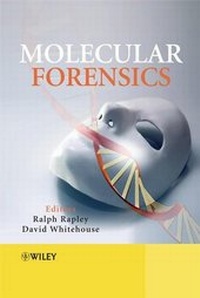
Molecular Forensics
Published on 13. April 2007
Book
Hardback
258 pages
978-0-470-02495-9 (ISBN)
Description
Molecular Forensics offers a comprehensive coverage of the increasingly important role that molecular analysis plays within forensic science. Starting with a broad introduction of modern forensic molecular technologies, the text covers key issues from the initial scenes of crime sampling to the use of evidential material in the prosecution of legal cases. The book also explores the questions raised by the growing debate on the applications of national DNA databases and the resulting challenges of developing, maintaining and curating such vast data structures. The broader range of applications to non-human cases is also discussed, as are the statistical pitfalls of using so-called unique data such as DNA profiles, and the ethical considerations of national DNA databases.
* Provides a comprehensive overview of modern forensic molecular technologies.
* Explores the growing debate on the applications of national DNA databases.
* Discusses the initial phases of investigation to the conclusion of cases involving molecular forensic analysis.
An invaluable reference for students taking courses within the Forensic and Biomedical sciences, and also useful for practitioners in the field looking for a broad overview of the subject.
* Provides a comprehensive overview of modern forensic molecular technologies.
* Explores the growing debate on the applications of national DNA databases.
* Discusses the initial phases of investigation to the conclusion of cases involving molecular forensic analysis.
An invaluable reference for students taking courses within the Forensic and Biomedical sciences, and also useful for practitioners in the field looking for a broad overview of the subject.
More details
Other editions
Additional editions
Ralph Rapley | David Whitehouse
Molecular Forensics
Book
04/2007
Wiley
€90.00
Article exhausted; check different version
Persons
Dr Ralph Rapley, Department of Biosciences, University of Hertfordshire, Hatfield, r.rapley@herts.ac.uk
Dr David Whitehouse, Consultant Biotechnologist and Research Fellow, London School of Hygiene and Tropical Medicine, London
Dr David Whitehouse, Consultant Biotechnologist and Research Fellow, London School of Hygiene and Tropical Medicine, London
Content
Preface.
List of contributors.
1. Current and Future Trends In Forensic Molecular Biology (Simon J. Walsh).
2. Introduction to PCR Technology (Ralph Rapley and David Whitehouse).
3. Automated DNA Extraction Techniques for Forensic Analysis (Marion Nagy).
4. Real Time Quantitative PCR in Forensic Science (Antonio Alonso Alonso and Oscar García Fernández).
5. Minisatellite and Microsatellite DNA Typing Analysis (Keiji Tamaki).
6. Application of SNPs in forensic casework (Claus Boersting, Juan J. Sanchez, and Niels Morling).
7. The X chromosome in the forensic science: Past, present and future (Reinhard Szibor).
8. Y-Chromosomal Markers in Forensic Genetics (Professor Dr. Manfred Kayser).
9. Mitochondrial Analysis in Forensic Science (Hirokazu Matsuda and Nobuhiro Yukawa).
10. Laser Microdissection in Forensic Analysis (Dr. Luigi Saravo Dr.Di Martino, Dr. Staiti).
11. Laboratory Information Systems for Forensic Analysis of DNA Evidence (Benoît Leclair and Tom Scholl).
12. Statistical Presentation of Forensic Data (Mark A. Best).
13. Protein profiling for forensic and biometrics applications (Mikhail Soloviev, Julian Bailes, Nina Salata, Paul Finch).
14. Application Of Mrs For The Determination Of The Postmortem Interval (Scheurer Eva, Ith Michael, Boesch Chris).
Index.
List of contributors.
1. Current and Future Trends In Forensic Molecular Biology (Simon J. Walsh).
2. Introduction to PCR Technology (Ralph Rapley and David Whitehouse).
3. Automated DNA Extraction Techniques for Forensic Analysis (Marion Nagy).
4. Real Time Quantitative PCR in Forensic Science (Antonio Alonso Alonso and Oscar García Fernández).
5. Minisatellite and Microsatellite DNA Typing Analysis (Keiji Tamaki).
6. Application of SNPs in forensic casework (Claus Boersting, Juan J. Sanchez, and Niels Morling).
7. The X chromosome in the forensic science: Past, present and future (Reinhard Szibor).
8. Y-Chromosomal Markers in Forensic Genetics (Professor Dr. Manfred Kayser).
9. Mitochondrial Analysis in Forensic Science (Hirokazu Matsuda and Nobuhiro Yukawa).
10. Laser Microdissection in Forensic Analysis (Dr. Luigi Saravo Dr.Di Martino, Dr. Staiti).
11. Laboratory Information Systems for Forensic Analysis of DNA Evidence (Benoît Leclair and Tom Scholl).
12. Statistical Presentation of Forensic Data (Mark A. Best).
13. Protein profiling for forensic and biometrics applications (Mikhail Soloviev, Julian Bailes, Nina Salata, Paul Finch).
14. Application Of Mrs For The Determination Of The Postmortem Interval (Scheurer Eva, Ith Michael, Boesch Chris).
Index.