

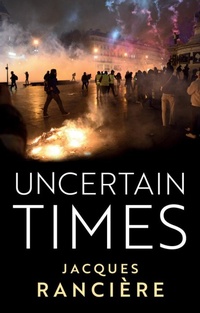
Uncertain Times
1st Edition
Published on 16. February 2024
Book
Paperback/Softback
200 pages
978-1-5095-5868-1 (ISBN)
Description
The global triumph of democracy was announced thirty years ago, promising an age of consensus in which the dispassionate consideration of objective problems would give birth to a world at peace. Today, these grand hopes have been destroyed, and the era touted as new and exceptional has turned out to be remarkably similar to the old order - but not simply due to the aggression of external forces. Instead, we must look to the nature of consensus itself, which, in the view of leading radical philosopher Jacques Ranciere, is revealed as a violent, absolutized capitalist machine whose output is ever more inequality, exclusion and hate.
This book delivers a frank and piercing assessment of the globalised capitalist consensus. The invasion of Iraq, the riots on Capitol Hill and the rise of the European far right all provide evidence of the consummation of consensual realism, as does the current state-sanctioned racism which exploits the disenchanted progressive tradition and is led by an intelligentsia that claims to be left-wing. At the same time, Ranciere also praises the dynamism of social movements which affirm the power of the assembly of equals and its capacity for worldmaking: autonomous protest collectives have proven themselves capable of opening breaches in the consensual order and challenging the post-1989 system of domination.
The global triumph of democracy was announced thirty years ago, promising an age of consensus in which the dispassionate consideration of objective problems would give birth to a world at peace. Today, these grand hopes have been destroyed, and the era touted as new and exceptional has turned out to be remarkably similar to the old order - but not simply due to the aggression of external forces. Instead, we must look to the nature of consensus itself, which, in the view of leading radical philosopher Jacques Ranciere, is revealed as a violent, absolutized capitalist machine whose output is ever more inequality, exclusion and hate.
This book delivers a frank and piercing assessment of the globalised capitalist consensus. The invasion of Iraq, the riots on Capitol Hill and the rise of the European far right all provide evidence of the consummation of consensual realism, as does the current state-sanctioned racism which exploits the disenchanted progressive tradition and is led by an intelligentsia that claims to be left-wing. At the same time, Ranciere also praises the dynamism of social movements which affirm the power of the assembly of equals and its capacity for worldmaking: autonomous protest collectives have proven themselves capable of opening breaches in the consensual order and challenging the post-1989 system of domination.
This book delivers a frank and piercing assessment of the globalised capitalist consensus. The invasion of Iraq, the riots on Capitol Hill and the rise of the European far right all provide evidence of the consummation of consensual realism, as does the current state-sanctioned racism which exploits the disenchanted progressive tradition and is led by an intelligentsia that claims to be left-wing. At the same time, Ranciere also praises the dynamism of social movements which affirm the power of the assembly of equals and its capacity for worldmaking: autonomous protest collectives have proven themselves capable of opening breaches in the consensual order and challenging the post-1989 system of domination.
The global triumph of democracy was announced thirty years ago, promising an age of consensus in which the dispassionate consideration of objective problems would give birth to a world at peace. Today, these grand hopes have been destroyed, and the era touted as new and exceptional has turned out to be remarkably similar to the old order - but not simply due to the aggression of external forces. Instead, we must look to the nature of consensus itself, which, in the view of leading radical philosopher Jacques Ranciere, is revealed as a violent, absolutized capitalist machine whose output is ever more inequality, exclusion and hate.
This book delivers a frank and piercing assessment of the globalised capitalist consensus. The invasion of Iraq, the riots on Capitol Hill and the rise of the European far right all provide evidence of the consummation of consensual realism, as does the current state-sanctioned racism which exploits the disenchanted progressive tradition and is led by an intelligentsia that claims to be left-wing. At the same time, Ranciere also praises the dynamism of social movements which affirm the power of the assembly of equals and its capacity for worldmaking: autonomous protest collectives have proven themselves capable of opening breaches in the consensual order and challenging the post-1989 system of domination.
More details
Language
English
Place of publication
Oxford
United Kingdom
Publishing group
John Wiley and Sons Ltd
Dimensions
Height: 212 mm
Width: 136 mm
Thickness: 15 mm
Weight
230 gr
ISBN-13
978-1-5095-5868-1 (9781509558681)
Copyright in bibliographic data and cover images is held by Nielsen Book Services Limited or by the publishers or by their respective licensors: all rights reserved.
Schweitzer Classification
Other editions
Additional editions
Jacques Ranciere
Uncertain Times
Book
02/2024
1st Edition
Polity Press
€60.50
Shipment within 15-20 days
Persons
Jacques Ranciere is a leading French philosopher and Professor Emeritus of Philosophy at the University of Paris-St. Denis. He is the author of many books on politics and aesthetics including Hatred of Democracy, The Emancipated Spectator, The Politics of Literature and The Edges of Fiction.
<b>Jacques Ranciere</b> is a leading French philosopher and Professor Emeritus of Philosophy at the University of Paris-St. Denis. He is the author of many books on politics and aesthetics including <i>Hatred of Democracy</i>, <i>The Emancipated Spectator</i>, <i>The Politics of Literature</i> and <i>The Edges of Fiction</i>.
<b>Jacques Ranciere</b> is a leading French philosopher and Professor Emeritus of Philosophy at the University of Paris-St. Denis. He is the author of many books on politics and aesthetics including <i>Hatred of Democracy</i>, <i>The Emancipated Spectator</i>, <i>The Politics of Literature</i> and <i>The Edges of Fiction</i>.
Content
<i>Preface</i>
Part One. The violence of consensus
Chapter One. The new racism: a passion from above
Chapter Two. A modest proposal to help the victims
Chapter Three. An elusive populism
Chapter Four. Unravelling the confusions serving the dominant order
Chapter Five. On freedom of expression
Chapter Six. The Hatred of Equality
Chapter Seven. Fools and sages. Reflections on the end of the Trump presidency
Chapter Eight. A golden opportunity? Reflections in the time of lockdown
Part Two. Moments of democracy
Chapter Nine. The pandemic and inequality
Chapter Ten. Interpreting the event 68: politics, philosophy, sociology
Chapter Eleven. Occupation
Chapter Twelve. Nuit Debout: Desire for Community or Egalitarian Invention?
Chapter Thirteen. The virtues of the inexplicable. On the Gilets Jaunes
Chapter Fourteen. Beyond the hatred of democracy
Chapter Fifteen. Speech at the assembly of railway workers
<i>Notes</i>
Part One. The violence of consensus
Chapter One. The new racism: a passion from above
Chapter Two. A modest proposal to help the victims
Chapter Three. An elusive populism
Chapter Four. Unravelling the confusions serving the dominant order
Chapter Five. On freedom of expression
Chapter Six. The Hatred of Equality
Chapter Seven. Fools and sages. Reflections on the end of the Trump presidency
Chapter Eight. A golden opportunity? Reflections in the time of lockdown
Part Two. Moments of democracy
Chapter Nine. The pandemic and inequality
Chapter Ten. Interpreting the event 68: politics, philosophy, sociology
Chapter Eleven. Occupation
Chapter Twelve. Nuit Debout: Desire for Community or Egalitarian Invention?
Chapter Thirteen. The virtues of the inexplicable. On the Gilets Jaunes
Chapter Fourteen. Beyond the hatred of democracy
Chapter Fifteen. Speech at the assembly of railway workers
<i>Notes</i>