

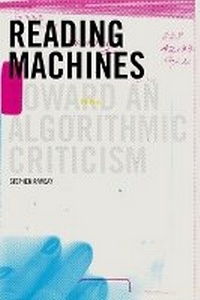
Reading Machines
Toward and Algorithmic Criticism
Published on 30. November 2011
Book
Paperback/Softback
112 pages
978-0-252-07820-0 (ISBN)
Description
Besides familiar and now-commonplace tasks that computers do all the time, what else are they capable of? Stephen Ramsay's intriguing study of computational text analysis examines how computers can be used as "reading machines" to open up entirely new possibilities for literary critics. Computer-based text analysis has been employed for the past several decades as a way of searching, collating, and indexing texts. Despite this, the digital revolution has not penetrated the core activity of literary studies: interpretive analysis of written texts. Computers can handle vast amounts of data, allowing for the comparison of texts in ways that were previously too overwhelming for individuals, but they may also assist in enhancing the entirely necessary role of subjectivity in critical interpretation. Reading Machines discusses the importance of this new form of text analysis conducted with the assistance of computers. Ramsay suggests that the rigidity of computation can be enlisted in the project of intuition, subjectivity, and play.
Reviews / Votes
"Reading Machines makes an important and provocative contribution to the fields of literary criticism and digital humanities. With sound scholarship and lucid argumentation, this book will stir up debate among both traditionalists and digital humanities scholars."--David L. Hoover, author of Stylistics: Prospect and Retrospect"This significant book by the progenitor of the term 'algorithmic criticism' packs a lot into its slender binding. Pithy, readable, and full of striking turns of phrase, it reaches for a broader audience for the debates over the application of computers to the critical enterprise."--Literary and Linguistic Computing
"Anchored by his incisive, prescient, and influential essay 'Toward an Algorithmic Criticism,' Stephen Ramsay's book is filled with trenchant critical arguments and paradigmatic examples that traverse contemporary literary computing to argue that doing technology is now not necessarily different from doing humanities; it is in fact another humanities activity. Human beings live, work, feel, express, and reflect. Speech, writing, images, and now text-mining are ways of 'doing,' and understanding, the literature of the human. Ramsay makes his case to both digital humanities scholars and the broader audience of the humanities with a unique blend of technical authority and open-ended, accessible humanistic inquiry."--Alan Liu, author of Local Transcendence: Essays on Postmodern Historicism and the Database
More details
Language
English
Place of publication
Baltimore
United States
Target group
College/higher education
Professional and scholarly
Illustrations
3 line drawings, 3 tables
Dimensions
Height: 229 mm
Width: 152 mm
Thickness: 10 mm
Weight
200 gr
ISBN-13
978-0-252-07820-0 (9780252078200)
Copyright in bibliographic data and cover images is held by Nielsen Book Services Limited or by the publishers or by their respective licensors: all rights reserved.
Schweitzer Classification
Person
Stephen Ramsay is an associate professor of English at the University of Nebraska and has written and lectured widely on subjects related to literary theory and software design for humanities.
Content
CoverTitle PageCopyrightContentsPreconditions1. An Algorithmic Criticism2. Potential Literature3. Potential Readings4. The Turing Text5. 'PatacomputingPostconditionsNotesWorks Citedindex